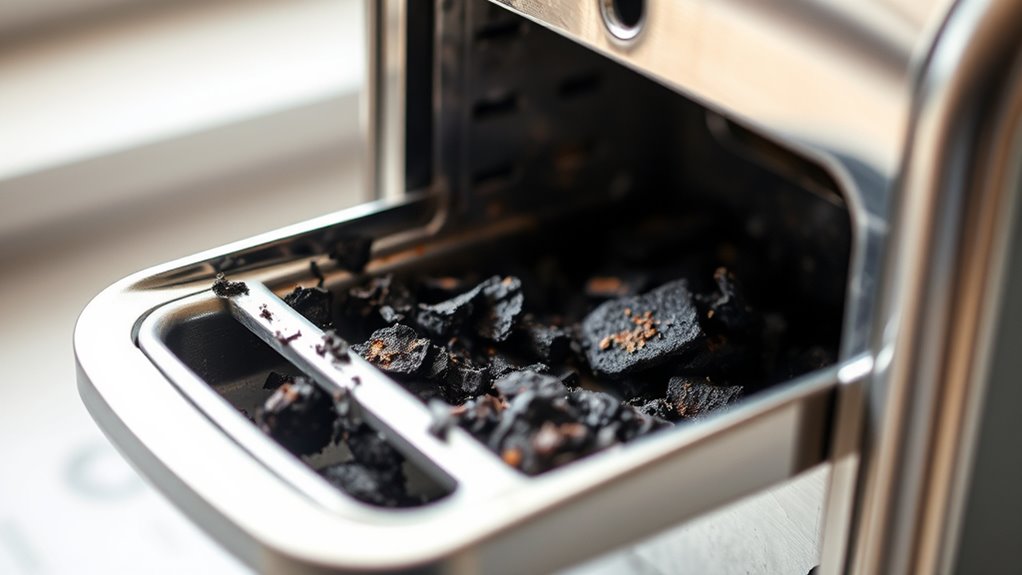

If your empty toaster smells burnt, it’s often caused by accumulated crumbs, debris, or residue inside that ignites when heated. Over time, crumbs can fall into the heating elements or crumb tray, which may burn and produce odors. Residue from food and grease buildup can also cause the smell. Regularly cleaning and removing debris helps prevent this issue. Keep going to discover more tips to keep your toaster safe and odor-free.
Key Takeaways
- Crumbs and debris may have accumulated inside, burning during operation and causing a burnt smell.
- Residue from food splatters or grease buildup can char, emitting burnt odors even without bread.
- Burnt smell could indicate a damaged or dirty heating element that overheats or burns residues.
- Lack of regular cleaning allows debris to burn, leading to persistent unpleasant odors.
- Internal components or wiring issues might produce burnt smells if malfunctioning or damaged.

If your toaster smells burnt even when it’s empty, you’re probably wondering what’s causing the odor. This situation can be unsettling, especially if you’re concerned about safety. A burnt smell might indicate that something inside the toaster has burned or accumulated over time, creating potential safety concerns if left unaddressed. To keep yourself and your home safe, it’s essential to identify the root cause and perform proper maintenance. Starting with simple maintenance tips can prevent future issues and ensure your toaster operates safely and efficiently.
First, consider the buildup of crumbs and debris inside your toaster. Over time, crumbs can fall into the heating elements or the crumb tray, which can burn when the toaster is turned on. When cleaning your toaster, always unplug it first. Remove the crumb tray and shake out any loose debris. Use a soft brush or cloth to wipe down the interior, avoiding metal utensils that could damage the heating elements. Regular cleaning not only prevents burnt smells but also reduces fire hazards, which are a significant safety concern. Be cautious to remove all crumbs thoroughly, as even small amounts can cause burning odors or ignite if left unattended. Additionally, inspecting the heating elements for damage or residue buildup can help identify any issues early on.
Another common cause is the accumulation of grease or food splatters from previous use. These residues can become charred when heated, emitting a burnt odor even without bread inside. To address this, disassemble the toaster if possible and wipe down exposed parts with a damp cloth. Avoid using harsh chemicals that could damage internal components. Performing these maintenance tips regularly can help you catch potential problems early, reducing safety risks and prolonging your appliance’s lifespan.
Sometimes, the heating elements themselves can develop issues. If elements are damaged or have accumulated residue, they may overheat or produce unusual smells. If cleaning doesn’t resolve the problem, it might be time to replace the heating elements or consider getting a professional to inspect the device. Ignoring persistent odors might lead to more severe safety concerns, such as electrical faults or fire hazards. Regular inspections and maintenance ensure the appliance functions safely and efficiently. Moreover, ensuring proper ventilation around the toaster can help dissipate any residual odors and prevent overheating.
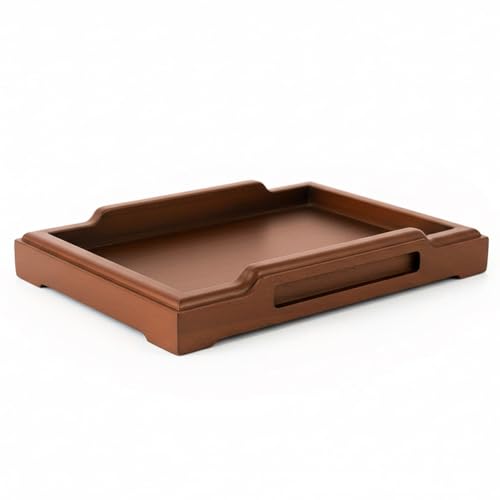
Toaster Crumb Catcher Tray for Under Toaster with Handles – Toaster Holder & Crumb Tray for Countertop, Kitchen Organizer to Catch Crumbs, Fits 2-Slice Toasters, Mess-Free Counter
THE END OF COUNTER CRUMBS: Tired of wiping up a gritty mess every time you make toast? This…
As an affiliate, we earn on qualifying purchases.
As an affiliate, we earn on qualifying purchases.
Frequently Asked Questions
Can a Burnt Smell Indicate an Electrical Problem in My Toaster?
Yes, a burnt smell can indicate an electrical malfunction or wiring issues in your toaster. If you notice this smell, you should unplug the appliance immediately to prevent potential hazards. Check for any visible wiring problems or damage, and avoid using the toaster until it’s been inspected or repaired by a professional. Ignoring these signs could lead to further electrical malfunctions or even fire risks.
How Often Should I Clean My Toaster to Prevent Odors?
Think of your toaster like a car—it needs regular maintenance to run smoothly. You should clean it at least once a week with a proper cleaning schedule, removing crumbs and residue that cause odors. Maintenance tips include unplugging it and using a brush or cloth to clear out crumb trays. Doing this prevents burnt smells and keeps your appliance smelling fresh and working efficiently.
Is It Safe to Use a Toaster That Smells Burnt?
Using a toaster that smells burnt isn’t safe; it indicates potential electrical safety issues or burnt residue. Stop using it immediately and perform proper toaster maintenance—unplug it, clean out crumbs, and check for any burnt wiring or damage. If the smell persists, consider replacing your toaster to prevent fire hazards. Regular cleaning and maintenance help guarantee safe operation and reduce the risk of electrical safety concerns.
What Household Items Can Eliminate Burnt Smells From a Toaster?
Think of your toaster like an oven that needs cleaning; a baking soda deodorizer can help. To eliminate burnt smells, unplug it first, then sprinkle baking soda inside and leave it overnight. You can also wipe the exterior with a damp cloth. Regular oven cleaning with baking soda is a good habit that keeps your appliances fresh, preventing lingering odors and ensuring safe, enjoyable use.
Why Does My Toaster Smell Burnt Even After Cleaning?
Your toaster might still smell burnt because of lingering odor causes, even after cleaning. Over time, crumbs or grease can build up deep inside, causing persistent odors. Poor toaster maintenance or using it on high settings can also damage internal components, leading to burnt smells. To fix this, unplug it, let it cool, then clean thoroughly and run a cycle with a damp cloth or vinegar to eliminate odors.

Upgrade 1650W Electric Smoker Heating Element Replacement Kit with Adjustable Thermostat Probe Cord Compatible with Masterbuilt, SmokeHollow, Cuisinart, Brinkmann Gourmet, Char-Broil and Cerakote Oven
🔥【𝐇𝐢𝐠𝐡 𝐏𝐨𝐰𝐞𝐫 𝐇𝐞𝐚𝐭𝐢𝐧𝐠 𝐄𝐥𝐞𝐦𝐞𝐧𝐭 𝐑𝐞𝐩𝐥𝐚𝐜𝐞𝐦𝐞𝐧𝐭】High Power 1650W 120V 15A Electric Smoker Heating Element Replacement Kit with Adjustable Thermostat…
As an affiliate, we earn on qualifying purchases.
As an affiliate, we earn on qualifying purchases.
Conclusion
So, next time your empty toaster smells like a bonfire, remember it’s not trying to ruin your breakfast. Sometimes, the burnt smell isn’t about bread but tiny crumbs or dust heating up. Ironically, your empty toaster might just be giving you a warning — or a smoky warning, at that. Instead of panicking, just clean it out regularly. After all, it’s better to smell burnt crumbs than to wonder why your toaster’s auditioning for a horror movie!

XANGNIER Toaster Cleaning Brush Set,5 Pcs Cleaner Supplies Tools kit for Toasters 2 Slice/ 4 Slice Accessories(Excluding Toaster)
Toast Cleaning Solution:Are you looking for a tool that will enable you to deep clean your toaster? Our…
As an affiliate, we earn on qualifying purchases.
As an affiliate, we earn on qualifying purchases.

Zero Odor Pro – Commercial Strength Eliminator Odor Neutralizer, Room Deodorizer Odor Eliminator Musty Smell – Strongest Odor Eliminator Trigger Spray, (32-ounce)
Safe and Gentle Formula: Made in the USA, non-toxic, non-allergenic, and biodegradable, making it suitable for use around…
As an affiliate, we earn on qualifying purchases.
As an affiliate, we earn on qualifying purchases.