You should avoid putting aluminum or copper items, wooden utensils, non-stick cookware, and delicate decorative pieces in your dishwasher. These materials can be damaged by high heat, harsh detergents, or abrasive cycles, leading to corrosion, warping, or tarnishing. Hand washing with mild soap is best for preserving their appearance and integrity. Keep these tips in mind to protect your favorite items—and if you keep exploring, you’ll discover more ways to care for your delicate possessions.
Key Takeaways
- Avoid dishwasher for aluminum and copper items to prevent corrosion, discoloration, and tarnishing.
- Do not dishwasher wooden or handcrafted utensils to prevent cracking, warping, or damage to delicate designs.
- Skip non-stick cookware and bakeware to protect coatings from peeling and deterioration.
- Keep decorative, metallic, or fragile glassware out of the dishwasher to prevent fading, tarnishing, or breakage.
- Always hand wash sensitive items to preserve their appearance and integrity, prolonging their lifespan.

Magnaware Cast Aluminum Dutch Oven with Lid – 5 Quart Lightweight Cookware Pot with Silicone Covers for Easy Handling – Even Heat Distribution & Retention – For Bread Baking, Stew, Simmering & More
Your New Trusty Kitchen Companion – Make cooking a breeze with Magnaware lightweight, rustproof aluminum Dutch oven pot…
As an affiliate, we earn on qualifying purchases.
As an affiliate, we earn on qualifying purchases.
Items Made From Aluminum or Copper
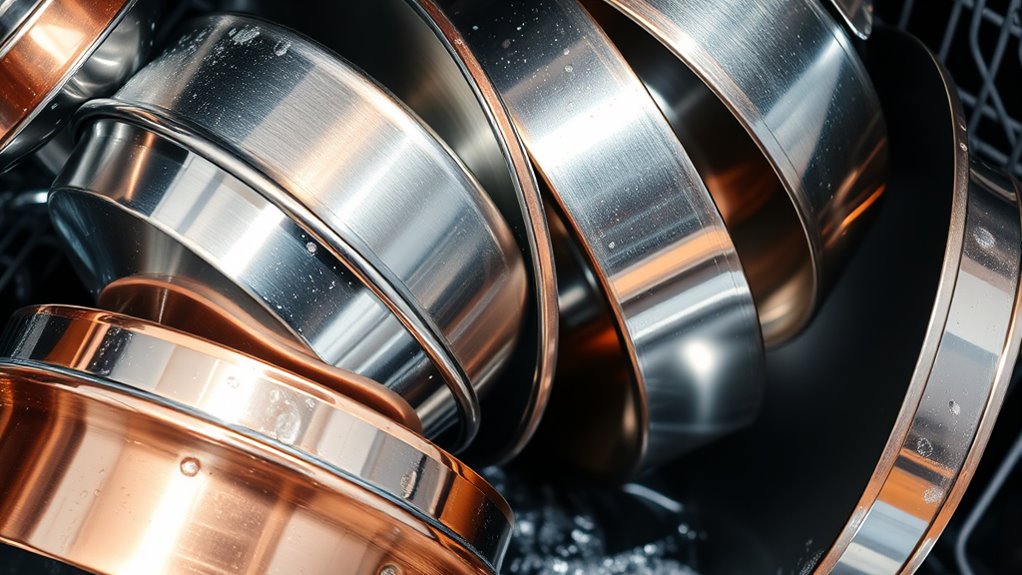
Items made from aluminum or copper should never go in your dishwasher because the harsh detergents and high heat can cause significant damage. Aluminum is prone to aluminum corrosion, which results in dull, discolored surfaces and a loss of shine. The aggressive cleaning agents can also cause pitting and weaken the metal over time. Copper items are equally vulnerable; exposure to dishwasher chemicals can lead to copper discoloration, turning your utensils or cookware a dull or uneven hue. The high temperatures can further accelerate tarnishing and damage the patina that gives copper its character. To preserve the integrity and appearance of your aluminum or copper items, hand wash them carefully with mild soap and avoid the dishwasher entirely. Dishwasher safety is crucial for maintaining the longevity of delicate metals and preventing costly replacements.

SinkSense Copper Care IQ Kit
Dimensions : 7" x 6" x 3"
As an affiliate, we earn on qualifying purchases.
As an affiliate, we earn on qualifying purchases.
Wooden and Handcrafted Utensils
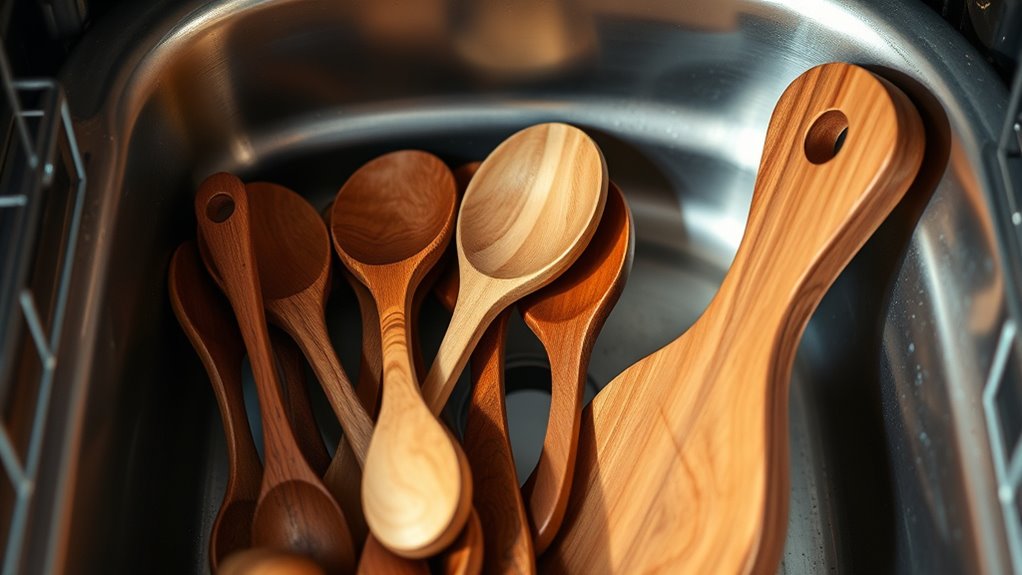
Although it might be tempting to toss wooden and handcrafted utensils into the dishwasher for convenience, doing so can cause irreversible damage. Handcrafted wooden utensils and delicate artisanal utensils are best cleaned by hand to preserve their quality. The high heat and prolonged exposure to water in a dishwasher can cause wood to crack, warp, or split over time. The harsh detergents can also strip away protective finishes, leaving your utensils vulnerable to staining and decay. Additionally, the intense cleaning cycle can dull or damage intricate carvings or delicate details. To keep your utensils in top shape, wash them gently with warm, soapy water and dry immediately. Proper care guarantees your handcrafted wooden utensils stay beautiful and functional for years to come. Recognizing material sensitivities can help prevent unnecessary damage and extend the lifespan of your utensils. Using appropriate cleaning techniques ensures that your utensils are maintained without risking harm or deterioration. Being mindful of material compatibility also helps preserve their appearance and structural integrity over time.

Wlasss Drinking Glasses Set of 4, 16.4 oz Clear Glass Tumbler, Water Glasses for Beer, Juice, Mojito, Iced Tea, Dishwasher Safe Glassware,Gifts
Sturdy and Safety: Wlasss glass cup set is made of high quality lead-free glass, has a temperature range…
As an affiliate, we earn on qualifying purchases.
As an affiliate, we earn on qualifying purchases.
Non-Stick Cookware and Bakeware
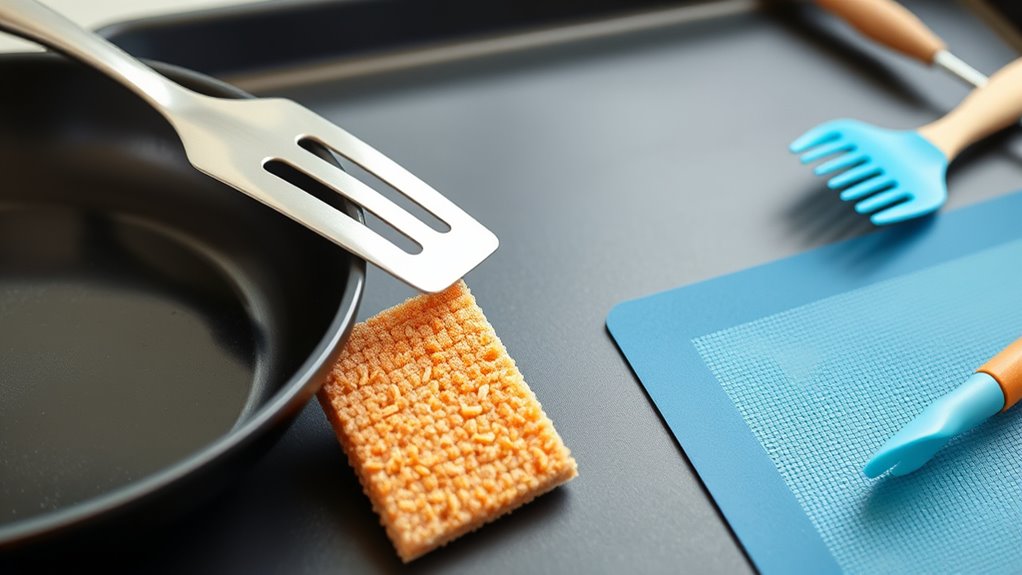
Non-stick cookware and bakeware should never go in the dishwasher because the high heat and harsh detergents can damage their coatings. This compromises dishwasher safety and shortens their lifespan. To keep your non-stick surfaces pristine, always follow hand wash recommendations. Use a soft sponge and mild detergent, avoiding abrasive scrubbers that can scratch the coating. Here’s a quick comparison:
| Feature | Dishwasher Safety | Hand Wash Recommendations |
|---|---|---|
| Coating durability | Not dishwasher safe | Recommended to prolong life |
| Risk of peeling | High | Low if properly cared for |
| Cleaning method | Harsh detergents | Gentle scrubbing |
| Heat exposure | Excessive heat damages | Avoided in hand washing |
| Long-term maintenance | Better with hand wash | Essential for coating preservation |
Following these tips guarantees your non-stick cookware stays in top shape. Additionally, understanding proper cleaning techniques can significantly extend the life of your cookware. For example, avoiding abrasive scrubbers helps maintain the non-stick surface integrity over time. Using gentle cleaning methods also helps prevent coating degradation, ensuring your cookware remains effective and safe for years to come. Proper care and maintenance can also prevent coating peeling, which is crucial for preserving the cookware’s performance and safety.

HOMEXCEL Sponges Kitchen 24pcs, Non-Scratch Scrub Dish Sponge Safe on Non-Stick Cookware, Dual Sided Cleaning Sponges for Kitchen, Household, Bathroom and More
Non-Scratch Cleaning: Safely cleans non-stick cookware, glass, ceramic, and other delicate surfaces; scrubbing side removes grease and stuck-on…
As an affiliate, we earn on qualifying purchases.
As an affiliate, we earn on qualifying purchases.
Items With Decorative or Metallic Finishes
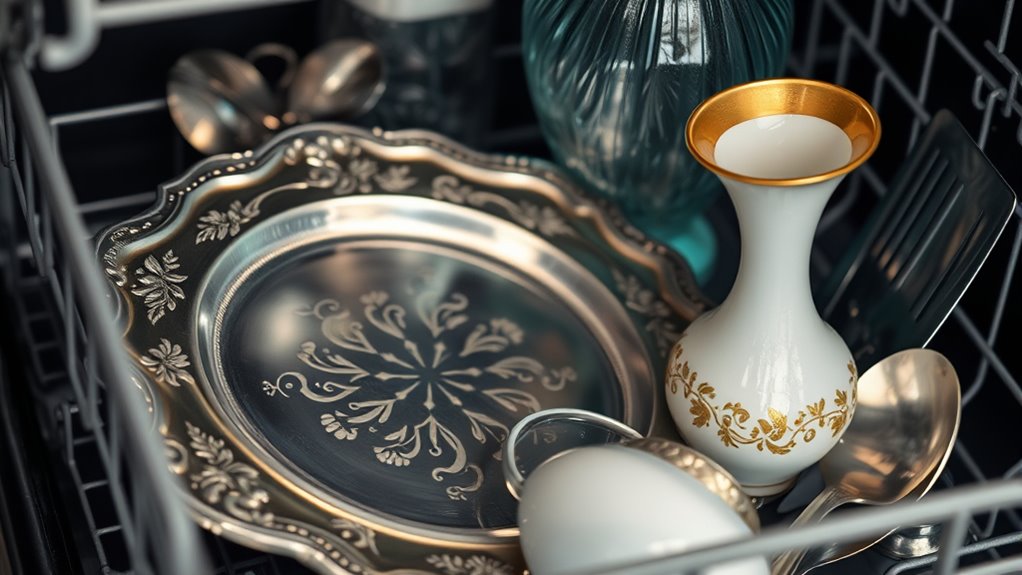
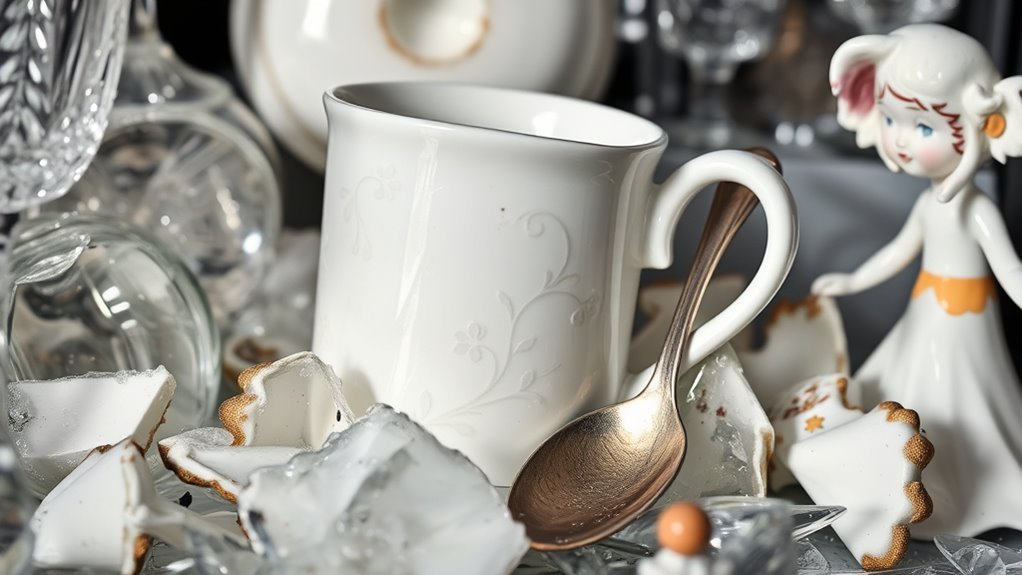
Decorative or metallic finishes can add elegance to your dishware and serveware, but they require careful handling to maintain their appearance. Dishwashers can damage these delicate surfaces, causing fading, tarnishing, or peeling. Items like decorative glassware and metallic jewelry are especially vulnerable. To protect your pieces, avoid placing them in the dishwasher. Using a dishwasher can also cause damage to items with high critical acclaim, so hand-washing is often the best option. Be cautious with ceramic pieces that have metallic or decorative finishes. Taking care of these items by hand-washing preserves their material integrity and longevity. Additionally, understanding dishwasher safety can help prevent accidental damage to these fragile items.
Frequently Asked Questions
Can I Put Plastic Utensils in the Dishwasher Safely?
Yes, you can put plastic utensils in the dishwasher safely if they’re labeled dishwasher-safe. Always check for any manufacturer’s instructions, as some plastics may melt or warp under high heat. To guarantee dishwasher safety, place plastic utensils on the top rack where the water temperature is cooler. Avoid putting thin or flimsy plastics in, as they’re more likely to get damaged or release harmful chemicals during the wash cycle.
Are Ceramic Dishes Dishwasher Safe?
Ceramic dishes are generally dishwasher safe, but watch out for ceramic chip risks that can occur if they’re jostled or knocked around. A glazed finish usually enhances durability, making cleaning easier and less damaging. To preserve your ceramics’ integrity, avoid high heat cycles and abrasive detergents, especially if the glaze is delicate. With proper care, your ceramic dishes can withstand regular dishwasher use without losing their shine or strength.
How Do I Clean Delicate Glassware in the Dishwasher?
Don’t put all your eggs in one basket when cleaning delicate glassware in the dishwasher. To keep your glassware safe, use the gentle or glassware cycle, and place items securely to avoid clinking. Use a mild detergent and skip high heat drying. Follow these dishwasher cleaning tips, and you’ll preserve your glassware’s sparkle, preventing chips or cracks, so it stays beautiful and safe for years to come.
Is It Okay to Wash Silicone Bakeware in the Dishwasher?
Yes, you can wash silicone bakeware in the dishwasher since it’s dishwasher safe silicone. Its durability makes it easy to clean without worrying about damage. Just place your silicone bakeware on the top rack to avoid high heat and harsh water pressure, and it’ll come out clean and ready to use again. Always check the manufacturer’s instructions, but generally, dishwasher safe silicone is convenient and safe for regular cleaning.
Do Dishwasher Cycles Affect Rubber Seals and Gaskets?
Did you know that over 60% of dishwasher repairs involve rubber seals and gaskets? Dishwasher cycles can indeed affect rubber seals and gaskets, especially if exposed to high heat and harsh detergents. Continuous exposure may cause gasket damage, leading to leaks and reduced efficiency. To protect your dishwasher rubber, regularly inspect seals and gaskets and avoid overloading or using overly aggressive detergents. Proper maintenance prevents costly repairs and prolongs your appliance’s lifespan.
Conclusion
Avoid putting delicate items like non-stick pans or vintage aluminum cookware in your dishwasher. For instance, Sarah once washed her favorite copper pot, only to find it tarnished and ruined. To keep your kitchenware looking new and functioning well, hand wash items with special finishes or materials that can’t handle high heat and harsh detergents. When in doubt, it’s better to be safe than sorry—your cookware will thank you for it!