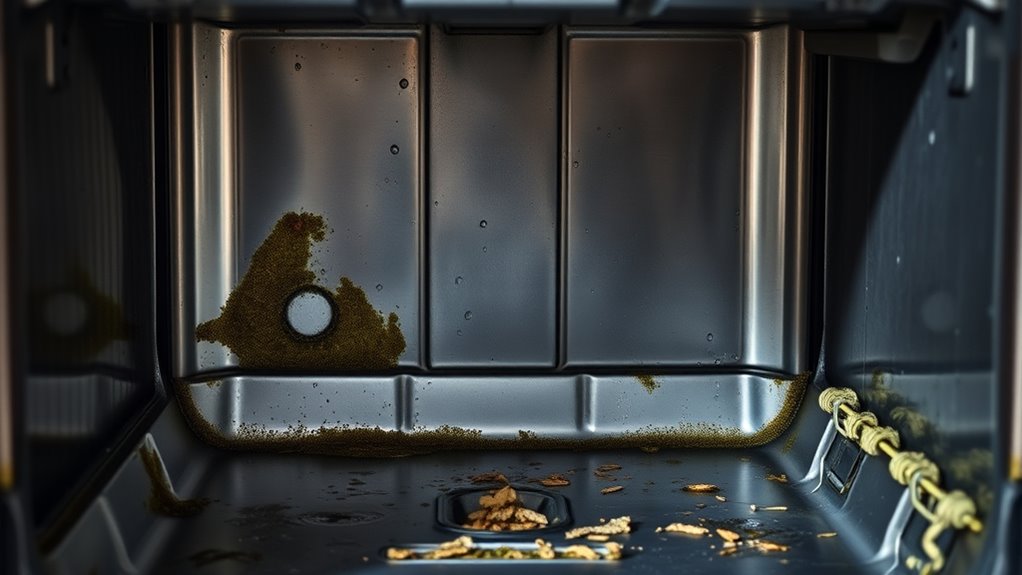

If your dishwasher stinks, it’s likely caused by leftover detergent, soap scum, mold, or trapped food particles from improper cleaning. To fix this, run a hot water cycle with vinegar or a dishwasher cleaner, and clean the filter, spray arms, and door seals regularly. Make sure dishes are loaded properly and leave the door ajar after cycles to let moisture escape. Keep going to discover more effective tips to banish odors for good.
Key Takeaways
- Residue from excess detergent, soap scum, or food particles can cause unpleasant odors.
- Mold and bacteria thrive in residual moisture and buildup inside the dishwasher.
- Regularly run a hot water cycle with vinegar or a dishwasher cleaner to eliminate odors.
- Properly load dishes to prevent trapping food and blocking spray arms, reducing residue.
- Leave the door slightly ajar after cycles and clean filters and seals to promote air circulation and freshness.

If your dishwasher starts emitting a foul odor, you’re not alone. That smell can be pretty off-putting, but the good news is it’s usually fixable. One common culprit is detergent residue. When you use too much detergent or don’t rinse away the soap completely, leftover suds and soap scum can build up inside your dishwasher. Over time, this residue fosters mold, bacteria, and foul smells. It’s easy to overlook, especially if you’re rushing through laundry or forget to run a cleaning cycle regularly. Additionally, improper loading can contribute to the problem. When dishes are crammed in tightly or aren’t arranged correctly, water and soap don’t circulate properly. This prevents thorough rinsing, leaving food particles and soap behind, which can rot or breed bacteria, leading to that unpleasant odor.
A foul dishwasher odor often results from detergent residue and improper loading.
To address detergent residue, start by running a hot water cycle with a dishwasher cleaner or a cup of white vinegar placed in the top rack. This helps dissolve soap scum and flush out lingering residues. If you notice stubborn buildup, you may need to do a more intensive cleaning by removing and scrubbing the filter, spray arms, and door seals. Regular maintenance is key—aim to run a cleaning cycle once a month to keep your dishwasher fresh and odor-free. Proper cleaning techniques can significantly extend the lifespan of your appliance and improve its efficiency.
When it comes to improper loading, take a moment to organize your dishes properly. Avoid nesting items or blocking the spray arms, which can prevent water from reaching all surfaces. Place larger items like pots and pans along the sides or back, and ensure smaller items are securely placed so they don’t block the spray nozzles. Leave enough space between dishes so water and detergent can flow freely. Also, avoid overloading the dishwasher, as this not only hampers cleaning but also increases the chance of residual soap and food particles lingering inside.
Another tip is to periodically leave the dishwasher door slightly ajar after cycles. This allows air to circulate, helping moisture evaporate and preventing mold growth. Using a rinse aid can also improve water runoff, reducing spots and soap residue. Remember, a well-maintained dishwasher isn’t just about cleaning your dishes—it’s about keeping your appliance odor-free and functioning at its best. By addressing detergent residue and practicing proper loading techniques, you’ll eliminate that stubborn stink and enjoy fresh, clean-smelling dishes every time.
Top picks for "help dishwasher stink"
Open Amazon search results for this keyword.
As an affiliate, we earn on qualifying purchases.
Frequently Asked Questions
Can Dishwasher Odors Be Harmful to Health?
Dishwasher odors can impact your air quality, but they’re usually not directly harmful unless mold or bacteria develop. Lingering smells often come from trapped food particles or mold, which can harbor cleaning chemicals and bacteria. Breathing in these odors occasionally isn’t dangerous, but persistent smells may indicate mold growth. Regularly cleaning your dishwasher and ensuring proper ventilation helps maintain better air quality and reduces potential health risks.
How Often Should I Clean My Dishwasher to Prevent Smells?
Think of your dishwasher as a garden needing regular tending; to keep it fresh, you should clean it once a month. This dishwasher maintenance prevents odors from taking root, like weeds choking out good scents. Incorporate odor prevention tips such as running hot cycles with vinegar or baking soda, and cleaning filters and seals regularly. This routine keeps your appliance smelling clean and functioning smoothly, acting as a shield against unwelcome odors.
Are There Natural Remedies to Eliminate Dishwasher Odors?
Yes, you can use natural remedies for odor prevention in your dishwasher. Try running a cycle with white vinegar or baking soda to eliminate lingering smells. You can also place lemon slices or use a mixture of baking soda and essential oils to freshen things up. These natural remedies are safe, cost-effective, and help keep your dishwasher smelling fresh without harsh chemicals, ensuring odor prevention over time.
Why Does My Dishwasher Smell Worse After Running?
Your dishwasher smells worse after running because the odor intensifies like a volcanic eruption, often caused by unseen mold and food residue buildup. These hidden culprits thrive in damp, dark places, releasing foul odors. To fix this, clean the filter and seals regularly, run a hot water cycle with vinegar or baking soda, and leave the door slightly open after each wash. This prevents mold growth and keeps odors at bay.
What Dishwasher Models Are Less Prone to Odors?
You should consider models like Bosch, Miele, or KitchenAid, known for better dishwasher maintenance and odor prevention techniques. These brands often have advanced filtration systems and tighter seals that reduce odor buildup. To keep odors at bay, regularly clean the filter, run hot water before starting, and leave the door slightly open after cycles. Choosing a high-quality model with good maintenance features helps prevent unpleasant smells altogether.
Conclusion
A stinky dishwasher can feel like a stubborn stain on your routine, but with the right tips, you can banish odors for good. Regular cleaning, checking for clogs, and keeping the door slightly open after cycles are simple steps that make a big difference. Think of it like tending a garden—consistent care keeps everything fresh and blooming. So, don’t let that foul smell linger; take action and enjoy clean, fresh dishes every time.