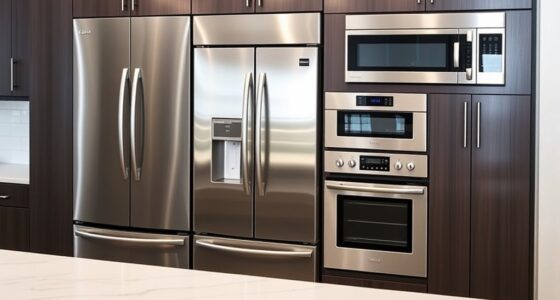
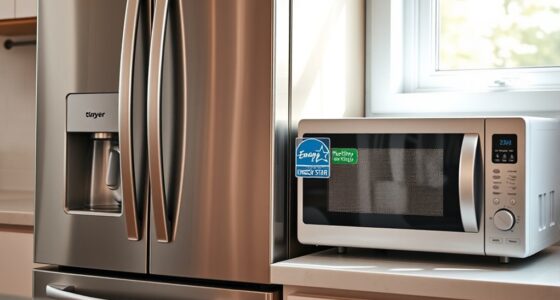
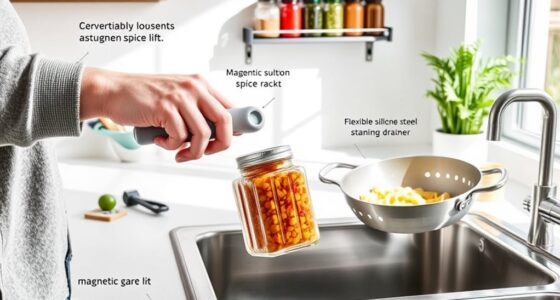
To make cooking easier and safer, choose appliances with simple controls, large handles, and non-slip bases. Look for models with automatic shut-off, cool-touch exteriors, and minimal parts for easy cleaning. Features like tactile buttons and clearly labeled options reduce confusion and effort. Ergonomic design and safety features support your independence in the kitchen. Keep in mind, selecting the right appliances can transform your experience—discover more options tailored to your needs as you continue exploring.
Key Takeaways
- Appliances with large, easy-to-grip handles and simple controls enhance ease of use for elderly or disabled cooks.
- Safety features like automatic shut-off and non-slip bases reduce risk and promote confidence in operation.
- Devices with intuitive, minimalistic control panels and tactile buttons simplify operation for limited dexterity.
- Removable, dishwasher-safe parts make cleaning straightforward, reducing maintenance effort.
- Selecting ergonomic, accessible appliances supports independence, safety, and comfortable meal preparation.

Cooking can be challenging for elderly or disabled individuals, especially when appliances are complicated or difficult to operate. That’s why choosing simple, user-friendly appliances is vital to make meal preparation safer and more manageable. One of the most important considerations is ergonomic design. Appliances with ergonomic features are built to accommodate limited strength, mobility, or dexterity, reducing strain and making tasks easier. For example, appliances with large, easy-to-grip handles or controls positioned within easy reach help you operate them comfortably without needing to bend or stretch excessively. A well-designed ergonomic layout minimizes the effort needed to use the appliance, which is essential for preventing fatigue or injury. When shopping for appliances, look for models that emphasize smooth, intuitive operation and consider those with adjustable components to suit your needs. Additionally, selecting appliances with proper air purifier maintenance features can ensure the air quality in your kitchen remains safe and healthy, especially if you have allergies or sensitivities. Safety features are equally vital. Appliances with built-in safety mechanisms reduce the risk of accidents, giving you peace of mind while cooking. Automatic shut-off functions are a prime example, turning off the device after a certain period to prevent overheating or fires. Non-slip feet or bases keep appliances stable on countertops or tables, preventing slips or accidental tipping. Some appliances also come with safety covers or lockable lids, which help prevent spills or burns. Easy-to-read control panels with large buttons or tactile feedback can make it simpler to operate appliances accurately, especially if you have visual impairments or limited dexterity. It’s also helpful to choose appliances with cool-touch exteriors or insulated handles, reducing the risk of burns if you accidentally touch hot surfaces. When considering these appliances, prioritize those that combine ergonomic design with essential safety features, because this pairing guarantees both ease of use and a safer cooking environment.
In addition to ergonomic design and safety features, look for appliances that are straightforward to clean and maintain. Simplicity in design often translates to fewer parts to worry about and easier cleaning, which is especially important if mobility is limited. Many appliances now feature minimalistic controls and removable parts that are dishwasher safe, saving time and effort. By carefully selecting appliances with these qualities, you create a kitchen environment that promotes independence and confidence. You’ll find it easier to prepare meals without the frustration of complex controls or unsafe conditions. With the right ergonomic and safety-focused appliances, cooking becomes a more accessible, enjoyable activity rather than a daunting chore.
Frequently Asked Questions
Are These Appliances Safe for Users With Limited Mobility?
Yes, these appliances are generally safe for users with limited mobility, but you should consider specific safety considerations. Look for features like easy-to-press buttons, lightweight design, and non-slip surfaces to reduce risks. confirm the appliances are stable and simple to operate to accommodate your mobility challenges. Always follow safety instructions and, if needed, seek advice from a healthcare professional to make sure the appliances meet your needs.
Can These Appliances Be Operated With One Hand?
Yes, many of these appliances are designed for one-handed operation thanks to their ergonomic design. You can easily operate them with just one hand, making cooking simpler and safer. Look for appliances with large, accessible buttons and easy-to-grip handles, which are specifically made for one-handed use. This guarantees you stay independent and comfortable while preparing meals, without the need for complicated or multi-step controls.
Do They Require Regular Maintenance or Special Cleaning?
Most of these appliances require minimal maintenance and regular cleaning to stay in good condition. You should clean them frequently, following the manufacturer’s instructions, to prevent buildup and ensure safety. Maintenance requirements are generally simple, like wiping surfaces or replacing batteries occasionally. By keeping up with cleaning frequency and basic upkeep, you’ll ensure the appliances work smoothly and last longer, making your cooking experience safer and more convenient.
Are There Any Safety Features to Prevent Accidents?
Think of these appliances as a safety net, catching you before accidents happen. They often include an emergency shutoff feature that cuts power instantly if needed, and a slip-resistant design to prevent falls. These safety features act like guardians, giving you peace of mind and helping you cook confidently. You can focus on your meal, knowing that your appliances are designed to protect you from common accidents.
Do These Appliances Come With User-Friendly Instructions?
Yes, these appliances come with clear instructions and user manuals to help you operate them easily. The manuals are designed to be straightforward, guiding you step-by-step through setup and use, so you can feel confident while cooking. Many brands also include quick-start guides or online tutorials, making it even simpler for you to understand the functions without hassle. This focus on user-friendly instructions guarantees a safer, more enjoyable experience in the kitchen.
Conclusion
Remember, simplicity is the ultimate sophistication. When choosing appliances, opt for those with easy-to-understand controls and minimal features. These devices can boost your independence and make cooking safer and more enjoyable. Don’t let complexity hold you back—sometimes, less is more. With the right tools, you’ll find cooking easier and more satisfying, proving that the simplest appliances truly are the best for elderly or disabled cooks. After all, a journey of a thousand miles begins with a single step.