
To child-proof your kitchen appliances, unplug small devices after use and store them out of kids’ reach. Install outlet covers and childproof plugs, ensuring they fit snugly and are maintained regularly. Secure heavy appliances with straps or brackets, and keep knives and sharp tools in high, locked cabinets. Use stove locks, keep liquids away from children, and add safety locks on cabinets and drawers. Want more tips? Keep exploring to create a safer kitchen environment for your little ones.
Key Takeaways
- Unplug small appliances after use and store them out of children’s reach.
- Install and regularly check childproof outlet covers and safety plugs.
- Secure heavy appliances with straps or brackets to prevent tipping.
- Keep knives and sharp objects in locked drawers or high cabinets.
- Use safety locks on cabinets and drawers containing cleaning supplies and hazardous items.
Unplug and Store Small Appliances Safely

To prevent accidents, it’s essential to unplug small appliances when they’re not in use. Proper appliance maintenance reduces the risk of electrical hazards and keeps your appliances functioning safely. Always disconnect devices like toasters, blenders, and coffee makers after use, and store them out of reach of children. Use safety signage or labels to remind family members to unplug appliances, especially in busy kitchens. Keeping cords tidy and secured prevents tripping and pulling hazards. Regularly inspect cords and plugs for damage, and replace any frayed or broken components. Additionally, understanding the safety features of appliances can help in choosing safe and effective options for your family. Ensuring that you are familiar with essential oil safety can help prevent misuse or accidental exposure in the kitchen environment. Incorporating child safety measures in your kitchen design can further enhance protection for young explorers. By maintaining a safe environment through proper unplugging and storage, you minimize the chance of electrical sparks or fires, ensuring your little ones stay safe while exploring the kitchen.
Use Outlet Covers and Childproof Plugs
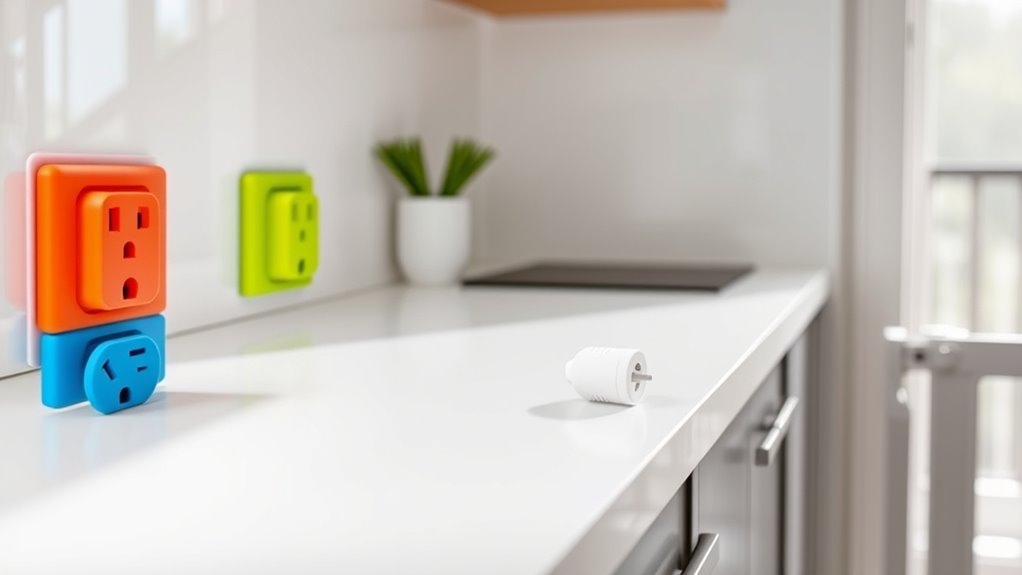
Choosing the right outlet covers and childproof plugs is essential to keep your kids safe. Make sure you install them properly and securely to prevent accidental removal. Regularly check and maintain these covers to guarantee they stay effective over time. Additionally, opting for outlet covers and plugs that meet safety standards can further reduce risks. Incorporating product recalls and safety notices can provide extra assurance of your safety measures. Using childproofing devices with proper certification enhances overall security and peace of mind. Being aware of child safety regulations can help ensure your home complies with recommended safety practices.
Choosing Appropriate Covers
Ensuring that your outlets are secure is an essential step in child-proofing your kitchen. Choosing the right appliance covers and safety barriers helps prevent curious kids from inserting objects or tampering with electrical outlets. Opt for outlet covers that fit snugly and are tamper-resistant to reduce the risk of accidental shocks. Childproof plugs are another effective option, blocking access and preventing power from flowing when outlets aren’t in use. When selecting covers, look for ones made from durable, non-toxic materials that are easy to remove when needed by adults. Properly chosen safety barriers not only keep children safe but also give you peace of mind, knowing that your electrical outlets are protected from tiny fingers and curious hands. Necessary cookies play a key role in ensuring that your website functions correctly, which is important when providing safety information to parents. Additionally, choosing covers with tamper-resistant features enhances security against children attempting to remove or dislodge them. Incorporating payment security measures, such as secure online payment platforms, can also help protect sensitive data when shopping for safety products online. To further safeguard your home, consider installing child-proof outlet covers that are designed to be both durable and easy for adults to access when necessary. For added protection, some parents opt for smart outlet covers that can be monitored remotely or automatically shut off when not in use.
Installing Properly and Securely
Properly installing outlet covers and childproof plugs is key to making your kitchen safer. Securely fitting these devices prevents little hands from accessing live outlets, reducing electrical hazards. To guarantee they stay in place, consider these steps:
- Choose high-quality covers that fit snugly and are tamper-resistant.
- Check installation regularly as part of your appliance maintenance routine.
- Ensure safety signage is visible nearby, reminding everyone to keep outlets covered.
- Replace worn or damaged covers immediately to maintain safety standards.
- Regularly inspecting your childproofing measures helps ensure ongoing safety and effectiveness. Additionally, understanding electricity safety can further reduce risks in your home.
- Being aware of tableware safety is also important, especially when children are around, to prevent accidents involving breakable or sharp items. Incorporating kitchen safety practices can also help create a safer environment for kids. It’s also beneficial to familiarize yourself with air purifier features to improve indoor air quality and reduce allergens that could affect children.
Regular Maintenance Checks
Regular maintenance checks are essential to keep your outlet covers and childproof plugs effective over time. By routinely inspecting these safety devices, you prevent wear and damage that could compromise their function. Regular checks help extend the appliance lifespan of your safety tools, ensuring they continue to protect your children. Establishing maintenance schedules, such as monthly inspections, allows you to catch issues early—like loose covers or cracked plugs—that need replacing. Don’t wait for visible damage; proactive maintenance keeps your kitchen safer. Remember, even the best childproofing measures require upkeep to remain effective. Consistent checks provide peace of mind, knowing your appliances and outlets stay secure as your kids explore the kitchen. Staying vigilant with maintenance is a simple step to sustain long-term safety. Incorporating inspection routines into your safety practices ensures ongoing protection for your family.
Secure Heavy Appliances to Prevent Tipping
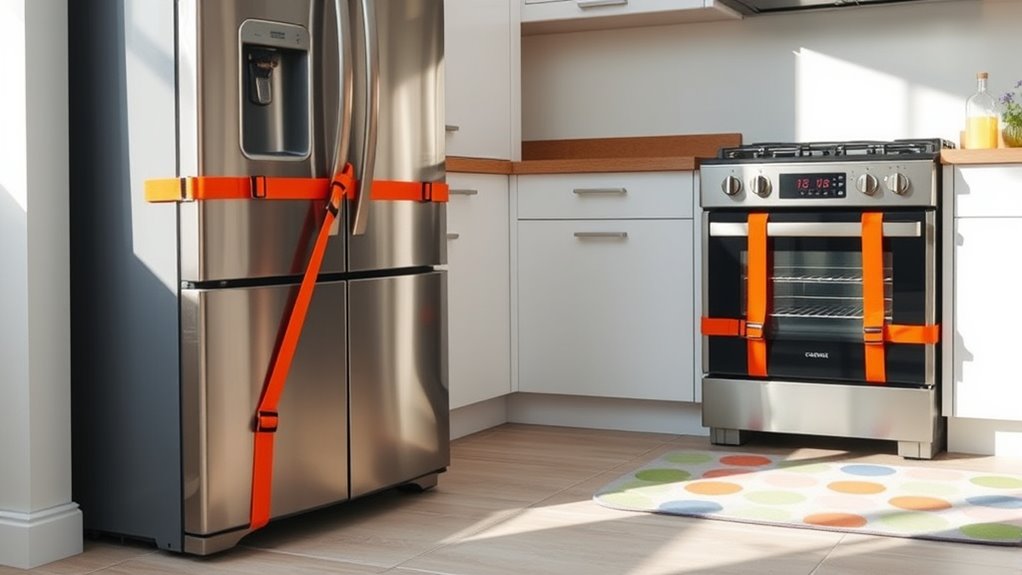
Heavy kitchen appliances like refrigerators, dishwashers, and microwaves can pose a tipping hazard, especially in homes with young children. To guarantee safety, you should implement stability measures that secure these appliances. Consider these steps:
- Use straps or brackets designed for appliance stability.
- Attach appliances to the wall or cabinets using appropriate mounting hardware.
- Check the appliance weight distribution to prevent top-heavy setups.
- Regularly tighten straps and brackets to maintain security.
- Be aware of child safety considerations when positioning and securing appliances to prevent accidents.
These measures help prevent tipping accidents caused by children pulling or climbing. Remember, the appliance weight and its distribution influence how stable it remains. By securing heavy appliances properly, you reduce the risk of injury and create a safer kitchen environment for your kids.
Keep Knives and Sharp Objects Out of Reach
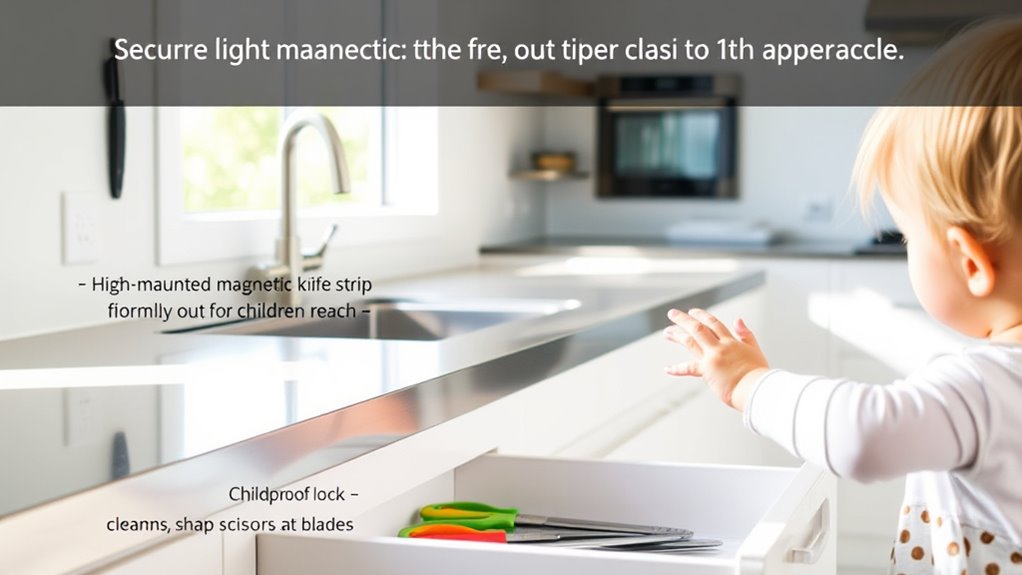
Since sharp objects like knives pose a significant safety risk, it’s essential to keep them out of children’s reach at all times. Practice proper knife safety by storing knives in a secure, designated sharp object storage area, such as a locked drawer or a high, child-proof cabinet. Avoid leaving knives unattended on countertops or in easily accessible spots. Use safety knives with protective covers when handling or cleaning, and always put knives away immediately after use. Regularly check your storage solutions to guarantee they remain secure and out of reach. By implementing these safety measures, you reduce the risk of accidental cuts and injuries, making your kitchen a safer space for little explorers.
Install Stove and Oven Locks
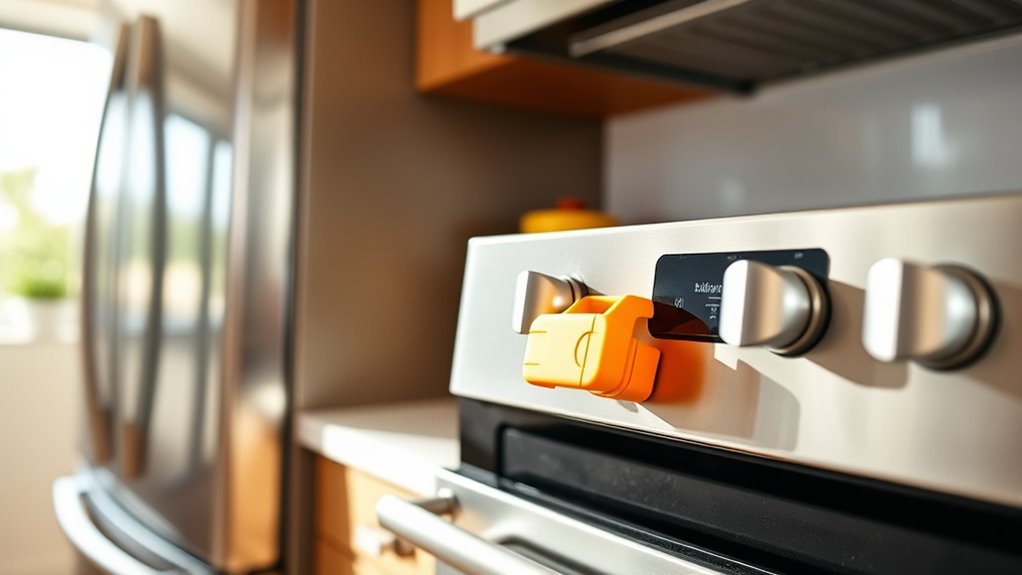
Have you ever considered how quickly curious little hands can reach into hot ovens or turn on stove burners? Installing stove and oven locks is essential for ensuring stove safety and oven protection. To maximize safety, consider these steps:
- Choose locks that fit your stove and oven models securely.
- Install locks on all oven doors to prevent accidental opening.
- Secure stove knobs with child-proof covers or locks.
- Regularly check locks for wear and proper function.
These simple measures help prevent burns and accidents, giving you peace of mind. Properly installed stove and oven locks are a vital part of child-proofing your kitchen, keeping your little ones safe from hot surfaces and potential hazards.
Cover and Secure Electrical Cords

Did you know that loose or exposed electrical cords can pose a serious tripping or electrical hazard for curious children? To improve electrical safety, it’s essential to cover and secure cords properly. Use cord covers or clips to keep cords neatly tucked away and prevent accidental pulling or tugging. Avoid leaving cords dangling where children can reach them, as this increases the risk of electric shock or injury. Good cord management reduces clutter and keeps your kitchen safer. Regularly inspect cords for damage or wear, replacing any frayed or exposed wiring. By taking these simple steps, you minimize hazards and create a safer environment for your kids, giving you peace of mind while they explore the kitchen.
Keep Liquids and Cleaning Supplies Away From Kids

Keeping liquids and cleaning supplies out of your child’s reach is essential to prevent accidental spills, ingestion, or poisoning. Liquids hazards can quickly lead to serious injuries or poisoning if kids swallow or come into contact with harmful chemicals. To child-proof your kitchen effectively, consider these tips:
- Store cleaning supplies in high, locked cabinets out of reach.
- Keep liquids like bleach, detergents, or vinegar in secure, labeled containers.
- Never leave cleaning supplies unattended on counters or near children.
- Use child-resistant caps on all bottles containing cleaning supplies or liquids hazards.
Use Child-Resistant Locks on Cabinets and Drawers

Choosing the right child-resistant lock is essential for keeping little ones safe in your kitchen. You should consider different lock types and how they fit your cabinets or drawers. Proper installation guarantees the locks work effectively and last longer.
Childproof Lock Types
Child-resistant locks are essential for preventing young children from accessing dangerous items in cabinets and drawers. There are various child lock mechanisms and safety latch types to suit your needs. Here are four popular options:
- Press-and-Release Locks: Simple to use for adults, but difficult for children to open.
- Magnetic Locks: Use a magnetic key to open, keeping cabinets secure.
- Slide Locks: Attach across doors or drawers, requiring a slide to open.
- Hook-and-Loop Locks: Stick-on locks that can be easily installed but are child-resistant.
Choosing the right safety latch type depends on your cabinet style and your child’s age. Always guarantee the lock mechanism is secure and difficult for children to bypass.
Proper Installation Tips
To guarantee your child-proof locks work effectively, it’s essential to install them correctly on cabinets and drawers. Proper installation ensures they stay secure during appliance maintenance and prevent accidental access to unsafe areas. Before attaching locks, clean surfaces thoroughly for a strong bond. Make sure locks are level and fit snugly without forcing. Check that the locks do not interfere with power outlet safety, especially near appliances with accessible outlets. Regularly inspect locks for wear and tear, replacing damaged ones promptly. Here’s a quick guide:
| Step | Tip |
|---|---|
| Clean surfaces | Use alcohol wipes for better adhesion |
| Align locks properly | Ensure they are straight and secure |
| Test lock functionality | Confirm they hold firmly without excessive force |
| Avoid interference | Keep locks away from power outlets |
| Routine checks | Inspect regularly for appliance maintenance safety |
Create a Safe Zone for Kids Away From Appliances
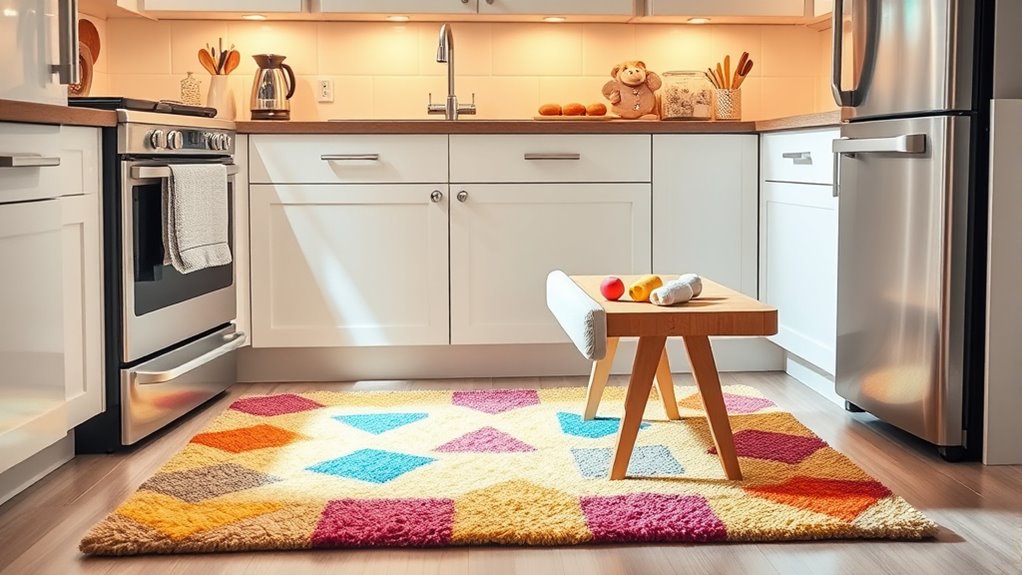
Creating a designated safe zone for kids away from appliances is essential for preventing accidents in the kitchen. Proper appliance placement helps keep dangerous items out of reach, but establishing a safe zone offers added protection. To do this effectively:
- Choose a corner or area in the kitchen for your child’s designated play area.
- Keep appliances away from this zone to minimize hazards.
- Use barriers or gates to create clear boundaries.
- Ensure toys and activities are within the safe zone to discourage wandering near dangerous appliances.
This setup helps your child understand where they can play safely. By creating a dedicated space and carefully arranging appliances, you reduce risks and help prevent accidents. Always supervise your kids in the kitchen for added safety.
Educate Children About Kitchen Safety
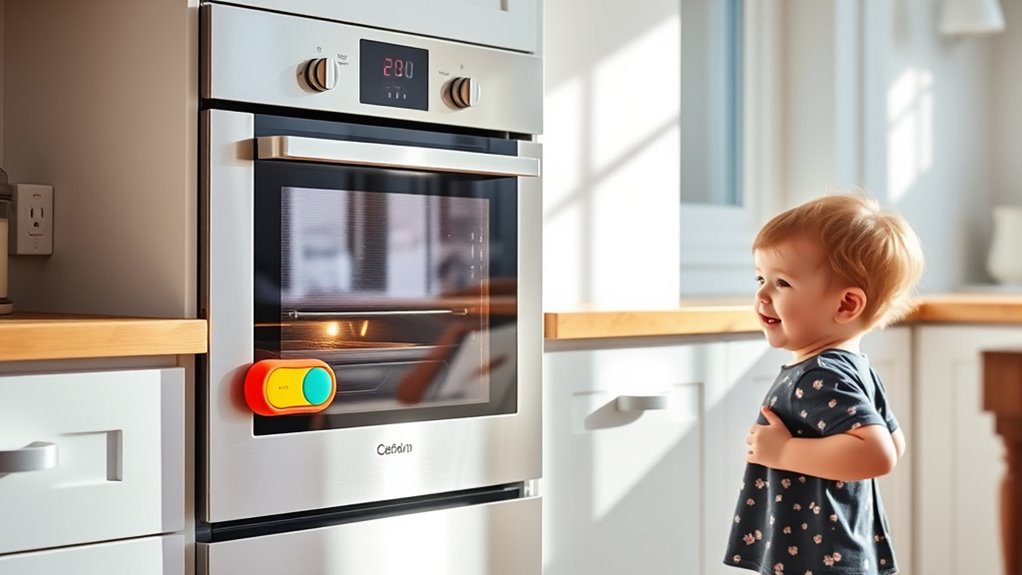
Have you ever wondered how to best teach your kids about kitchen safety? Educating children is key to preventing accidents. Start by explaining the importance of kitchen cleanliness, like washing hands before handling food and keeping surfaces tidy to avoid slips. Teach them about appliance maintenance, such as never touching hot appliances or unplugging cords without permission. Show them how different appliances work and discuss the dangers of misusing them. Use simple language and set clear rules, like staying away from stovetops and sharp tools. Reinforce these lessons regularly and lead by example—demonstrate proper safety habits yourself. When kids understand the risks and proper precautions, they’re more likely to stay safe and respect the appliances, making your kitchen a safer space for everyone.
Frequently Asked Questions
How Can I Prevent My Child From Turning on Appliances Accidentally?
You can prevent your child from turning on appliances accidentally by installing child safety locks on switches and knobs. Keep appliances unplugged when not in use, and consider using stove knob covers or guard rails. Always supervise your child in the kitchen and teach them about safety. These measures, combined with child safety products, help minimize risks and give you peace of mind, knowing your little one stays safe around appliances.
Are There Specific Safety Features I Should Look for in Appliances?
You should look for appliances with child safety features like safety locks, control lockouts, and automatic shut-offs. These features prevent kids from turning on or tampering with appliances accidentally. Check for appliances with recessed controls or protective covers, which add extra protection. Prioritize models that explicitly mention child safety, as they’re designed to minimize risks. Incorporating these features helps guarantee your child’s safety and peace of mind in the kitchen.
What Should I Do if My Child Gets Hurt by a Kitchen Appliance?
If your child gets hurt by a kitchen appliance, stay calm and gently evaluate the situation. Provide a prompt first aid response, like cleaning a small cut or applying ice for swelling. If the injury is serious or bleeding won’t stop, seek immediate medical attention. Keep your child comfortable and reassured while waiting for professional help, and always follow up with a healthcare provider to ensure proper recovery.
How Often Should I Check for Appliance Safety Hazards?
You should check for appliance safety hazards weekly, ensuring your appliances are in good condition. Regular appliance maintenance helps prevent potential risks, like frayed cords or loose parts. During hazard inspections, look for signs of damage or malfunction, and address issues immediately. Staying vigilant with routine checks keeps your kitchen safe for kids, reducing the chances of accidents. Consistent maintenance and hazard inspections are key to maintaining a secure environment.
Can Childproofing Affect Appliance Performance or Accessibility?
Childproofing might seem like it hampers appliance efficiency or accessibility, but it actually enhances safety without major drawbacks. You can still access appliances easily by choosing childproof locks and safety covers designed for convenience. These measures minimize accessibility challenges, ensuring your appliances remain functional while keeping your kids safe. Properly installed safety features protect your little ones without compromising appliance performance, giving you peace of mind in your kitchen.
Conclusion
So, congratulations! You’ve now turned your kitchen into a fortress of safety—because nothing says “fun” like a child-proofed paradise. Just remember, the real challenge is convincing your little explorer that the stove isn’t a shiny new toy or that the cleaning supplies aren’t a treasure trove. Keep up the good work, and soon enough, your kids will be safer than a secret agent’s vault—minus the spy gadgets, of course.