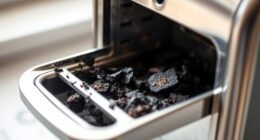
To clean burnt-on food without scratching, start by soaking your pan in warm water mixed with dish soap for at least 30 minutes. Then, sprinkle baking soda over the area, pour vinegar on top, and let fizz for 15-30 minutes. Gently scrub with a soft sponge or cloth, and for tougher spots, try a paste of baking soda and hydrogen peroxide. For natural options, lemon and salt work well. Continued tips can help you keep your cookware pristine.
Key Takeaways
- Soak pans in warm water with dish soap for at least 30 minutes to loosen burnt residue gently.
- Use a soft cloth or non-abrasive sponge to scrub affected areas in gentle, circular motions.
- Apply natural cleaners like baking soda and vinegar, letting fizzing action lift grime without scratching surfaces.
- Use lemon halves sprinkled with salt to scrub, combining acidity and abrasiveness safely.
- Avoid steel wool or abrasive pads; opt for gentle methods and proper cleaning techniques to protect cookware.
Soaking With Warm Water and Dish Soap
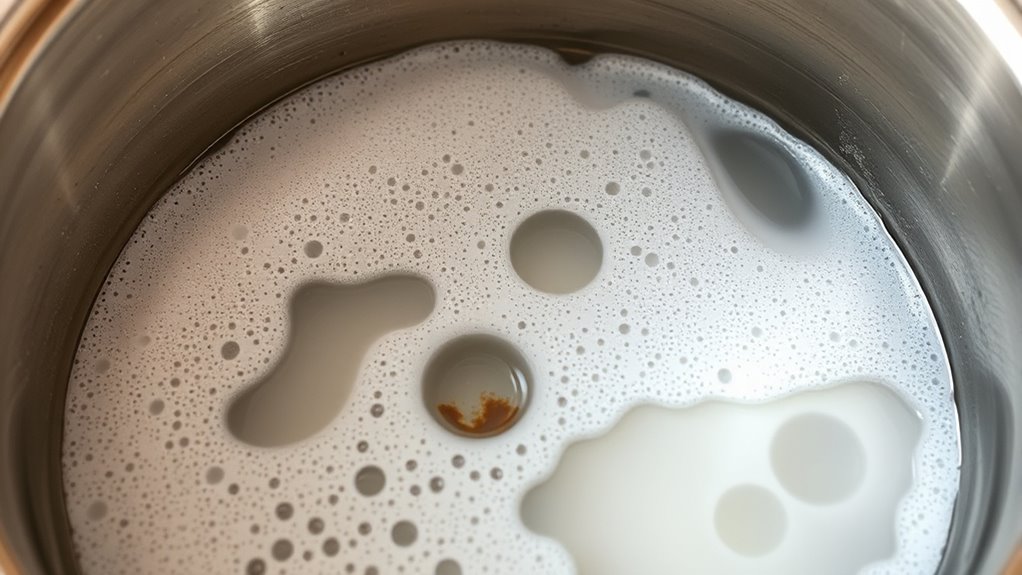
Before trying any harsh scrubbing methods, it’s best to start with soaking. Fill your burnt pan with warm water, enough to cover the affected area. Add a generous squirt of dish soap—preferably a grease-cutting variety—and let it sit for at least 30 minutes. The warm water helps loosen the burnt-on food, while the dish soap breaks down grease and residue. During this time, avoid using hot water, as it can cause the burnt bits to set further. After soaking, use a soft sponge or non-abrasive scrubber to gently lift away loosened food. This simple step often does the trick without scratching your cookware. Patience is key—giving the soap and warm water time to work makes the cleaning process much easier.
Using Baking Soda and Vinegar for Gentle Scrubbing
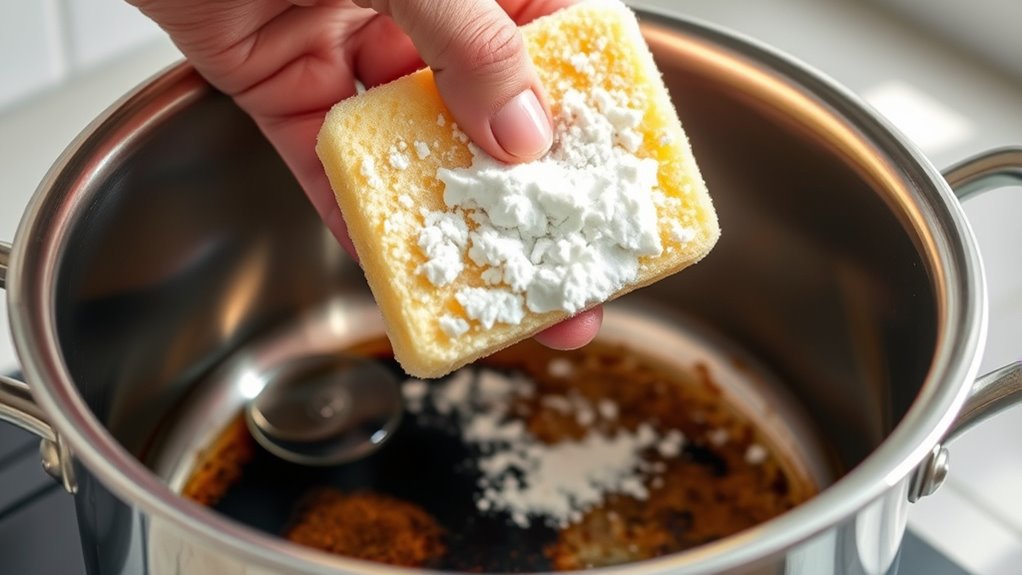
Using baking soda and vinegar is an effective and gentle way to tackle burnt-on food without harsh scrubbing. This natural cleaning method offers eco-friendly solutions that won’t damage your cookware’s surface. Start by sprinkling a generous layer of baking soda over the affected area, then pour in enough vinegar to cover it. You’ll see fizzing action that helps lift stubborn residue. Let the mixture sit for 15-30 minutes to loosen the grime. Use a soft sponge or cloth to gently scrub the surface, focusing on any remaining spots. This combination creates a mild, effective cleaning solution that’s safe for your pots and pans while being environmentally friendly. It’s an easy way to restore shine without scratching or harsh chemicals. Additionally, proper cookware maintenance can help prevent future build-up and make cleaning easier. Being aware of pinball machine weights can also be helpful when moving your cookware or appliances, ensuring safety and efficiency.
Employing Baking Soda and Hydrogen Peroxide Paste
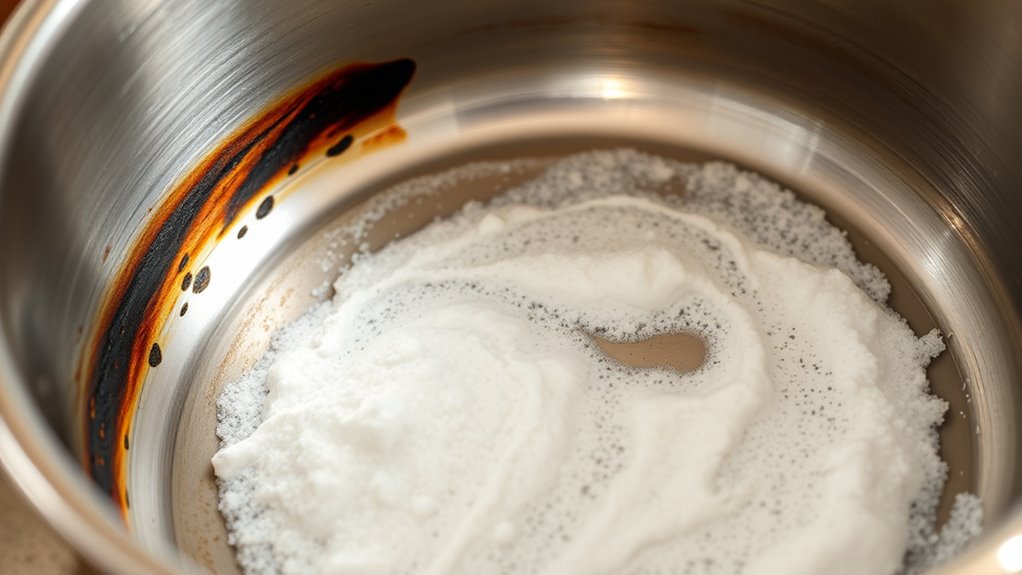
Applying a baking soda and hydrogen peroxide paste creates a powerful yet gentle way to remove burnt-on food from pots and pans. When combined, these ingredients trigger chemical reactions that loosen stubborn residues without scratching your cookware. Baking soda acts as a mild abrasive, while hydrogen peroxide serves as a natural oxidizer, breaking down charred particles. To guarantee cleaning safety, wear gloves and work in a well-ventilated area, as hydrogen peroxide can produce fumes. Spread the paste over the affected areas and let it sit for 15-20 minutes. The chemical reactions weaken the burnt-on food’s bonds, making it easier to scrub away with a soft sponge. This method offers an effective, non-abrasive cleaning option that preserves your pots and pans’ surface.
Applying Lemon and Salt for Natural Cleaning
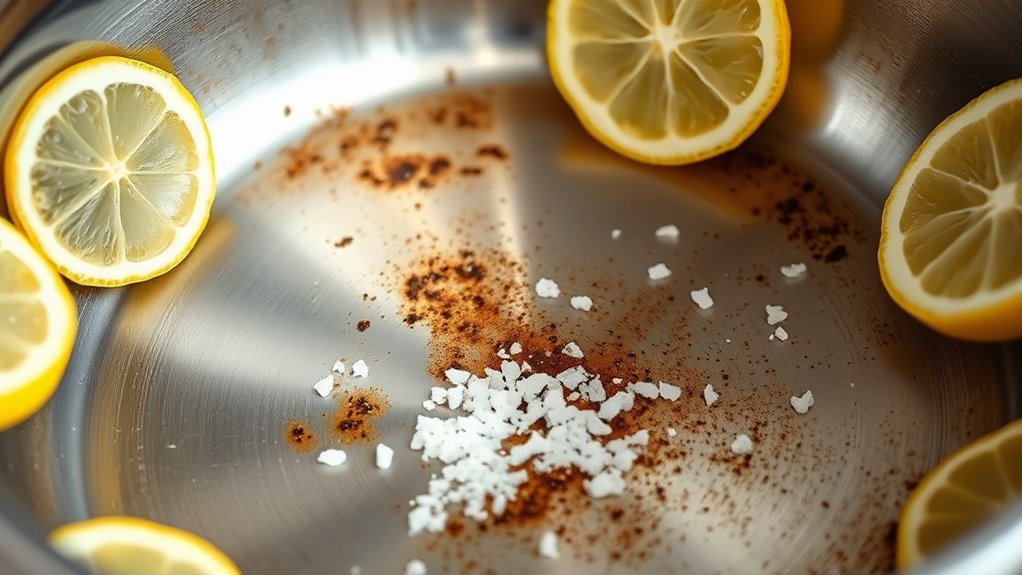
Lemon’s natural acidity helps break down burnt-on food, making cleaning easier. When combined with salt’s abrasive texture, you get a powerful, chemical-free scrub. Together, they effectively lift stubborn residues without damaging your cookware. Additionally, the antimicrobial properties of lemon may help in reducing bacteria and maintaining oral health. Using natural ingredients like lemon and salt can also be a sustainable alternative to harsh chemical cleaners, aligning with environmentally friendly practices. Incorporating eco-conscious cleaning methods is increasingly important as automation in industries continues to grow.
Lemon’s Natural Cleaning Power
You can harness lemon’s natural cleaning power by combining it with salt to tackle burnt-on food. Lemon’s cleaning power comes from its natural acidity, which breaks down tough residues without scratching your cookware. Plus, lemon acts as a natural deodorizer, eliminating lingering odors from burnt food. To use this method, cut a lemon in half and sprinkle salt onto the cut side. Scrub the affected areas with the lemon, allowing the acidity and abrasive salt to loosen and lift the burnt-on food. This simple, eco-friendly approach not only cleans effectively but also leaves your pots and pans smelling fresh. Using lemon’s natural properties is a gentle way to restore your cookware without harsh chemicals or scratching, making your cleaning routine safer and more sustainable. Additionally, contrast ratio plays a significant role in evaluating the effectiveness of your home cleaning environment by ensuring proper lighting conditions.
Salt’s Abrasive Action
Salt’s abrasive texture works in tandem with lemon’s acidity to effectively loosen burnt-on food. The key is salt’s abrasive action, which helps lift stubborn residue without scratching your cookware. Because salt has a relatively high mineral hardness, it can gently scrub away burnt-on bits without damaging the surface. When combined with lemon juice, the salt creates a natural scrub that breaks down stubborn deposits. To use, sprinkle a generous amount of salt over the affected area, then squeeze lemon juice on top. Let it sit for a few minutes to allow the acidity to soften the residue. Afterwards, use a soft cloth or sponge to scrub gently, leveraging the abrasive action of the salt to lift the burnt residue without harming your pots and pans. Additionally, ensuring proper surface preparation can enhance the effectiveness of this natural cleaning method.
Effective Burnt Food Removal
Applying lemon and salt together creates a natural and effective method for removing burnt-on food from your pots and pans. This approach is gentle on your cookware, making it ideal for maintaining stainless steel surfaces or non-stick coatings without scratching. To try this, sprinkle salt generously over the burnt area, then squeeze fresh lemon juice onto the salt. Let the mixture sit for a few minutes to loosen the residue. Use a soft cloth or sponge to scrub gently, focusing on the burnt spots. The acidity of lemon combined with the abrasiveness of salt helps lift stubborn food without damaging your cookware. This natural cleaning method preserves the integrity of your pots and pans while restoring their shine and cleanliness. Incorporating regular maintenance can also help prevent future buildup and keep your cookware in top condition, especially when combined with effective cleaning techniques for best results.
Utilizing Commercial Non-Abrasive Cleaners Safely

When using commercial non-abrasive cleaners, you need to follow safe application methods to protect your cookware. Choose gentle cleaners that are labeled for pots and pans, and always read the instructions carefully. This helps ensure effective cleaning without damaging your cookware or risking health hazards. Additionally, understanding best laundry detergents can help you select the safest and most effective cleaning products for your kitchenware. Being aware of kitchen cleaning safety measures can further prevent accidents and preserve your cookware’s finish. Maintaining proper product safety practices is essential to avoid harmful chemical exposure during cleaning.
Safe Application Methods
To guarantee you clean burnt-on food safely with commercial non-abrasive cleaners, it’s important to follow proper application techniques. First, read the product instructions carefully to avoid accidental abrasive cleaning that could scratch your pans. Always test a small area first to ensure it won’t cause metal scratching or damage. When applying, use a soft cloth or sponge instead of steel wool or abrasive pads. Let the cleaner sit for the recommended time to loosen burnt food without harsh scrubbing. Avoid aggressive scrubbing, which can cause scratches and damage the pan’s surface. Incorporating gentle techniques, such as using a soft cloth, can help prevent damage while effectively cleaning. Practicing mindful application methods aligns with proper cleaning techniques that protect your cookware. Additionally, understanding angel numbers and their meanings can inspire patience and a positive mindset during cleaning, encouraging you to approach the task with calm and care. Applying gentle cleaning methods not only preserves your cookware but also makes the process more efficient and less stressful. For best results, consider patience and consistency to gradually lift stubborn residues without damaging the surface. Use gentle, circular motions during cleaning — Apply the cleaner evenly across the affected area — Rinse thoroughly to remove any residue
Choosing Gentle Cleaners
Choosing the right gentle cleaner is essential for safely removing burnt-on food without damaging your pots and pans. Look for eco-friendly options that are designed to be non-abrasive, reducing the risk of scratches and surface damage. Chemical-free solutions, such as baking soda and vinegar, are effective and safe alternatives to harsh commercial cleaners. When selecting a commercial product, read labels carefully to ensure it’s labeled as non-abrasive and suitable for your cookware type. Always follow the manufacturer’s instructions for safe use. Using gentle, eco-friendly cleaners helps protect your cookware’s finish and the environment. These options offer a safe, effective way to tackle burnt-on food without resorting to aggressive scrubbing or damaging chemicals. Necessary cookies can help ensure the proper functioning of your browsing experience while you explore different cleaning methods. Incorporating proper cleaning techniques can further enhance your ability to maintain cookware without causing surface damage.
Preventing Burnt-On Food: Tips for Future Cooking
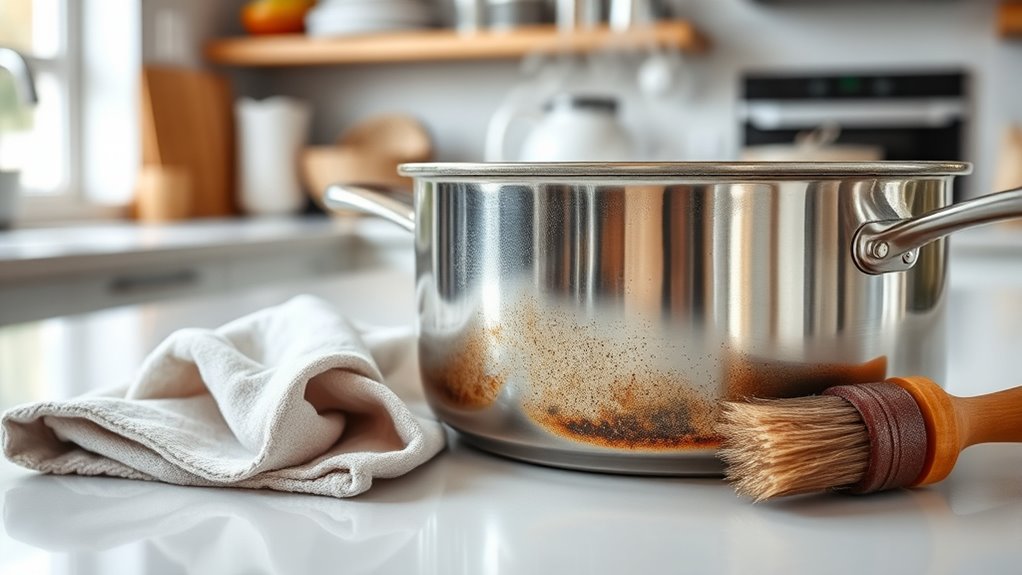
Preventing burnt-on food starts with paying close attention to your cooking process and using the right techniques. Stay mindful of heat levels, and avoid high temperatures that can cause food to stick and burn. Always monitor your pots and pans to prevent overheating, which is key for kitchen safety and cookware maintenance. Use enough liquid or oil to prevent food from sticking, and stir regularly to distribute heat evenly. Additionally, don’t leave cooking unattended for long periods. Properly maintaining your cookware, such as seasoning pans and cleaning them after use, helps prevent future issues. Remember, patience and attentiveness are your best tools for avoiding burnt-on food, saving you time and effort when it’s time to clean. Incorporating specialized planters into your kitchen or garden setup can also encourage better organization and maintenance of your cookware and tools, reducing clutter and making cleaning easier. Being aware of WWE Raw’s financial impact can remind cooks that paying close attention to details can lead to better results and efficiency.
Frequently Asked Questions
Can I Use a Metal Scrubber on Non-Stick Pans?
You shouldn’t use metal scrubbers on non-stick pans because they can damage the surface, risking non-stick safety. Metal scrubbers are too abrasive and may scratch or remove the coating, shortening the pan’s lifespan and compromising its non-stick properties. Instead, opt for softer cleaning tools like sponge or nylon scrubbers. Keeping non-stick surfaces intact guarantees safe cooking and extends your pan’s usability, protecting both your cookware and your health.
How Long Should I Soak Pots for Best Results?
You should soak your pots for at least 30 minutes, but for stubborn burnt-on food, up to 2 hours is even better—think of it as giving your pan a relaxing spa day! The ideal timing depends on how burnt-on the mess is. Longer soaks loosen grime faster, making cleaning way easier. Just don’t forget to check periodically; sometimes, a little patience turns even the worst stains into a quick wipe!
Are There Safe Natural Alternatives to Commercial Cleaners?
Yes, there are safe natural alternatives to commercial cleaners. You can try eco-friendly solutions like baking soda remedies, which effectively loosen burnt-on food without scratching your cookware. Make a paste with baking soda and water, then apply it to the affected areas. Let it sit for a while before gently scrubbing. These natural options are gentle on your pans and environmentally friendly, making them a smart choice for cleaning.
Will Vinegar Damage Stainless Steel Cookware?
Vinegar won’t damage your stainless steel cookware—unless you decide to bathe in it daily. Its acetic acid might cause minor vinegar corrosion if left on long-term, but generally, it’s safe and effective. Just don’t leave it soaking overnight, and you’ll preserve stainless steel safety. Think of vinegar as a gentle, natural cleaner that keeps your pots shiny without risking your investment. So, clean confidently—your stainless steel is safe!
How Often Should I Clean My Pots to Prevent Buildup?
You should clean your pots regularly to prevent buildup, ideally after each use or every few days depending on how often you cook. Stick to a consistent maintenance schedule and cleaning frequency to avoid stubborn stains and burnt-on food. This proactive approach keeps your cookware in top shape, reduces heavy scrubbing, and makes sure your pots stay hygienic and ready for your next meal.
Conclusion
So, next time you burn something, don’t despair—just remember these gentle tricks. It’s almost funny how a simple soak or a dash of baking soda can save your favorite pan without scratching it to pieces. Who knew that avoiding harsh scrubbing could actually make your cookware last longer? So, go ahead, embrace these natural solutions and keep your pots shiny—because, after all, who needs more scratches when you’ve got clever tricks up your sleeve?