
During a power outage, you can still eat well by relying on non-electric methods like camping stoves, grills, or solar cookers. Stock up on canned goods, dried foods, and ready-to-eat items so you’re prepared. Prepare meals that can be enjoyed cold, such as salads or sandwiches, and keep a manual can opener handy. Practice using outdoor cooking tools to expand your options. Keep these tips in mind to stay nourished until power is restored.
Key Takeaways
- Use non-electric methods like camping stoves, grills, or solar cookers for hot meal preparation.
- Stockpile non-perishable foods such as canned goods and dried foods for easy, no-electric cooking.
- Prepare cold meals like salads, sandwiches, and charcuterie boards that don’t require heating.
- Keep essential tools like manual can openers, utensils, and portable stoves readily accessible.
- Practice outdoor cooking techniques and recipes to ensure preparedness during power outages.

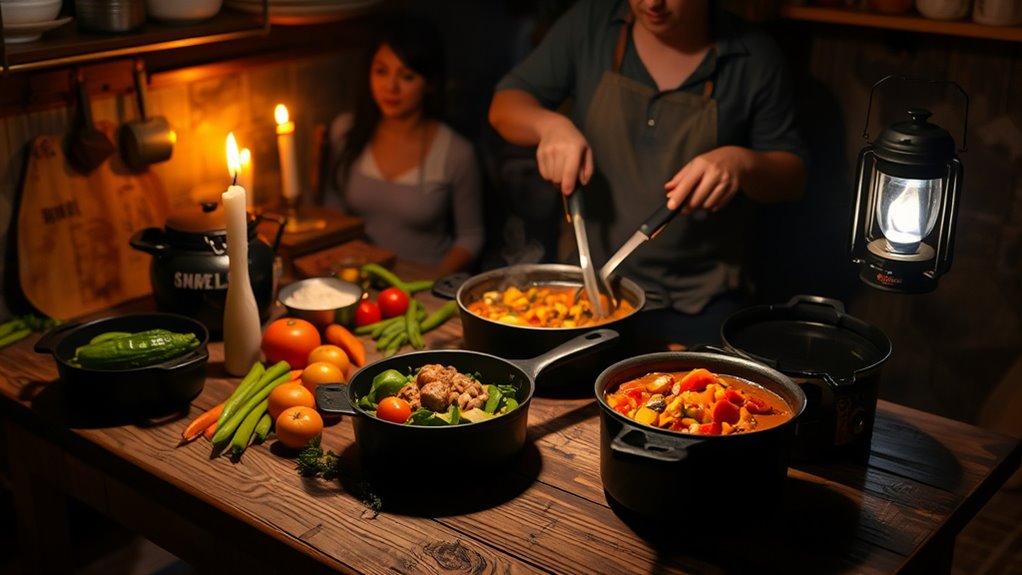
When the power goes out unexpectedly, it can disrupt your plans in the kitchen, but you can still prepare meals with some simple strategies. The key is to be prepared ahead of time by practicing emergency meal planning that focuses on non-electric cooking methods. Having a collection of recipes that don’t require electricity makes all the difference. Think about meals that can be cooked over a camp stove, on a grill, or even with a portable solar cooker. Stocking up on canned goods, dried foods, and other non-perishable items ensures you won’t run out of options when the lights go out.
Prepare for outages with non-electric recipes, canned goods, and alternative cooking methods like camping stoves or solar cookers.
Start by organizing a dedicated emergency kit with items like a manual can opener, portable stove, fuel, and utensils. This way, when the power fails, you won’t waste time searching for equipment. When cooking without electricity, your best bets are methods like open-flame grilling, using a camping stove, or utilizing a charcoal grill. These options allow you to prepare hot meals without relying on the grid. Keep in mind that some foods, like canned soups or stews, can be heated directly on a stove or grill, saving you time and effort. Also, consider preparing meals beforehand that can be eaten cold or at room temperature, such as salads, sandwiches, or charcuterie boards, especially if the outage is expected to last a while.
In addition to traditional non-electric methods, you might explore alternative cooking devices like solar ovens, which harness the sun’s power to cook foods during daylight hours. These devices are eco-friendly and require no electricity or fuel, making them ideal for prolonged outages. If you own a Dutch oven or cast-iron skillet, they’re incredibly versatile for outdoor cooking on a campfire or grill. Keep in mind that safety is paramount—never leave a lit stove or grill unattended, and ensure proper ventilation when cooking indoors or in enclosed spaces.
Planning ahead also means knowing how to adapt recipes. For example, dishes that typically require boiling or frying can often be prepared using cold or no-cook methods. Think about assembling salads, wraps, or cold pasta dishes that are filling and nutritious. Staying flexible with your meal options helps you avoid feeling limited or frustrated during an outage. Additionally, understanding the importance of projector technology can be useful if you want to stay entertained or informed during extended outages, as portable projectors can be used with battery power to display news, movies, or educational content in your home or outdoor space. Remember, the goal is to keep your family nourished and comfortable while making the most of non-electric cooking methods. With some preparation and a mindset ready for improvisation, you can manage mealtime smoothly—even when the power’s out.
Top picks for "cook power outage"
Open Amazon search results for this keyword.
As an affiliate, we earn on qualifying purchases.
Frequently Asked Questions
How Can I Keep My Perishable Foods Safe Without Electricity?
To keep your perishable foods safe without electricity, focus on food preservation techniques like using a cooler with ice packs or storing items in a shaded, cool place. Keep your emergency supplies stocked with non-perishable foods and a thermometer to monitor temperature. Avoid opening your fridge or freezer unnecessarily, as this maintains cold conditions longer. Properly stored, your perishable foods can last until power is restored, reducing waste and ensuring safety.
What Are the Best Portable Cooking Options for Power Outages?
You can use portable stoves or solar cookers as the best options during power outages. Portable stoves run on propane, butane, or charcoal, letting you cook meals safely outdoors. Solar cookers harness sunlight, making them eco-friendly and cost-effective. Both options enable you to prepare hot meals without electricity, helping you stay nourished. Just guarantee you have the necessary fuel or sunlight, and you’ll be able to cook comfortably during outages.
How Long Can I Store Cooked Food Without Refrigeration?
You can typically store cooked food without refrigeration for about two hours, but if the temperature exceeds 90°F, cut that time to just one hour. Proper food storage is essential to prevent spoilage and foodborne illness. After this window, bacteria can grow rapidly, making the food unsafe to eat. To stay safe, consume or cool leftovers quickly, and consider portable refrigeration options during extended outages.
Are There Any Safety Tips for Using Outdoor Grills Indoors?
Indoor grilling safety is vital; never use your outdoor grill inside your home. Always guarantee proper grill ventilation tips, like opening windows and using exhaust fans, to prevent carbon monoxide buildup. Keep a fire extinguisher nearby, and never leave the grill unattended. Regularly check for leaks if using gas, and make sure your grill is on a flat, stable surface. Following these safety tips keeps your indoor grilling enjoyable and hazard-free.
How Can I Prevent Foodborne Illnesses During a Power Outage?
In the blink of an eye, you’ll want to keep food safe during a power outage. To prevent foodborne illnesses, avoid opening the fridge or freezer unnecessarily, as this slows bacteria growth and minimizes food spoilage. Keep fridge doors closed, use coolers with ice for perishables, and cook items promptly if safe to do so. Stay vigilant—your health depends on it.
Conclusion
When the lights go out, remember that 94% of households experience a power outage at least once a year. By keeping essentials like non-perishable foods, a manual can opener, and portable cooking options handy, you can still enjoy warm meals without electricity. Staying prepared not only keeps your family safe but also turns a potential inconvenience into an opportunity to get creative in the kitchen. So, stay calm, plan ahead, and enjoy your cooking adventure even in the dark.