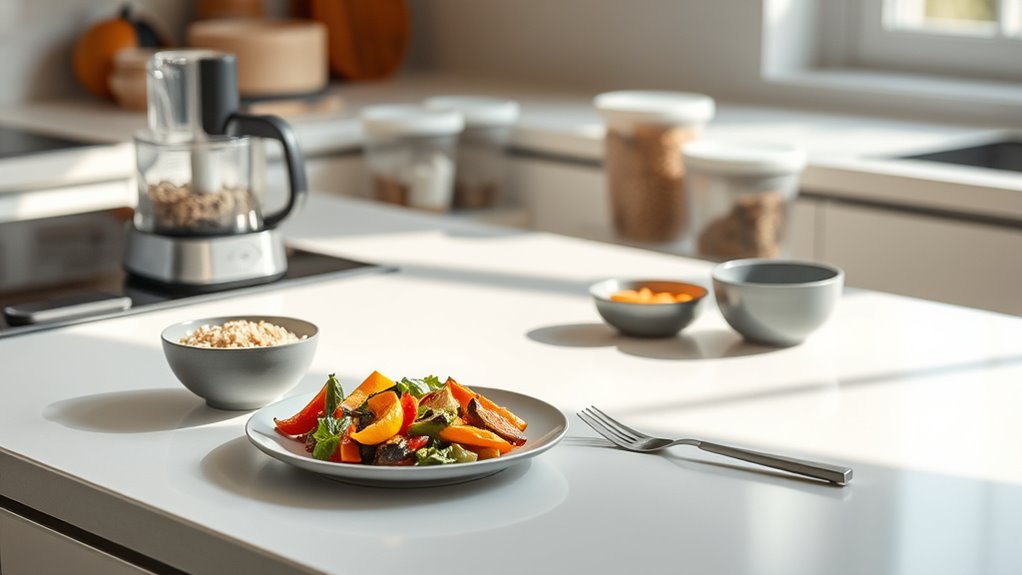
To avoid waste when cooking for one, focus on proper portion control using a kitchen scale and measuring cups to size ingredients accurately. Prepare only what you need and store leftovers in pre-portioned containers, labeling them for freshness. Use appliances like small batch cookware and storage containers that help you cook and keep exact amounts easily. Combining these tips ensures minimal waste and efficient meals, and if you keep exploring, you’ll find even more smart strategies to master single servings.
Key Takeaways
- Use a kitchen scale and measuring cups for precise ingredient and portion measurements.
- Prepare and cook small, manageable quantities to prevent excess leftovers.
- Immediately divide meals into pre-portioned containers for quick access and portion control.
- Store meals properly in labeled containers to maintain freshness and reduce waste.
- Utilize appliances like kitchen scales and storage containers to streamline portioning and minimize food waste.
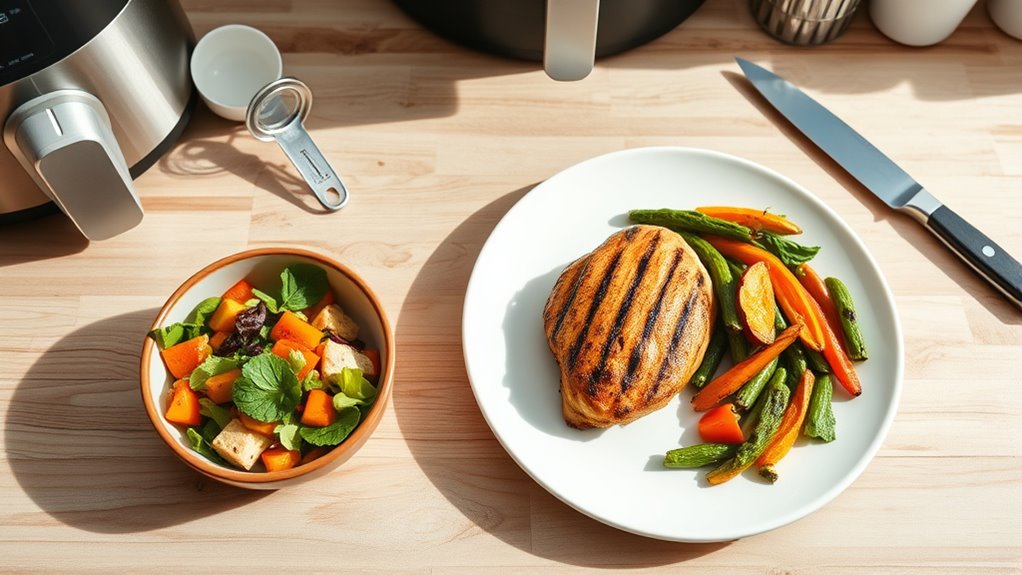
Portion control plays a vital role when cooking for one. It’s easy to overestimate how much food you need, leading to leftovers that might get forgotten or discarded. To avoid this, measure ingredients carefully and cook in smaller quantities. Using a kitchen scale or measuring cups can help you gauge portions accurately. When you serve your meals, consider dividing them into individual containers immediately. This not only helps with portion control but also makes it convenient to grab a pre-portioned meal during busy days. Plus, it reduces the temptation to mindlessly eat more than you need, supporting your health and budget. Incorporating proper storage techniques can further extend the freshness of your meals and prevent spoilage.
Frequently Asked Questions
How Can I Store Leftovers Safely for Future Meals?
You should store leftovers in airtight containers to keep food fresh and prevent contamination. Label the containers with dates to track freshness and use them within 3-4 days. Always refrigerate leftovers promptly to guarantee refrigeration safety, ideally within two hours of cooking. Keep your fridge at or below 40°F (4°C) and store leftovers on shelves, not in the door, to maintain a consistent temperature and avoid spoilage.
What Small Appliances Are Best for Cooking for One Person?
You should consider compact appliances like a small microwave, a single-serve coffee maker, or a mini slow cooker, which save space and are perfect for cooking for one. Space-saving tools like a compact blender or a mini toaster oven also work well. These appliances help you prepare meals efficiently without cluttering your kitchen. Investing in versatile, compact options makes cooking easier and helps you avoid waste by preparing just what you need.
How Do Portion Sizes Differ for Single Servings?
Think of a single serving as a delicate puzzle piece—just enough to satisfy without excess. Your portion sizes should be smaller, typically around 1 to 1.5 cups for grains or protein, ensuring you master portion control. Adjust recipes to fit one person, avoiding leftovers that turn into waste. This way, you delight in fresh, perfectly sized meals while keeping your kitchen tidy and waste-free.
Are There Meal Prep Tips Specific to Solo Cooking?
You can streamline your solo cooking with simple meal prep routines that focus on single serving recipes. Plan ahead by batch cooking ingredients and storing portions in individual containers, making it easy to grab a ready-made meal. Use versatile appliances like a small slow cooker or microwave to save time. This approach minimizes waste, saves money, and guarantees you always have a fresh, perfectly portioned meal at your fingertips.
How Can I Avoid Over-Purchasing Ingredients?
Think of ingredient shopping as steering a ship through calm waters—you want to stay on course. To avoid over-purchasing, plan your meals ahead and create a detailed shopping list. Keep your pantry organized so you see what you already have, preventing duplicate buys. Stick to your list, and buy only what you need for your recipes. This way, you minimize waste and keep your kitchen sailing smoothly.
Conclusion
Cooking for one might seem tricky, but with the right tips and appliances, you’ll waste less and enjoy more. Imagine opening your fridge to fresh ingredients and knowing each one will be used perfectly. Why settle for leftovers or spoiled produce when you can master simple, efficient cooking? Embrace these strategies, and soon you’ll see how easy it is to make every meal a satisfying, waste-free experience. Ready to turn your kitchen into a waste-not, want-not haven?