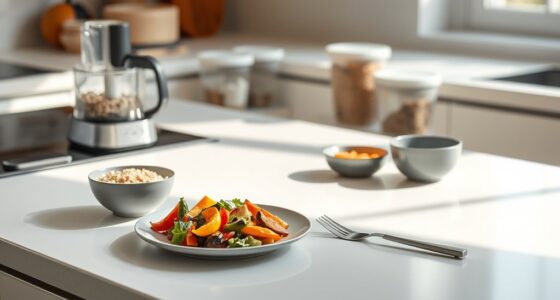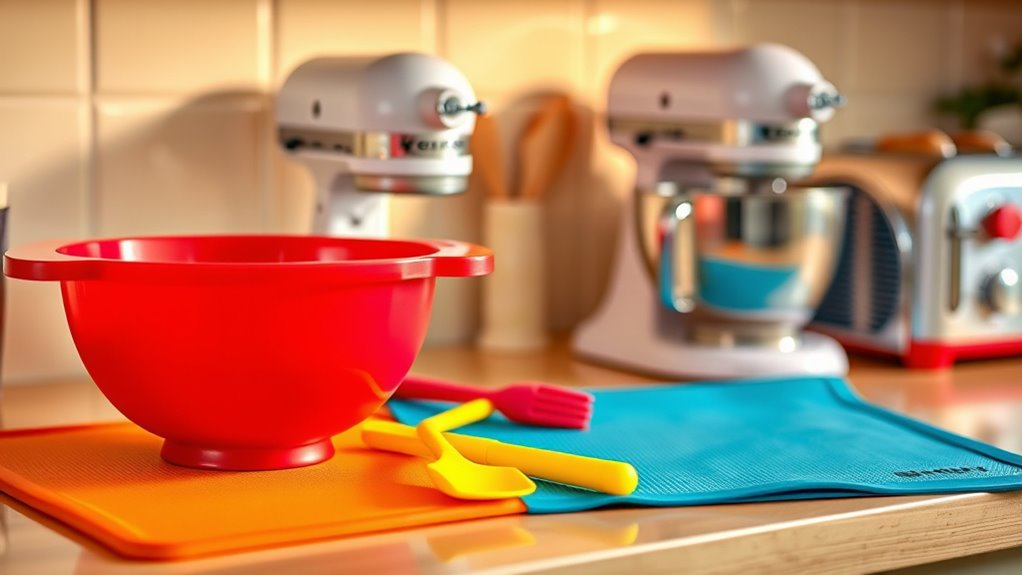

When choosing kid-friendly appliances and tools for safe cooking, look for lightweight, durable items made from non-toxic plastics or silicone. Use simple, clearly marked measuring tools, and supervise kids closely during activities. Select appliances with safety features like auto shut-off, non-slip bases, and rounded edges. Keep their workspace organized and teach responsible handling. If you explore further, you’ll discover even more ways to make cooking safe, educational, and fun for your kids.
Key Takeaways
- Choose durable, BPA-free plastic or silicone tools with non-toxic, rounded edges for safety.
- Use child-safe appliances with auto shut-off, non-slip bases, and easy-to-press buttons.
- Provide lightweight, color-coded measuring tools designed for small hands to promote safe handling.
- Supervise children during use and demonstrate proper handling of appliances and utensils.
- Maintain a clutter-free workspace, keeping sharp objects and hot surfaces out of reach to ensure safety.
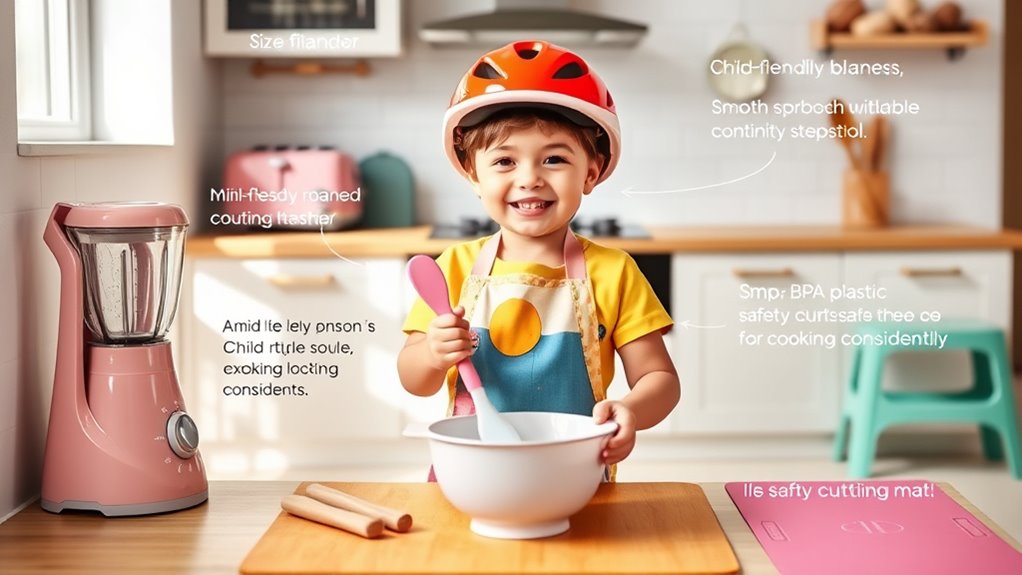
Have you ever wondered how to make cooking fun and safe for your kids? Introducing them to the kitchen can be a rewarding experience, but safety comes first. One of the easiest ways to do this is by choosing the right appliances and tools designed specifically for little hands and curious minds. When it comes to measuring ingredients, opt for kid-friendly measuring cups and spoons made from durable, non-toxic plastic or silicone. These are lightweight, easy to grip, and won’t cause injury if dropped. Teaching your kids to measure ingredients accurately not only helps them develop essential math skills but also keeps them safe by avoiding spills or overflows. Keep the measuring process simple and supervised, guiding them to level off ingredients with a flat edge or to fill cups carefully to prevent messes. Additionally, incorporating tools with clear markings or color-coded measurements can boost their confidence and understanding of the process.
Choose kid-friendly measuring cups and spoons to teach safety and math skills while making cooking fun and easy.
Setting timers is another vital aspect of safe cooking with children. Using a digital or visual timer designed for kids helps them understand time management and prevents overcooking or burning food. When you involve your kids in setting timers, you’re teaching responsibility and patience while ensuring safety in the kitchen. Choose timers that are easy to operate and have loud alarms or flashing lights to alert them when time’s up. Make it a fun, interactive activity—perhaps counting down together or setting the timer for a specific step in the recipe. This not only keeps the process engaging but also emphasizes the importance of timing in cooking.
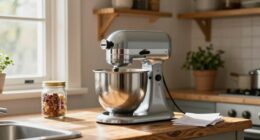
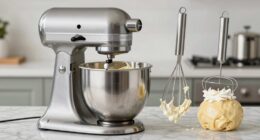
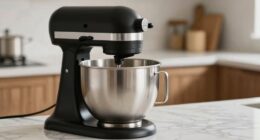
Alongside measuring ingredients and setting timers, consider using appliances that are specifically made for children. Look for kid-safe blenders, mixers, or food processors that have safety features such as auto shut-off, non-slip bases, and easy-to-press buttons. These appliances are designed to minimize risks and are often made with BPA-free plastics and rounded edges. Always supervise your kids when they use appliances, and demonstrate proper handling to prevent accidents.
Creating a safe cooking environment also means having a clutter-free workspace and ensuring that sharp objects, hot surfaces, and electrical cords are out of reach. When your kids are involved, it’s about combining safety with learning—teaching them to measure ingredients carefully, set timers confidently, and handle appliances responsibly. This approach makes cooking a fun and educational activity that builds their confidence and skills while keeping everyone safe.

C.R. Gibson Kids Games – Little Chef Kitchen Activity Set for Toddlers and Preschoolers, 9-Count, Measuring Spoons/Cups
MEASURING CUP AND SPOON SET FOR BEGINNERS Designed to introduce foundational kitchen measurement concepts
As an affiliate, we earn on qualifying purchases.
As an affiliate, we earn on qualifying purchases.
Frequently Asked Questions
What Safety Features Should I Look for in Kid-Friendly Kitchen Appliances?
When choosing kid-friendly kitchen appliances, look for safety features like child-proof locks to prevent accidental operation and automatic shut-off to avoid overheating or overuse. These features help protect your kids from potential hazards while they learn to cook. make certain appliances are easy for them to operate but still secure enough to keep them safe. Prioritizing these safety features gives you peace of mind as your children explore cooking.
Are There Specific Tools Designed for Small Children to Use Safely?
Think of child-friendly utensils as training wheels for your little chef—they make cooking safe and fun. Yes, there are specific tools designed for small children, like safe cutting tools with rounded edges and child-friendly utensils that are easy to handle. These tools help kids learn independence while minimizing risks. By choosing these specially made utensils, you create a safe kitchen environment where your kids can explore their culinary curiosity confidently.
How Can I Teach Kids About Kitchen Safety Effectively?
You can teach kids about kitchen safety effectively by actively supervising them and conducting safety demonstrations. Show them how to handle appliances carefully, emphasize the importance of knife safety, and explain hot surface dangers. Keep lessons simple, engaging, and age-appropriate. Reinforce rules consistently and encourage questions. Your supervision and clear safety demonstrations help kids understand risks and develop good habits, making cooking a fun and safe experience for everyone.
What Age Is Appropriate for Children to Start Using Simple Kitchen Tools?
You can start teaching kids about simple kitchen tools at age five. Research shows children as young as five can learn basic cooking skills safely. Use age-appropriate tools like plastic knives, beginner spatulas, and small whisks to build their confidence. Focus on cooking education tips that emphasize safety, supervision, and step-by-step guidance. This early exposure helps develop their skills and encourages healthy eating habits in a fun, safe environment.
How Do I Prevent Accidents When Kids Are Cooking With Appliances?
You prevent accidents by always supervising your children closely when they’re using appliances. Teach them safety rules and proper handling from the start, emphasizing the importance of not touching hot surfaces or sharp objects. Make sure appliances are unplugged when not in use and keep cords out of reach. Consistent child supervision combined with safety education helps your kids understand risks, reducing the chance of accidents during cooking activities.

HIPPIH Visual Timer for Kids – 60 Minute Pomodoro Timers for Classroom Kitchen Office, Countdown Kids Timer Clock with Rainbow Disk, Desk Time Management Tool for Toddler with Silent Operation, Blue
【Lively Rainbow Pomodoro Timer】Our visual timer boasts a rainbow pattern to capture kids' attention. Ease their reluctance and…
As an affiliate, we earn on qualifying purchases.
As an affiliate, we earn on qualifying purchases.
Conclusion
As you guide your kids through cooking, you’re handing them a tiny torch to light their future passions. Each safe tool becomes a stepping stone, symbolizing trust and learning. With every meal prepared together, you’re nurturing independence and confidence—seeds that will grow into a lifelong love for the kitchen. Remember, you’re not just making food; you’re shaping their journey, one safe and joyful step at a time.

Constructive Playthings Play Kitchen Appliances, Kids Blender and Mixer Toy, Realistic Designs, Developmental Toddler Toys, Ages 3 Years and Up
CONSTRUCTIVE PLAYTHINGS PLAY KITCHEN APPLIANCES: Enjoy hours of fun with this toy blender and toy mixer set that…
As an affiliate, we earn on qualifying purchases.
As an affiliate, we earn on qualifying purchases.
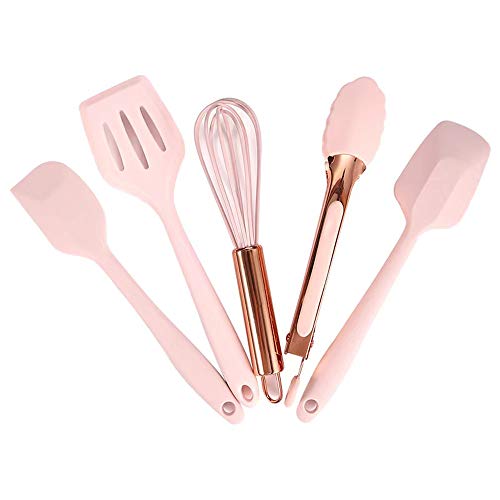
Collfa Rose Gold And Pink Kitchen Utensil Small Five-Piece Set Mini Silicone Kids Kitchen Tools Whisk Spatula Tongs Spoon And Slotted Spatula(Kids Baking Supplies)
〖Mini kids kitchen tool set〗: This small and mini kids kitchen tool, with beautiful colors and exquisite workmanship,…
As an affiliate, we earn on qualifying purchases.
As an affiliate, we earn on qualifying purchases.