To optimize your kitchen layout for efficiency, place appliances strategically within workflow zones like prep, cooking, cleaning, and storage. Keep your refrigerator near your prep area, and position the stove close to both the fridge and prep space for seamless ingredient transfer. Place small appliances on dedicated countertops near outlets to avoid clutter, and guarantee heavy appliances are stable. Proper placement reduces unnecessary movement and makes your kitchen safer and more functional—exploring these tips further can make all the difference.
Key Takeaways
- Place the refrigerator near the prep area for quick ingredient access and seamless workflow.
- Position the stove and oven close to the prep station to facilitate easy transfer of ingredients during cooking.
- Arrange small appliances on dedicated countertops near outlets, keeping main workspaces clutter-free.
- Locate the sink, stove, and refrigerator to form an efficient work triangle, minimizing movement and fatigue.
- Ensure heavy appliances are stable, cords are tidy, and frequently used items are at comfortable heights for safety and convenience.
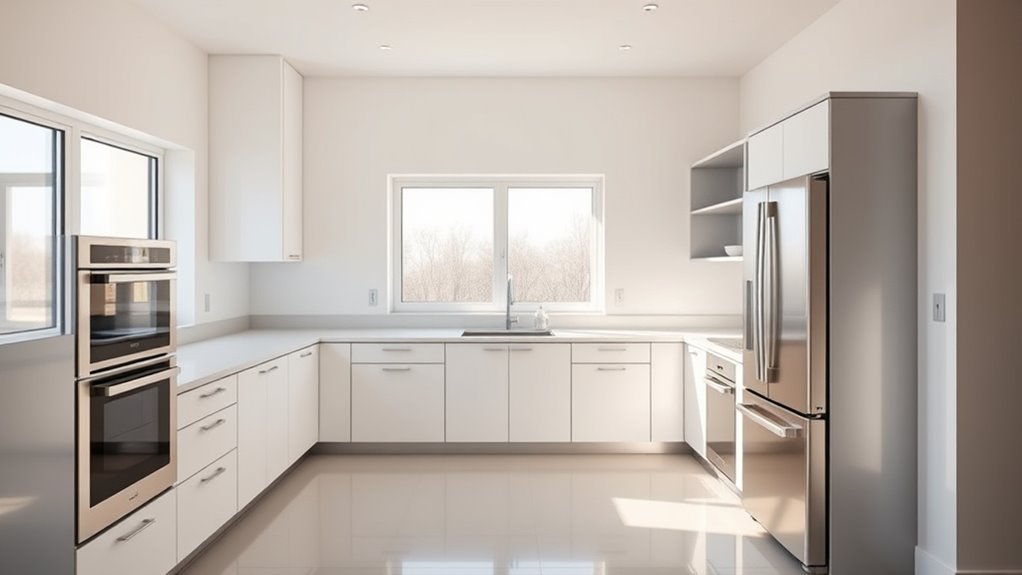
Have you ever wondered how a well-designed kitchen can transform your cooking experience? One of the key factors is proper appliance placement, which directly impacts how smoothly your workflow zones operate. When you set up your kitchen thoughtfully, you create a space where everything you need is within easy reach, making meal prep and cleanup more efficient. The goal is to minimize unnecessary movement and avoid clutter, so your kitchen feels intuitive rather than chaotic.
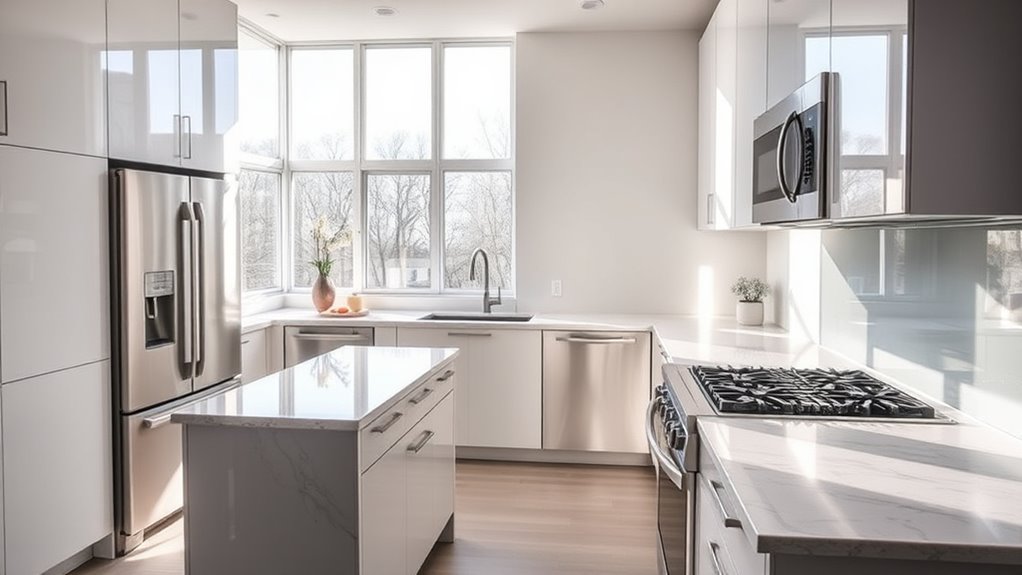
Start by understanding the concept of workflow zones. These zones divide your kitchen into areas dedicated to specific tasks, such as food prep, cooking, cleaning, and storage. Placing appliances strategically within these zones helps streamline your activities. For example, your refrigerator should be near your prep area, so grabbing ingredients doesn’t require long walks across the kitchen. Similarly, your stove and oven should be close to your prep station, allowing you to transfer ingredients seamlessly from chopping board to heat source. When appliances are positioned thoughtfully, you reduce back-and-forth trips, which saves you time and energy during busy cooking sessions.
Next, consider the main work triangle, which connects your sink, stove, and refrigerator. This classic concept emphasizes that these three points should form a triangle with comfortable distances between them. Proper appliance placement within this triangle ensures you can move efficiently between tasks. For instance, placing the microwave near the prep area or close to the refrigerator lets you reheat leftovers or quickly access ingredients without interrupting your workflow. Likewise, a dishwasher nearby your sink simplifies cleanup, keeping dirty dishes out of sight but within easy reach.
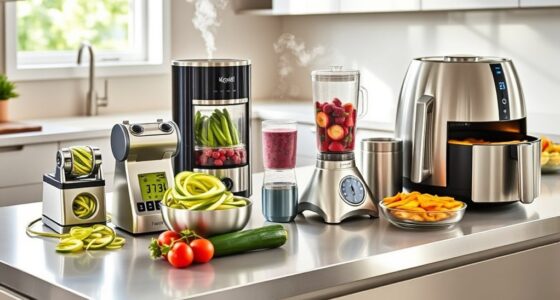
It’s also important to think about the placement of smaller appliances, like blenders, toasters, and coffee makers. Keep these on dedicated countertops close to your prep zone or near outlets for quick access. Avoid cluttering your main workspace with too many appliances, which can disrupt your workflow zones and cause unnecessary congestion. Instead, designate specific spots for these appliances, so they’re accessible but don’t interfere with your primary cooking activities.
Finally, remember that appliance placement isn’t just about convenience; it’s about safety and cleanliness too. Ensure heavy appliances are stable and that cords aren’t tangled or stretched across walkways. Position frequently used appliances at a comfortable height to prevent strain. When you thoughtfully arrange your appliances within your workflow zones, you create a kitchen that’s not only efficient but also safe and enjoyable to work in. Incorporating innovative European cloud servers into your planning can also inspire smarter, more connected kitchen technology. With a little planning, your kitchen becomes a well-oiled space that supports your culinary creativity and helps you cook with ease.
Frequently Asked Questions
How Can I Incorporate Ergonomic Principles Into Appliance Placement?
You can incorporate ergonomic principles by placing appliances at your counter height, reducing strain during use. Arrange frequently used items within your reach zones—about arm’s length—so you don’t have to stretch or bend excessively. Make sure heavy appliances are easy to lift and access, and keep everything within a comfortable work triangle. This setup minimizes fatigue and maximizes efficiency, making your kitchen safer and more comfortable to work in.
What Are the Best Lighting Options for Appliance Areas?
Lighting in your appliance areas should be as clear as a sunny day. You’ll want to combine task lighting, like under-cabinet lights, to illuminate work surfaces, with ambient lighting to create a warm, inviting atmosphere. This layered approach guarantees you see everything distinctly without shadows or glare, making cooking safer and more enjoyable. Proper lighting not only boosts efficiency but also transforms your kitchen into a space you love to spend time in.
How Do I Budget for Appliance Upgrades in My Kitchen?
To budget for appliance upgrades, start with budget planning by listing essential appliances and researching their costs. Consider appliance financing options to spread out payments and make upgrades more manageable. Set aside a specific savings goal each month, and prioritize high-impact upgrades first. Keep track of your expenses, compare prices, and look for deals or rebates. This proactive approach guarantees you stay within your budget while upgrading your kitchen efficiently.
What Are Eco-Friendly Appliance Placement Strategies?
You should place eco-friendly appliances near renewable energy sources like solar panels to maximize energy efficiency. Position composting solutions conveniently in your kitchen, such as near the sink or prep area, to encourage waste reduction. Keep energy-intensive appliances close to outlets powered by renewable energy and guarantee proper ventilation. This setup minimizes energy use, supports sustainability, and makes eco-friendly practices more accessible in your daily routine.
How Can Smart Technology Improve Kitchen Workflow?
Imagine a smart kitchen transforming your daily routine. With seamless appliance integration, you can control everything at your fingertips—lights, ovens, refrigerators—all working in harmony. This technology streamlines your workflow, reduces clutter, and saves time. Smart appliances anticipate your needs, suggesting recipes or adjusting temperatures automatically. You’ll experience a more efficient, intuitive kitchen where innovation meets convenience, making your cooking and cleaning smoother than ever before.
Conclusion
By thoughtfully arranging your appliances, you can boost your kitchen’s efficiency and enjoy cooking more. Remember, the average home cook spends about 2 hours a week searching for lost utensils or appliances—imagine saving that time with a smarter layout. Prioritize your most-used items near your prep and cooking zones to streamline your workflow. A well-organized kitchen not only saves you time but also makes cooking more enjoyable and stress-free.