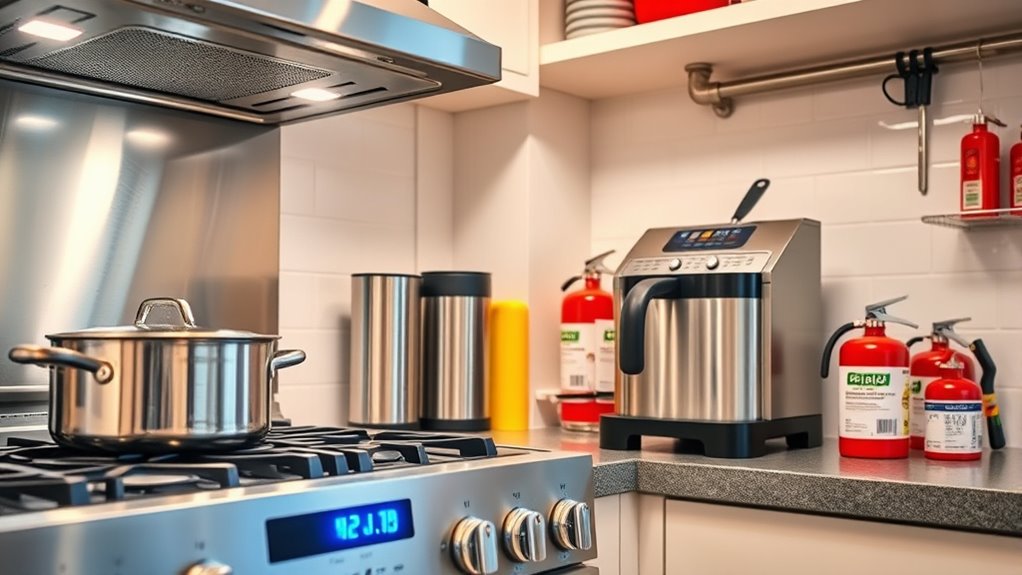
To prevent kitchen fires, stay vigilant when using ovens, stoves, and fryers. Never leave cooking unattended, keep flammable items away from heat sources, and turn off appliances immediately after use. Use back burners and avoid overfilling fryers with oil. Regularly clean grease buildup to prevent fires, and make certain your fire extinguisher and smoke alarms are functioning properly nearby. Continuing this guide, you’ll discover more practical safety tips to protect your home and loved ones.
Key Takeaways
- Never leave cooking unattended, especially when using the stove, oven, or fryer.
- Keep flammable items away from heat sources and clean grease buildup regularly.
- Use back burners and turn off burners immediately after cooking.
- Monitor oil temperature and avoid overfilling fryers to prevent splatters and fires.
- Install and test smoke alarms regularly; keep a fire extinguisher nearby and know how to use it.
Cooking is one of the most common causes of household fires, but many accidents can be prevented with simple safety measures. When you’re in the kitchen, staying vigilant and prepared can save your home and lives. One of the first steps is making sure your fire extinguisher maintenance is up to date. Regularly check that your extinguisher is fully charged and accessible, ideally mounted in a convenient spot near the kitchen but away from the stove or oven to prevent accidental discharge. Knowing how to operate it quickly can make all the difference if a fire starts.
Another essential safety measure is smoke alarm placement. Position smoke alarms on every level of your home, especially near the kitchen, but avoid installing them directly above the stove or oven, as steam and cooking smoke can cause false alarms. Proper placement guarantees you’re alerted promptly without unnecessary nuisance triggers. Test your smoke alarms monthly and replace batteries at least once a year. This simple step creates an early warning system that can give you precious seconds to react in case of a fire.
Place smoke alarms on every home level, avoid stove placement, and test monthly for early fire alerts.
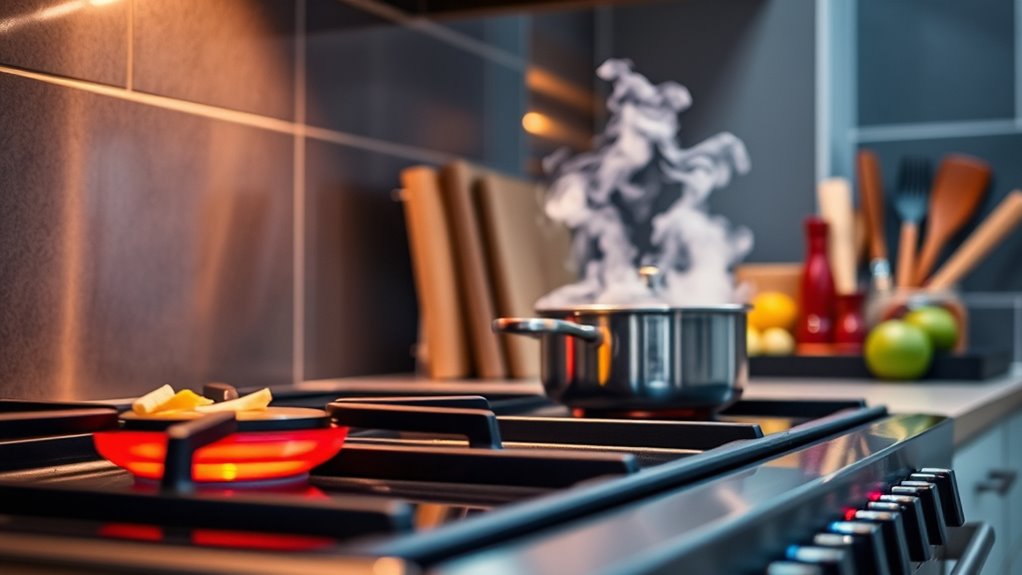
While cooking, never leave your stove or oven unattended, especially when frying or boiling. An unattended pan can quickly overheat and ignite. Keep flammable items like dish towels, paper towels, and wooden utensils away from heat sources. Use the back burners when possible, and turn off burners immediately after cooking, even if you plan to return shortly. When using fryers, never overfill them with oil, as splatters and fires are common with excess oil. Always use a thermometer to monitor oil temperature and keep a lid nearby to smother grease fires if they occur.
In addition to these precautions, stay organized. Keep a clear workspace and avoid clutter around your cooking area. Regularly clean grease and food buildup from stovetops, oven interiors, and exhaust hoods, as grease fires are a serious hazard. If a fire does start, remember that water can make grease fires worse, so never attempt to extinguish them with water. Instead, use a fire extinguisher suitable for kitchen fires, or smother the flames with a metal lid or baking soda.
Frequently Asked Questions
How Often Should I Clean My Oven to Prevent Fires?
You should clean your oven at least once a month to maintain proper oven maintenance and prevent fires. If you cook frequently or notice spills and grease buildup, consider a more frequent cleaning schedule, like every two weeks. Regularly removing crumbs and grease reduces fire hazards and keeps your oven running efficiently. Use oven-safe cleaning products and wipe down surfaces thoroughly to guarantee safety and ideal performance.
What Are the Best Fire Extinguishers for Kitchen Fires?
You should choose a fire extinguisher specially designed for kitchen fires, like a Class K extinguisher, because it targets grease and oil fires effectively. Look for extinguishers with safety features like easy-to-read gauges and ergonomic handles. Multi-purpose ABC extinguishers also work well, as they handle various fires, including electrical and paper. Ensuring you have the right type and safety features helps you respond quickly and safely during an emergency.
Can Using a Microwave Cause Kitchen Fires?
Using a microwave can cause kitchen fires if you neglect microwave safety and appliance maintenance. Avoid overheating or microwaving metal, which sparks fires. Always keep the microwave clean and check for damage regularly. Stay attentive to your microwave’s operation, and don’t leave it unattended while in use. Proper microwave safety and routine appliance maintenance markedly reduce fire risk, keeping your kitchen safe.
How to Safely Dispose of Used Cooking Oil?
Think of used cooking oil as a treasure that shouldn’t be wasted or misused. To dispose of it safely, avoid pouring it down the drain, as it clogs pipes and harms the environment. Instead, opt for oil recycling programs or proper disposal methods like sealed containers in the trash. This way, you protect your plumbing and support eco-friendly practices, turning waste into a responsible act.
Are Smart Stove Alarms Effective in Fire Prevention?
Yes, smart stove alarms are effective in fire prevention. They act as advanced safety technology, alerting you instantly if there’s excessive heat, smoke, or if you leave the stove unattended. By integrating smart alarm systems into your kitchen, you enhance safety and reduce fire risks. These alarms provide peace of mind, especially when you’re busy or away, ensuring you respond quickly and prevent potential kitchen fires.
Conclusion
Remember, an ounce of prevention is worth a pound of cure. By staying attentive and following these safety tips, you can keep your kitchen safe and enjoyable. Always stay alert when cooking, never leave appliances unattended, and keep flammable items away from heat sources. With these simple precautions, you’ll turn your kitchen into a secure space where good food and good memories can flourish. Stay cautious, and cook with confidence!