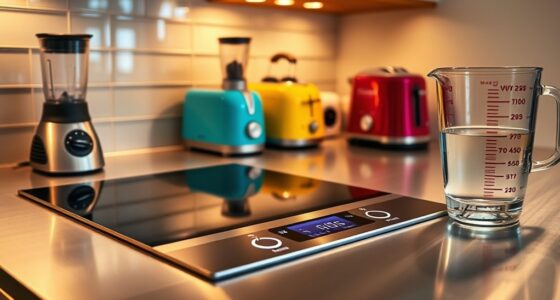
To sanitize your kitchen tools and appliances effectively, start by washing them thoroughly with warm water and dish soap to remove debris and grease. For non-porous items like knives and metal utensils, boil them or run through a dishwasher with a high-temperature cycle. For plastic or heat-sensitive tools, wipe them with alcohol-based disinfectants, ensuring the sanitizer evaporates completely. Incorporating these steps will help prevent illness—continue exploring for detailed methods tailored to each item.

Get kitchen staples and gadgets delivered free — and shop member deals
- Fast, free delivery on millions of items
- Access to Prime Big Deal Days deals on October 6–7
- Prime Video, Amazon Music and more included
Key Takeaways
- Wash all tools with warm water and dish soap to remove debris and grease before sanitizing.
- Use boiling water or a dishwasher’s sanitized cycle for heat-resistant metal tools and utensils.
- Wipe plastic and heat-sensitive items with alcohol-based disinfectant wipes or 70% isopropyl alcohol.
- Apply chemical sterilization solutions following manufacturer instructions for thorough sanitation.
- Ensure tools are completely dry before storage and establish a regular cleaning schedule to prevent contamination.
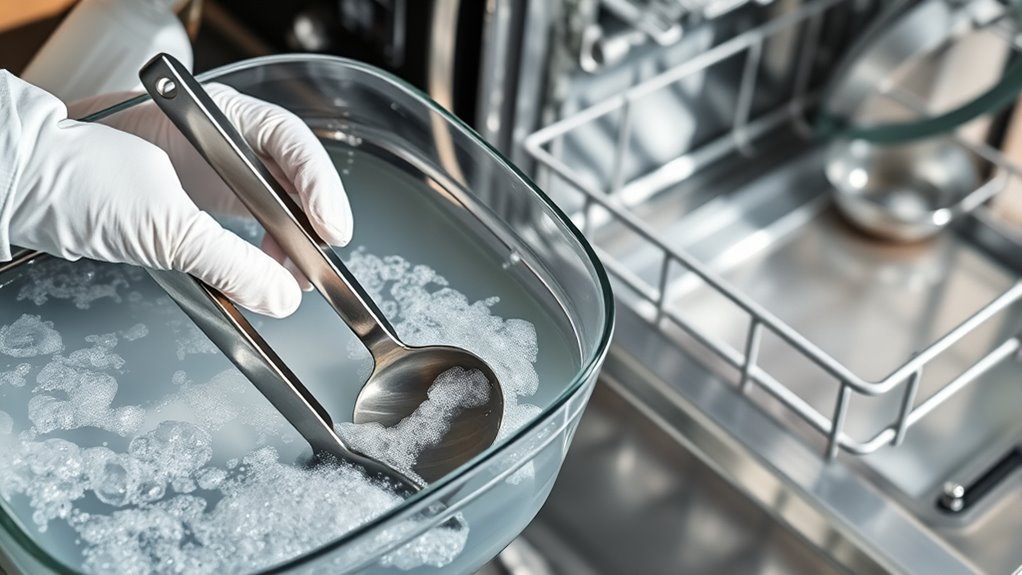
Keeping your kitchen tools sanitized is crucial to prevent the spread of germs and guarantee food safety. When it comes to cleaning utensils, cutting boards, and appliances, understanding the right sterilization methods can make a significant difference. Start by rinsing your tools with warm water to remove any visible debris. Then, apply a few drops of dish soap to a sponge or scrub brush and thoroughly clean all surfaces. Dish soap is effective at breaking down grease and removing bacteria, but it’s only the first step in proper sanitation. To truly sterilize your tools, you need to incorporate appropriate sterilization methods after washing.
Sanitize kitchen tools properly by rinsing, cleaning with soap, then sterilizing with boiling water or disinfectants.
For non-porous tools like stainless steel knives, spatulas, and metal utensils, boiling water is one of the simplest sterilization methods. Submerge these items in boiling water for at least five minutes to kill most bacteria and viruses. Alternatively, you can use a dishwasher with a high-temperature setting if your appliance offers a sanitized wash cycle. This method not only cleans but also sterilizes your tools without extra effort. When boiling or using the dishwasher, ensure the tools are dry before storing them to prevent bacterial growth.
For plastic items or those sensitive to heat, alcohol-based sanitizers or disinfectant wipes work well. Wiping down your tools with 70% isopropyl alcohol ensures effective sterilization, especially for frequently used items like cutting boards or plastic utensils. Just be sure to let the alcohol evaporate completely before using the tools again. If you prefer a more natural approach, a vinegar solution can also serve as a disinfectant, though it may not be as effective against all pathogens.
In addition to these methods, chemical sterilization solutions are available for more thorough sanitation, especially in professional settings. These solutions are designed to kill bacteria, viruses, and fungi quickly. Follow the manufacturer’s instructions carefully when using chemical sterilizers, and rinse tools thoroughly afterward to remove any residual chemicals before using them for food preparation.
Maintaining a regular cleaning schedule with proper sterilization methods is essential to keeping your kitchen safe. Remember, washing with dish soap removes surface dirt and some germs, but combining that with boiling, disinfectants, or specialized sterilization solutions ensures your tools are truly sanitized. This practice minimizes the risk of cross-contamination and protects your health and your family’s. Proper sterilization isn’t just about cleanliness—it’s about creating a safe environment where food can be prepared confidently. Regularly monitoring sterilization effectiveness helps ensure your methods are working as intended and keeps your kitchen safer.
stainless steel knife sterilization kit
As an affiliate, we earn on qualifying purchases.
As an affiliate, we earn on qualifying purchases.
Frequently Asked Questions
How Often Should I Sanitize My Kitchen Tools?
You should sanitize your kitchen tools after each use, especially when handling raw meats, fish, or poultry, to reduce contamination risks. Follow the frequency guidelines for different items; for example, cutting boards and knives need cleaning after every use, while sponges and cloths should be sanitized daily. Regular sanitizing helps prevent the spread of bacteria and keeps your kitchen safe. Stay consistent to minimize health risks and maintain a hygienic environment.
Can I Sanitize Tools With Natural Remedies Instead of Chemicals?
Yes, you can use natural remedies as chemical alternatives to sanitize your kitchen tools. For example, vinegar, lemon juice, and baking soda are effective in disinfecting surfaces without harsh chemicals. Simply soak or wipe your tools with these solutions, then rinse thoroughly. These natural remedies help eliminate bacteria and germs, making your kitchen safer while avoiding chemical residues. Always verify proper cleaning followed by sanitizing for the best results.
Are There Tools That Don’T Require Sanitizing?
Some tools, like stainless steel utensils and glassware, don’t require extensive sanitizing if you follow dishwasher safety guidelines. Regularly running them through a hot cycle helps with utensil sterilization, reducing bacteria without extra effort. However, items like cutting boards and sponges do need proper cleaning and sanitizing to prevent illness. Always check manufacturer instructions for specific care, and remember, routine dishwasher use is effective for many tools.
What’s the Best Way to Sanitize Wooden Cutting Boards?
Imagine you’re a knight wielding a sword in medieval times; now, you need to sanitize your wooden boards. To effectively remove bacteria, scrub the boards with hot water and mild dish soap, then disinfect with white vinegar or a hydrogen peroxide solution. Rinse thoroughly and let them air dry. This process guarantees bacteria removal, keeping your wooden boards safe and hygienic for future use.
How Do I Sanitize Tools During a Busy Cooking Schedule?
During a busy cooking schedule, you should quickly sanitize your tools by rinsing them with hot water and applying dish soap to remove debris. Then, use disinfectant sprays on utensils and surfaces to kill germs. For added safety, let the spray sit for a few minutes before wiping away. This routine keeps your tools clean and safe without slowing down your cooking flow.
dishwasher high temperature sanitize cycle
As an affiliate, we earn on qualifying purchases.
As an affiliate, we earn on qualifying purchases.
Conclusion
Now that you know how to properly sanitize your kitchen tools and appliances, you might think your work is done. But here’s the catch—if you skip even one step, lurking germs could still be hiding in your tools, waiting to cause illness. Are you confident your kitchen is truly safe? Keep these tips in mind, stay vigilant, and never underestimate the unseen threats. Your health depends on the choices you make today—are you ready to protect it?
70% isopropyl alcohol wipes for kitchen tools
As an affiliate, we earn on qualifying purchases.
As an affiliate, we earn on qualifying purchases.
chemical sterilization solutions for kitchen utensils
As an affiliate, we earn on qualifying purchases.
As an affiliate, we earn on qualifying purchases.
Halloween Picks
halloween
As an affiliate, we earn on qualifying purchases.