
TL;DR

Get kitchen staples and gadgets delivered free with Prime
- Fast, free delivery on millions of items
- Prime Video, Amazon Music and more included
- Member-only deals all year
A Good Housekeeping report identifies five places where smoke alarms may be less reliable or prone to nuisance alerts: near cooking appliances, bathrooms, garages or unfinished attics, drafts and airflow, and obstructions. The report cites expert guidance on spacing and temperature limits; local codes and the alarm manufacturer’s instructions should also guide placement.
A Good Housekeeping report identifies five locations where smoke alarms may trigger unnecessarily or fail to detect smoke as quickly: too close to cooking appliances, near bathrooms, in garages or unfinished attics, in drafts, and behind obstructions. The advice matters because nuisance alarms can lead people to disable devices, while poor airflow or extreme temperatures may reduce their reliability.
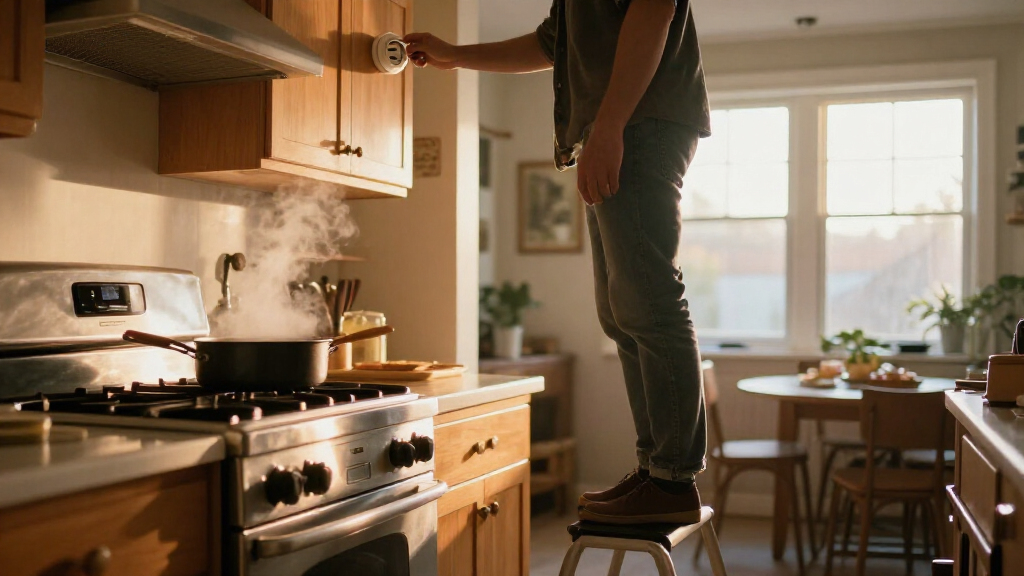
The report says alarms should be installed at least 10 feet from cooking appliances, citing Sanders. In a kitchen, smoke from ordinary cooking—such as burning toast—can prompt nuisance alerts when a detector is too close. Sanders says newer alarm technology may better distinguish fire smoke from cooking steam, and suggests considering an update if nuisance alarms happen often.
Bathrooms and other humid areas can also cause trouble: shower steam, hairdryers and laundry equipment may trigger alarms, according to Sanders. McKelvey advises keeping alarms at least three feet from bathrooms with showers or tubs. For garages and unfinished attics, the report points to dust and temperature swings as reasons alarms may be less reliable or produce unwanted alerts. McKelvey’s rule of thumb is to avoid locations below 40°F (4.4°C) or above 100°F (38°C).
The remaining locations involve how smoke reaches the detector. McKelvey advises against placing alarms near windows or HVAC air supplies; Sanders also names ceiling fans, vents and air-conditioning registers as possible sources of airflow that can carry smoke away from sensors. Finally, heavy fabric, beams, doors or tall shelves can block smoke from reaching an alarm quickly. Sanders says detectors need unobstructed access to air.
Placement Can Affect Warning Time
Smoke alarms provide warning only if smoke can reach the sensor and the device can operate under the conditions where it is installed. A detector near cooking or shower steam may sound frequently for non-fire causes. The report warns that repeated nuisance alarms can prompt people to disable an alarm, leaving a home without that warning when a fire occurs.
Airflow and physical barriers create a different concern: smoke may not reach the alarm promptly. The recommendations are practical checks for homeowners, but they do not replace installation requirements for a particular alarm or jurisdiction. Following the device instructions and applicable local fire-safety rules remains important.
Products Worth Considering

KitchenAid Go Cordless Citrus Juicer with Battery, KCJR161BM

Traeger Woodridge Pro Wood Pellet Grill and Smoker, 970 sq. in., WiFIRE

Cuisinart 14-Cup Food Processor with 720-Watt Motor, Stainless Steel (DFP-14BCNY)
As an affiliate, we earn on qualifying purchases.
The Five Locations in the Report
The guidance is attributed in Good Housekeeping’s report to Sanders and McKelvey, whose full names and professional roles are not stated in the supplied material. It is presented as advice about placement, not as a notice of a new regulation or a change to building codes. The article also distinguishes between spaces where alarms can be problematic and the basement, where Sanders says smoke alarms should be installed.
The cited distances and temperature range are recommendations reported by Good Housekeeping. The supplied material does not identify a specific alarm model, provide testing data comparing devices, or explain whether all manufacturers use identical specifications. Readers should check the instructions for their own alarm before relocating or replacing it.
“Smoke alarms should be installed at least 10 feet away from cooking appliances.”
— Sanders, quoted in Good Housekeeping
Model and Local Rules May Differ
The source material does not provide the experts’ full names, the report’s publication date, or the specific alarm standards behind each recommendation. It also does not establish that every detector behaves the same way in kitchens, humid rooms or temperature extremes. The supplied report offers general placement guidance; the correct requirements for a specific home may depend on the alarm’s instructions and local fire or building codes.
It is also unclear how much a newer alarm would reduce nuisance alerts in any particular household. Sanders says updated technology can better distinguish fire smoke from cooking steam, but the source gives no model names, performance figures or testing results.
Check Instructions Before Moving Alarms
Homeowners can review their detector locations against the distances and conditions described in the report, then consult the device manual and local requirements before making changes. If cooking-related nuisance alarms recur, the report suggests considering an alarm with technology designed to distinguish cooking steam from fire smoke. It does not name products or specify a replacement schedule.
Any move should preserve alarm coverage throughout the home, including the basement, rather than leaving a room or floor unprotected. The source does not set out a complete installation plan, so readers should use manufacturer guidance or seek advice from their local fire-safety authority when placement is uncertain.
Key Questions
How far should a smoke alarm be from a stove?
The Good Housekeeping report cites Sanders saying alarms should be at least 10 feet from cooking appliances to reduce nuisance alerts. Check the alarm manual and local requirements for your installation.
Can a smoke detector go near a bathroom?
Steam can trigger an alarm, according to the report. McKelvey recommends keeping a detector at least three feet from a bathroom with a shower or tub.
Why does the report advise against alarms in garages or unfinished attics?
It cites dust and variable temperatures as possible causes of unreliable operation or nuisance alarms. The report gives a rule of thumb to avoid locations below 40°F (4.4°C) or above 100°F (38°C).
Should a smoke alarm be near a fan or air vent?
The report advises avoiding strong airflow, including drafts near windows, ceiling fans, HVAC supplies and air-conditioning registers, because moving air may keep smoke from reaching the sensor quickly.
What should I do if cooking often sets off my alarm?
First check whether the alarm is positioned according to its instructions and the reported spacing guidance. Sanders says newer technology may better distinguish cooking steam from fire smoke; the source does not endorse a specific product.
Source: goodhousekeeping.com