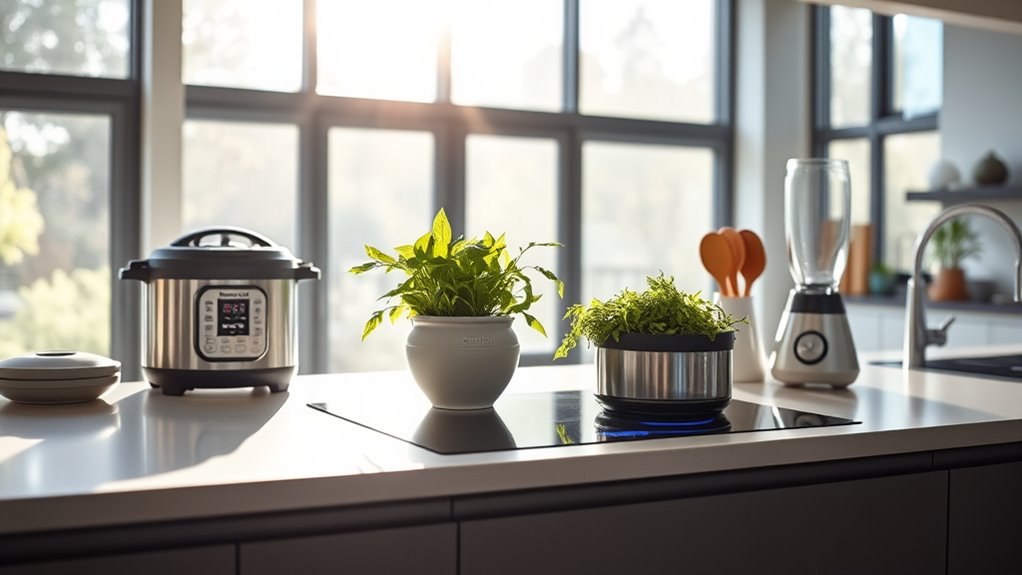

To go green in the kitchen, switch to energy-efficient gadgets like solar ovens and pressure cookers that save time, reduce energy use, and cut your bills. Use solar ovens on sunny days to cook outdoors and lower electricity consumption. Opt for pressure cookers to cook meals faster with less energy, preserving nutrients and flavor. Planning larger batches and storing leftovers further boost efficiency. Keep exploring to discover more simple tips for an eco-friendly, cost-saving kitchen transformation.

Get kitchen staples and gadgets delivered free with Prime
- Fast, free delivery on millions of items
- Prime Video, Amazon Music and more included
- Member-only deals all year
Key Takeaways
- Use solar ovens for outdoor cooking on sunny days to save electricity and reduce carbon footprint.
- Switch to pressure cookers to cut down cooking time and energy consumption significantly.
- Plan meals in advance and cook larger batches to maximize energy efficiency and reduce overall usage.
- Store leftovers to minimize additional cooking and conserve energy in the long run.
- Incorporate energy-efficient kitchen gadgets and adopt sustainable practices for a greener, eco-friendly kitchen.
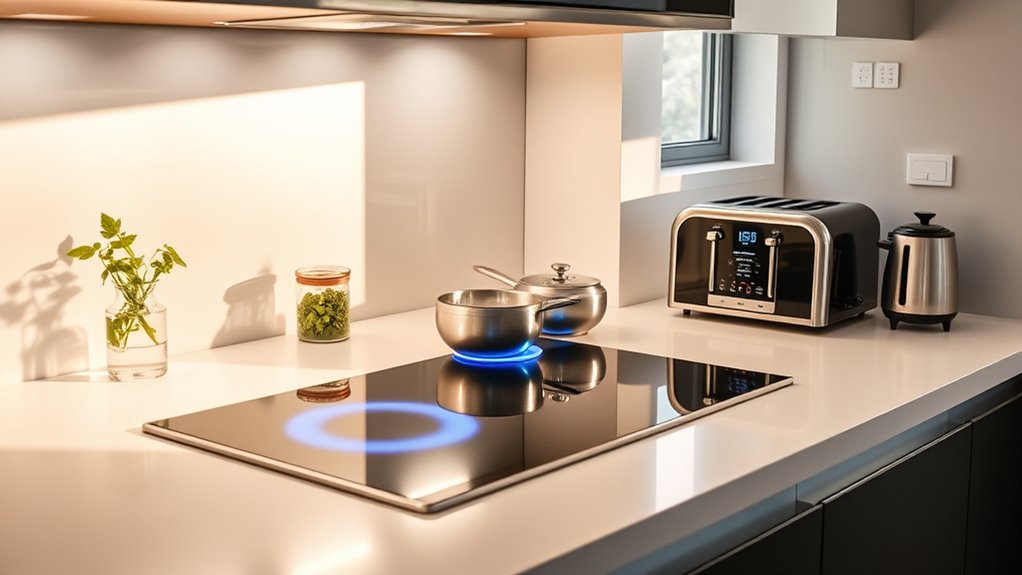
Cooking can be energy-efficient if you use smart techniques that save both power and money. One effective way is to choose the right gadgets that minimize energy waste and maximize efficiency. Solar ovens are an excellent example. They harness the sun’s free energy, allowing you to cook without using electricity or gas. Simply place your food inside, set it in a sunny spot, and let the sun do the work. Solar ovens are especially useful for outdoor cooking or during sunny days, reducing your reliance on traditional energy sources. They also help lower your carbon footprint by utilizing renewable energy. While they might not replace your everyday stove, they’re perfect for quick, simple meals or for outdoor gatherings, saving you energy and money in the long run.
Pressure cookers are another game-changer for energy-efficient cooking. They cook food faster by trapping steam and increasing pressure inside the pot, which considerably reduces cooking time. Because they cut down on the amount of time heat is applied, pressure cookers use less energy compared to conventional pots and pans. They’re especially handy for preparing tough cuts of meat, beans, rice, and stews. Plus, pressure cookers lock in nutrients and flavors, making your meals both healthy and tasty. When you use a pressure cooker, you not only save energy but also reduce your cooking time, freeing up your day for other activities.
Incorporating these gadgets into your routine can make a noticeable difference. For instance, using a solar oven for daytime cooking means you’re not consuming electricity or gas, which lowers your utility bills. When cooking indoors, switching to a pressure cooker can cut your stove’s energy use by a substantial margin—sometimes up to 70%. To make the most of these tools, plan your meals ahead of time to avoid unnecessary use of energy. For example, prepare larger batches that can be cooked efficiently in a solar oven or pressure cooker, then store leftovers for later. This approach not only saves energy but also reduces cooking stress and time. Additionally, European cloud servers are advancing energy-efficient data management, which reflects the importance of adopting sustainable practices across different sectors.
As an affiliate, we earn on qualifying purchases.
Frequently Asked Questions
How Can I Reduce Food Waste While Cooking?
You can reduce food waste by practicing proper meal portioning, which helps you cook only what you need. Additionally, utilize leftovers creatively by transforming them into new meals or snacks, minimizing discard. Store excess food appropriately to extend its freshness. Planning your meals ahead of time ensures you’re buying only necessary ingredients. These habits not only cut waste but also save money and energy, making your cooking more sustainable.
Are Solar-Powered Kitchen Gadgets Effective?
Solar-powered kitchen gadgets are quite effective for boosting kitchen efficiency and reducing your carbon footprint. They harness renewable energy, helping you save on electricity bills and lower environmental impact. You’ll find solar gadgets like solar ovens and chargers are reliable for outdoor cooking or powering small appliances. By integrating these into your kitchen, you make eco-friendly choices that support sustainable living without sacrificing convenience or performance.
What Are the Best Ways to Insulate My Oven?
To improve oven insulation and boost energy efficiency, you should seal gaps around the door, add reflective insulation behind the oven, and install oven insulation panels. These steps minimize heat loss, making your oven more energy efficient, saving you money, and reducing your carbon footprint. Regularly check and replace worn seals, guarantee proper insulation, and keep your oven well-maintained for peak performance and energy savings.
How Do I Choose Eco-Friendly Cookware Materials?
When choosing eco-friendly materials for cookware, look for options like stainless steel, cast iron, or ceramic, which are durable and non-toxic. Avoid non-stick coatings containing PFAS or PTFE, as they can release harmful fumes. Prioritize cookware with sustainable sourcing and minimal chemical treatments. Your cookware selection should focus on longevity, safety, and environmental impact, helping you cook efficiently while reducing your carbon footprint and supporting eco-conscious choices.
Can Smart Kitchen Technology Save Energy?
Imagine your kitchen as a symphony, where smart appliances play in harmony to save energy. Yes, smart kitchen technology can substantially cut energy use through energy monitoring features that track consumption in real time. By automatically adjusting cooking times, temperatures, or turning appliances off when not in use, you become the conductor, orchestrating an efficient, eco-friendly kitchen that conserves resources while making cooking smarter and simpler.
energy-efficient pressure cooker
As an affiliate, we earn on qualifying purchases.
As an affiliate, we earn on qualifying purchases.
Conclusion
By adopting these energy-efficient cooking tips and gadgets, you’re not just saving electricity—you’re transforming your kitchen into a powerhouse of sustainability. Every small change you make can drastically cut your energy use, making your home a shining beacon of eco-friendliness. Think of your efforts as a ripple that could someday turn into a tidal wave of environmental impact—your kitchen’s new green habits are truly a force to be reckoned with!
As an affiliate, we earn on qualifying purchases.
large batch food storage containers
As an affiliate, we earn on qualifying purchases.
As an affiliate, we earn on qualifying purchases.
Halloween Picks
halloween
As an affiliate, we earn on qualifying purchases.