To spot fake reviews when shopping for appliances online, look for overly enthusiastic language with little detail and generic praise that could fit any product. Watch for patterns like similar wording across multiple reviews or accounts with minimal profile info and only positive or negative feedback. Sudden surges of reviews or suspiciously polished comments also raise red flags. Keep an eye out for these clues; if you want to become more confident, there’s more to uncover below.
Key Takeaways
- Look for overly generic or exaggerated language lacking specific details about the appliance.
- Check reviewer profiles for minimal activity, generic names, or reviews only for a single product.
- Be cautious of a sudden surge of all positive or negative reviews within a short timeframe.
- Compare reviews across different platforms to identify repeated phrases or similar wording.
- Watch out for reviews that lack balanced feedback or mention both pros and cons realistically.
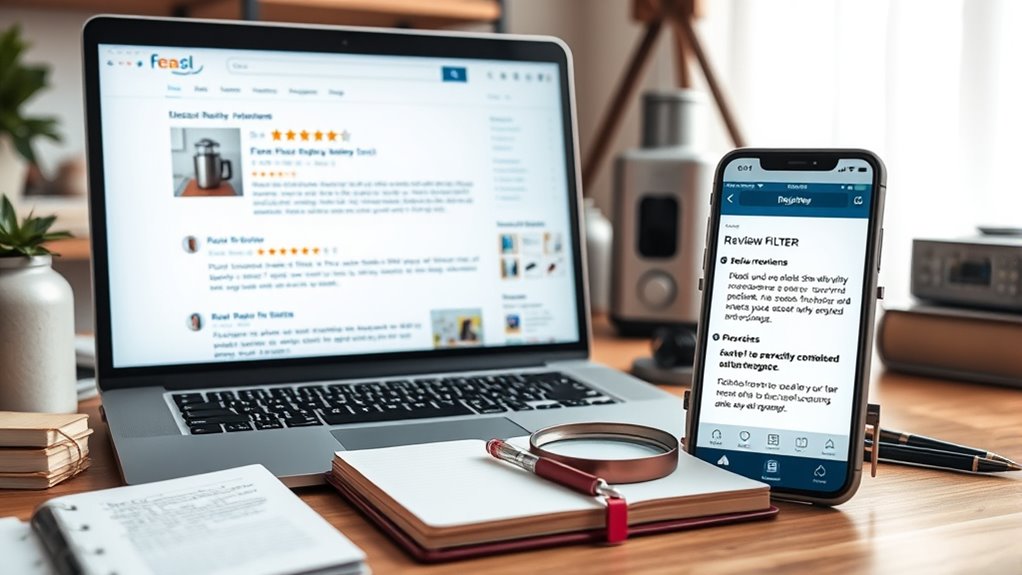
Have you ever wondered if the reviews you read online are genuine? It’s a common concern, especially when shopping for appliances where a single negative or positive review can influence your decision. Sadly, some reviews are not as trustworthy as they seem. Recognizing the signs of fake reviews requires a keen eye and awareness of tactics like product manipulation and questions about reviewer authenticity. Fake reviews often aim to sway your opinion by exaggerating or distorting the truth, making it essential to develop a sense for spotting them.
Stay alert for fake reviews that exaggerate or distort the truth when shopping online.
One of the first signs of a fake review is suspiciously enthusiastic language or overly generic praise. If a review feels like it’s been written by someone with a vested interest or sounds too perfect, it might be a sign of product manipulation. For example, phrases like “this is the best appliance ever” without specifics can be red flags. Genuine reviews usually include detailed descriptions of how the product performed, highlighting both positives and negatives. Fake reviews tend to lack these specifics, instead relying on vague praise that could apply to any product. They often use similar wording across multiple reviews, which suggests copy-pasting or coordinated efforts to manipulate perceptions.
Reviewer authenticity is another critical factor to factor in. Many fake reviews are posted by accounts with little to no activity or those that only review a single product. These profiles often have generic usernames, minimal profile information, or a history of leaving only five-star or one-star reviews across different brands and categories. If you notice a reviewer who suddenly posts an overly glowing review for a new appliance and has no other online activity, it’s worth questioning whether they’re genuine. Authentic reviewers tend to share consistent opinions across multiple products and have a history that supports their credibility. They often mention specific features or personal experiences that lend credibility to their review. Additionally, attention to detail can help identify reviews that seem overly polished or lack realistic nuances, which is a common trait of fake reviews.
Additionally, pay attention to review timing. A sudden influx of positive reviews within a short period may be orchestrated to artificially boost a product’s reputation. Conversely, a handful of overly negative reviews that seem to come from accounts with suspicious profiles could be attempts to sabotage a competitor. Cross-referencing reviews across different platforms can also help; if most reviews on one site appear overly positive with similar language, it might be a sign of coordinated fake reviews.
front load washing machine reviews
As an affiliate, we earn on qualifying purchases.
As an affiliate, we earn on qualifying purchases.
Frequently Asked Questions
Can Verified Purchase Reviews Be Trusted Entirely?
Verified purchase reviews are generally trustworthy, but don’t rely on them entirely. Sometimes, they can be biased or manipulated, especially if a product’s branding is aggressive or if customer service experiences are inconsistent. Look for detailed reviews that mention specific features and issues, and cross-check with other sources. This helps make certain you get a complete picture before making your decision, rather than just trusting verified labels alone.
How Do Review Dates Indicate Authenticity?
You can spot fake reviews by examining review date patterns and review frequency. If multiple reviews are posted within a short time span, it might indicate fake activity. Look for consistent, natural review timing; sudden surges or clustered dates may signal manipulation. Authentic reviews tend to be spread out over time, reflecting real customer experiences. Be cautious of reviews with very recent or identical dates, as these often suggest fake or incentivized feedback.
Are Overly Positive Reviews Suspicious?
Overly positive reviews often signal product bias or fake reviewer tactics, so stay cautious. Imagine hearing only glowing reviews about a new appliance—sounds suspicious, right? Fake reviewers craft overly perfect feedback to sway your opinion. If nearly all reviews praise a product excessively, it’s a red flag. Trust balanced, detailed reviews instead; they reveal genuine experiences and help you avoid falling for fake hype.
What Role Do Reviewer Profiles Play?
Your reviewer profiles reveal a lot about their credibility and influence your online reputation. Check if profiles are detailed and consistent, with a history of genuine reviews. Fake reviewers often have generic profiles, few reviews, or suspicious activity. By scrutinizing these profiles, you can better judge whether reviews are authentic, protecting your reputation and ensuring you make informed appliance purchases online.
How Does Review Language Reveal Fake Feedback?
You can spot fake reviews by examining language patterns and emotional cues. Fake reviews often use overly positive or generic language, lacking specific details about the appliance. Look for exaggerated praise or overly negative comments without clear reasons. Authentic reviews tend to include balanced feedback, with personal experiences and nuanced opinions. Pay attention to emotional cues—insincere reviews may seem overly enthusiastic or overly critical, signaling they might not be genuine.
best refrigerator with verified reviews
As an affiliate, we earn on qualifying purchases.
As an affiliate, we earn on qualifying purchases.
Conclusion
Now that you know how to spot fake reviews, you can navigate online shopping like a savvy detective. Trust your instincts and look for patterns or inconsistencies—they’re often the red flags waving in disguise. Remember, fake reviews are like wolves in sheep’s clothing; they try to deceive you. Stay vigilant, do your research, and you’ll avoid falling for those sneaky scams, ensuring you make smarter, more confident appliance choices every time.
dishwasher with genuine customer feedback
As an affiliate, we earn on qualifying purchases.
As an affiliate, we earn on qualifying purchases.
air conditioner authentic reviews
As an affiliate, we earn on qualifying purchases.
As an affiliate, we earn on qualifying purchases.