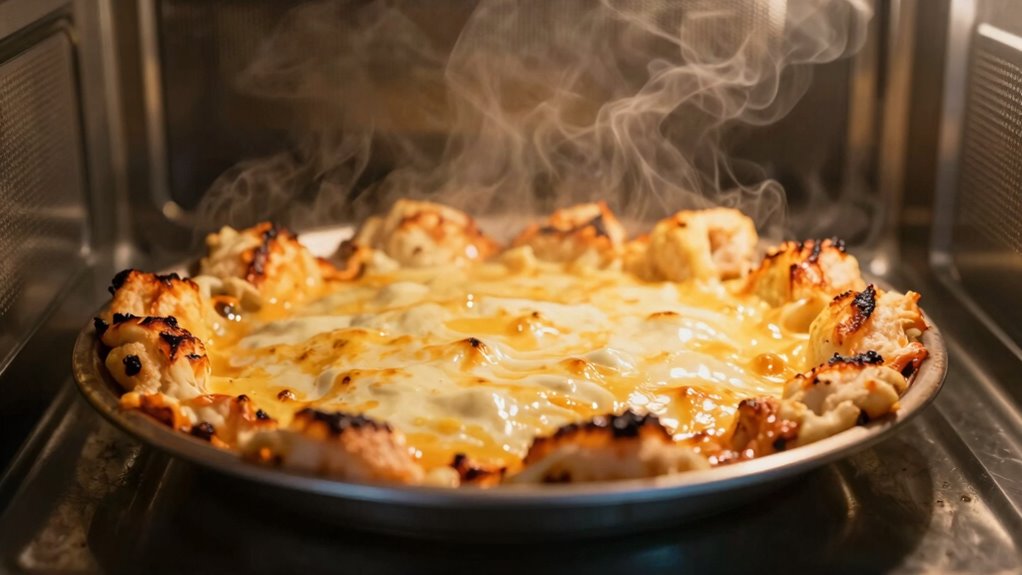
Your microwave heats food unevenly because electromagnetic waves cause water, fat, and sugar molecules to vibrate at different rates, which can create hot and cold spots. The design of your microwave, such as whether it has a turntable, helps distribute energy more evenly, but dense or irregularly shaped items might still heat inconsistently. Covering dishes and arranging food properly can improve uniform heating. To find out more tips on fixing uneven heating, keep exploring.
Key Takeaways
- Uneven heating occurs when microwave energy is not evenly distributed, often due to the appliance’s design or food placement.
- Hot spots form if the microwave lacks a turntable, causing some areas to heat more quickly than others.
- Dense or irregularly shaped foods heat unevenly because microwave waves penetrate differently.
- Residue or debris inside the microwave can block energy, leading to inconsistent heating.
- Older or faulty microwaves may have malfunctioning parts that disrupt proper energy distribution.
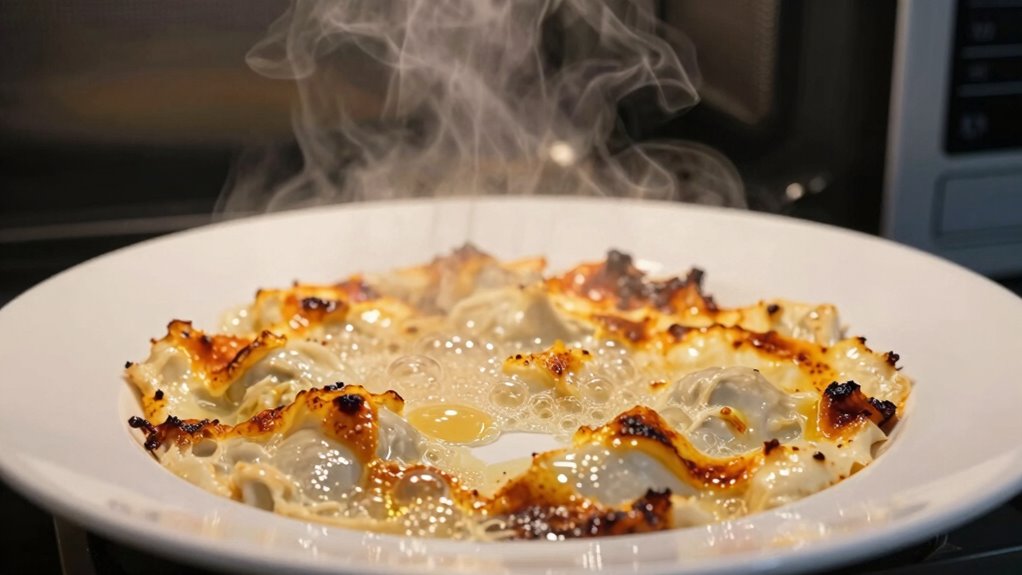
Have you ever wondered why some parts of your food come out hot while others remain cold? It’s a common frustration, and it often comes down to how microwaves work. Microwaves heat food using electromagnetic waves that cause water, fat, and sugar molecules to vibrate, generating heat. But these waves don’t always distribute evenly, which can lead to uneven heating. The design of your microwave, the shape of your food, and how you position it all play a role. Understanding these factors can help you improve microwave safety and energy efficiency, ensuring your meals are heated uniformly without wasting electricity.
One key reason for uneven heating is the way microwaves emit energy. Many microwaves use a component called a turntable that rotates your food, helping to distribute the waves more evenly. Without it, hot spots are more likely to develop, making some areas much warmer than others. Even with a turntable, the placement of food matters. Thick or irregularly shaped items tend to heat unevenly because microwaves penetrate differently depending on the food’s thickness and composition. For instance, dense areas may stay cold while edges become piping hot. To maximize energy efficiency and ensure even heating, you should arrange your food in a way that promotes uniform exposure to microwave energy. Covering dishes with microwave-safe lids or wraps can also help trap steam and heat more evenly, reducing hot spots and conserving energy by reducing the need for multiple reheats. Additionally, understanding the microwave energy distribution can help you position your food more effectively for consistent heating. Paying attention to microwave power settings is also crucial, as different wattages can affect how evenly your food heats. Properly maintaining your microwave by cleaning the interior and checking for worn components can also prevent uneven heating caused by faulty magnetrons. Regular maintenance and understanding the technical aspects of microwave operation are essential for optimal performance.
Your microwave’s age and condition can impact heating performance. Older units may have faulty magnetrons or worn components that cause uneven energy distribution, which not only affects food quality but can also compromise microwave safety. If your microwave isn’t heating evenly despite proper placement, it might be time for maintenance or replacement. Proper use not only improves safety—by avoiding overheating or mishandling—but also boosts energy efficiency. For example, stopping the microwave as soon as the food is heated thoroughly prevents unnecessary energy consumption. Covering food helps retain heat, reducing cooking time and energy use. Additionally, microwave efficiency can decline over time if the appliance isn’t regularly maintained, leading to increased energy consumption.
In essence, understanding why your microwave heats food unevenly helps you make smarter choices. By ensuring your microwave is in good condition, arranging your food properly, and using accessories like microwave-safe covers, you can achieve better results. These practices promote microwave safety and energy efficiency, saving you money and reducing potential hazards. So, next time you’re heating up a meal, pay attention to how you position and cover your food. Small adjustments can make a big difference in how evenly your food heats and how efficiently your microwave runs.

Gemroom 12" Microwave Glass Plate Replacement for Whirlpool Microwave Plate
- [Leave It to the Pros] Gemroom delivers precision…
- [Pure & Lead-Free Safe] Crafted from heavy-duty, premium…
- [Avoid the Return Trap] Did you know? 90% of buyer mistakes stem from three things: blindly ordering by brand alone,…
As an affiliate, we earn on qualifying purchases.
As an affiliate, we earn on qualifying purchases.
Frequently Asked Questions
Can Microwave Turntables Affect Heating Distribution?
Yes, microwave turntables can affect heating distribution. If the turntable mechanics aren’t working smoothly, it might not rotate food evenly, leading to hot and cold spots. Material compatibility also matters; using the wrong type of turntable or placing it improperly can hinder rotation or cause uneven heating. Ensuring your turntable spins freely and is made from compatible materials helps distribute heat more evenly, improving your microwave’s performance.
Do Different Food Shapes Heat Unevenly?
Yes, different food shapes heat unevenly because a food container’s shape affects how microwave energy distributes. Irregular or thick pieces can block heat flow, causing cold spots. You should adjust your microwave settings and use a suitable food container to foster even heating. Stir or rotate food midway to ensure consistent warmth, especially with irregularly shaped items, so your meal heats thoroughly and evenly.
How Does Microwave Age Impact Heating Consistency?
As your microwave ages, its heating consistency declines because the microwave lifespan is limited, and internal component degradation occurs over time. You might notice uneven heating or longer cook times as parts like the magnetron or turntable motor wear out. Regular use and age cause these components to lose efficiency, making your microwave less reliable. To maintain even heating, consider replacing or servicing your microwave once it shows signs of aging.
Is It Normal to Hear Buzzing Noises During Heating?
Yes, it’s normal to hear buzzing noises during heating. These microwave noises are common as the magnetron generates the electromagnetic waves that heat your food. You might also notice other heating sounds, like clicking or humming, which are part of the microwave’s operation. However, if the buzzing becomes unusually loud or sounds abnormal, it could indicate a problem with your microwave’s components, and you should consider having it checked.
Can Microwave Wattage Influence Heating Evenness?
Think of your microwave’s power as the conductor of an orchestra—if the wattage isn’t consistent, the music of your meal gets out of tune. Higher microwave power usually means more even heating, reducing heating variability. Conversely, lower wattage can cause uneven heating, leaving hot spots and cold spots. So, the wattage directly influences how evenly your food heats, making it essential to choose the right power level for smooth, consistent results.

Tovolo Collapsible Microwave Splatter Cover, Charcoal Gray, Medium 10.5"
- Microwave Splatter Cover: Keeps microwave clean during heating
- Fits Most Plates and Bowls: Measures 10.5 inches, suitable for standard microwaves
- Collapsible Design: Pops up for use, collapses for compact storage
As an affiliate, we earn on qualifying purchases.
As an affiliate, we earn on qualifying purchases.
Conclusion
So, next time your food comes out unevenly heated, remember it’s not just bad luck. It’s a coincidence that your microwave’s design or placement affects the heat distribution. Sometimes, it’s as simple as stirring your food or adjusting the turntable. With a little awareness and a few quick tricks, you’ll find that those uneven spots become a thing of the past. After all, in the dance of heat and time, harmony is just a stir away.

KuangBBBTools 11.25" Microwave Glass Turntable Plate Replacement
- Product Name: 11.25-inch Microwave Turntable Plate
- Size: 11.25 inches (28.8 cm)
- Shape: Round Bottom
As an affiliate, we earn on qualifying purchases.
As an affiliate, we earn on qualifying purchases.

MiracleWipes for Microwaves and Cooktops, Easily Removes Food and Grime Buildup, Safe and Convenient Stove Top Cleaner, Great for Home and Kitchen Use – 60 Count
- Versatile Cleaning Surface: Suitable for microwave, cooktops, tiles, and more
- Removes Food and Oil: Lifts dirt, splatters, and greasy residues
- Streak-Free Shine: Leaves surfaces spotless and smudge-free
As an affiliate, we earn on qualifying purchases.
As an affiliate, we earn on qualifying purchases.