
Stainless steel pans often frustrate beginners because they lack a non-stick coating, making food more likely to stick if you don’t master proper technique. You need to preheat the pan, use enough oil, and manage heat carefully to avoid burning or sticking. Their quick heating and heat retention can be tricky to control, leading to frustration. However, understanding these nuances can help you cook better—keep going, and you’ll discover how to achieve great results with patience and practice.
Key Takeaways
- Lack of non-stick coating increases food sticking, requiring precise preheating and oil use to prevent frustration.
- Managing the pan’s quick heat response and avoiding burning can be challenging for beginners.
- Proper temperature control is difficult due to rapid heat retention, risking overcooking or sticking.
- Stainless steel pans need skillful techniques like proper preheating and deglazing to prevent food from sticking.
- Cleaning and maintenance are essential to prevent residue buildup, which can cause sticking over time.
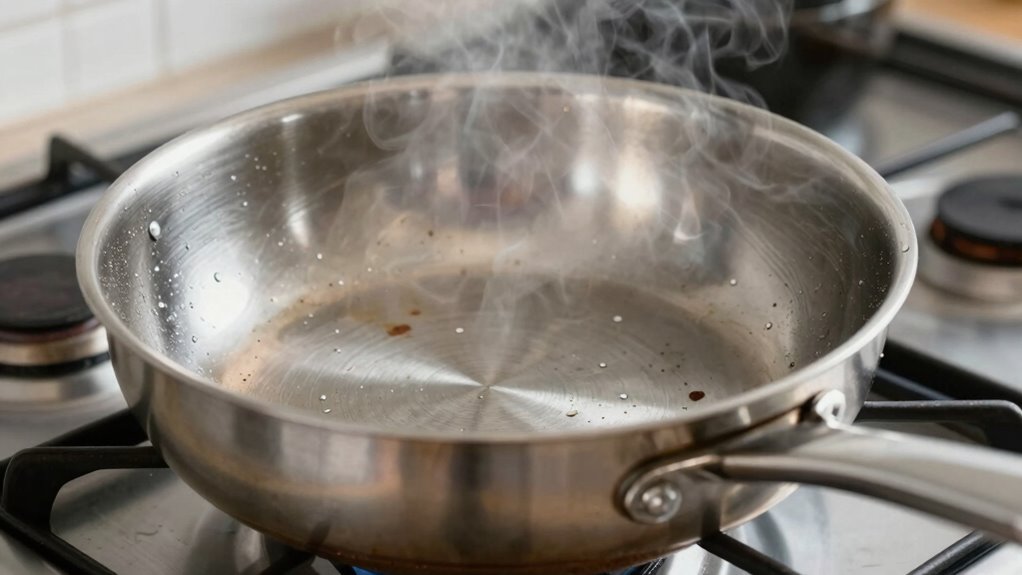
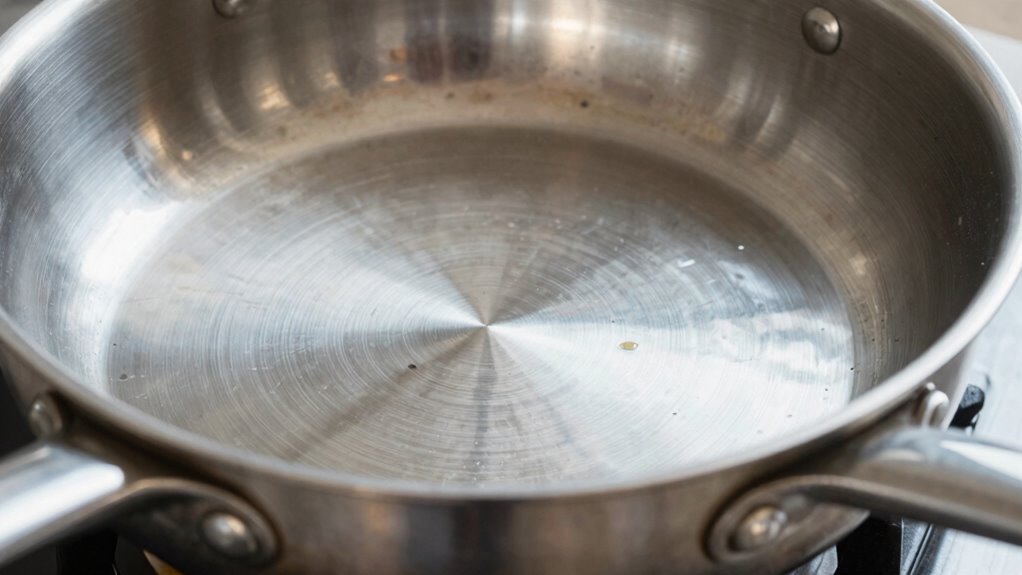
If you’re new to cooking, stainless steel pans are a versatile and durable choice that can make your kitchen experience much easier. They’re known for their longevity, resistance to scratches, and ability to handle high heat. However, many beginners find themselves frustrated when they first start using these pans, often because of their unique cooking characteristics. One common issue is that stainless steel doesn’t come with a non stick coating like some other cookware. This means food is more likely to stick, especially if you don’t pay close attention to your technique. Unlike non-stick pans, which release food easily, stainless steel requires a bit more skill to cook without sticking. You need to get used to preheating the pan properly and using enough oil or fat to create a barrier between the food and the surface. Without this, your eggs, pancakes, or delicate fish may cling stubbornly, leading to frustration and wasted ingredients.
Another reason beginners struggle with stainless steel pans is their heat retention properties. While this is generally an advantage—since it allows for even cooking and better control—it’s also a double-edged sword. If you’re not familiar with how these pans respond to heat, you might accidentally cook at too high a temperature, causing food to burn or stick. Stainless steel pans heat up quickly and hold onto that heat, so once they’re hot, they tend to stay hot. This can be intimidating at first because it’s easy to overdo it, especially if you’re used to more forgiving cookware. Managing heat effectively is essential to prevent sticking or burning, but it takes some trial and error to master.
Many beginners also underestimate the importance of proper cleaning and maintenance. Stainless steel pans require careful cleaning to prevent buildup of residues that can cause sticking or dullness. They can be dishwasher safe, but hand washing with a gentle scrub keeps the surface in top shape. If you don’t clean them properly, you might notice food starting to stick more over time, compounding your frustration. Learning how to deglaze the pan after cooking can also help prevent sticking and enhance flavors.
As an affiliate, we earn on qualifying purchases.
Frequently Asked Questions
How Do I Prevent Food From Sticking to Stainless Steel Pans?
To prevent food from sticking to stainless steel pans, avoid relying on non-stick coatings, which can wear out. Instead, preheat the pan over medium heat and add enough oil or butter, letting it heat until shimmering. Keep an eye on the cooking temperature—too high causes sticking, too low prolongs cooking. With proper preheating and temperature control, your food will release easily, making cooking much smoother.
What Is the Best Way to Clean Stainless Steel Cookware?
Did you know stainless steel pans can last decades if cleaned properly? To clean them, start with warm water and mild dish soap, then use a non-abrasive scrubber for stubborn spots. For tough stains, try a mixture of baking soda and water—this acts like stainless steel seasoning, restoring shine. Also, use copper cleaning pads carefully to avoid scratching. Regular cleaning keeps your cookware looking new and performing well.
Can Stainless Steel Pans Be Used on Induction Cooktops?
Yes, stainless steel pans can be used on induction cooktops if they’re induction compatible. Check for magnetic properties—if a magnet sticks to the bottom, it indicates induction compatibility. These pans work well because their magnetic stainless steel base interacts with the cooktop’s electromagnetic field, allowing efficient heat transfer. Just make certain your pan has a flat, smooth bottom for maximum contact and performance on your induction stove.
Are Stainless Steel Pans Dishwasher Safe?
Did you know that about 85% of stainless steel cookware is dishwasher safe? Yes, stainless steel pans are generally dishwasher safe, thanks to their durability. Their stainless steel durability means they withstand regular cleaning without warping or damage. However, to maintain their shine and prevent discoloration, hand washing with mild detergent is often recommended. Always check the manufacturer’s instructions for specific dishwasher safety guidelines.
How Do I Maintain the Shiny Appearance of Stainless Steel?
To maintain the shiny appearance of your stainless steel, regularly use metal polishing products specifically designed for stainless steel. These remove stains and restore shine effectively. For stain removal, create a paste of baking soda and water, apply gently, and rinse thoroughly. Avoid abrasive scrubbers that can scratch the surface. Consistent cleaning and polishing keep your pans looking new, preventing dullness and ensuring they stay beautiful and shiny over time.
best stainless steel cookware for beginners
As an affiliate, we earn on qualifying purchases.
As an affiliate, we earn on qualifying purchases.
Conclusion
So, while stainless steel pans might seem like the hero of your kitchen, they often play the villain in beginner hands. Patience and practice are your allies in mastering their quirks—think of them as a dance partner, requiring rhythm and finesse. Remember, every great chef was once a beginner, wrestling with the same frustrations. Embrace the challenge, for in perseverance, you’ll find the true taste of mastery—like a diamond forged through fire, your skills will shine brighter.
As an affiliate, we earn on qualifying purchases.
stainless steel pan cleaning brush
As an affiliate, we earn on qualifying purchases.
As an affiliate, we earn on qualifying purchases.