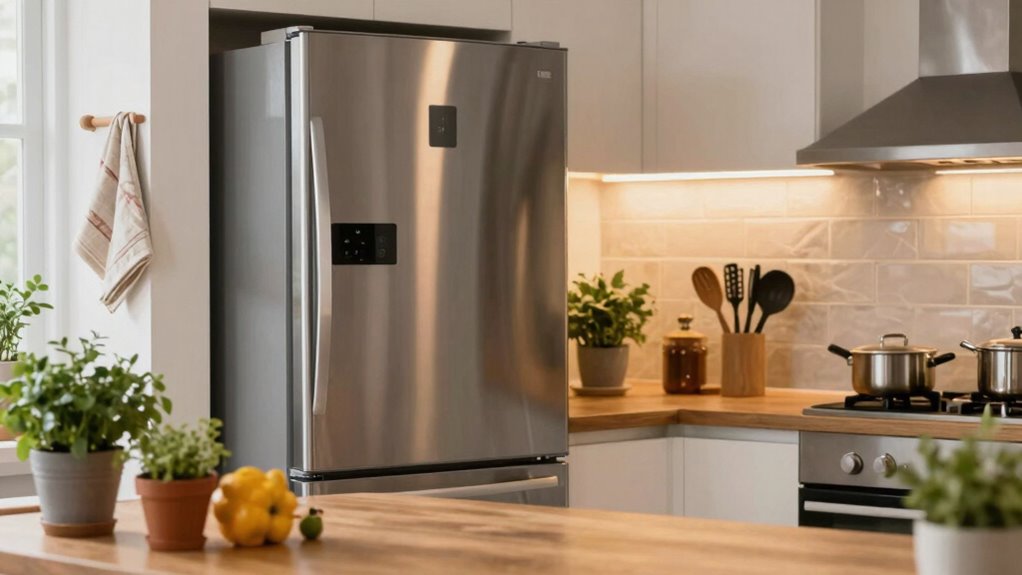
To make stainless steel less intimidating, start with simple cleaning tips like using a soft cloth, warm water, and mild soap to keep it shiny and free of fingerprints. Pair it with warm wood accents or textured textiles to soften its sleek look. Choosing matte finishes or brushed textures can hide smudges, making maintenance easier. Incorporating contrasting materials, such as stone or tile, can add warmth and balance. Keep exploring to discover even more ways to enjoy stainless steel’s stylish, durable appeal without the stress.
Key Takeaways
- Incorporate warm wood tones or colorful accents to soften the sleek, industrial look of stainless steel.
- Use matte finishes or brushed textures to hide fingerprints and create a more inviting feel.
- Add decorative elements like textiles or glass to balance the modern aesthetic with coziness.
- Pair stainless steel with natural materials such as stone or tile for a balanced, approachable design.
- Keep surfaces well-maintained and clean to enhance their appeal and reduce intimidating, clinical vibes.
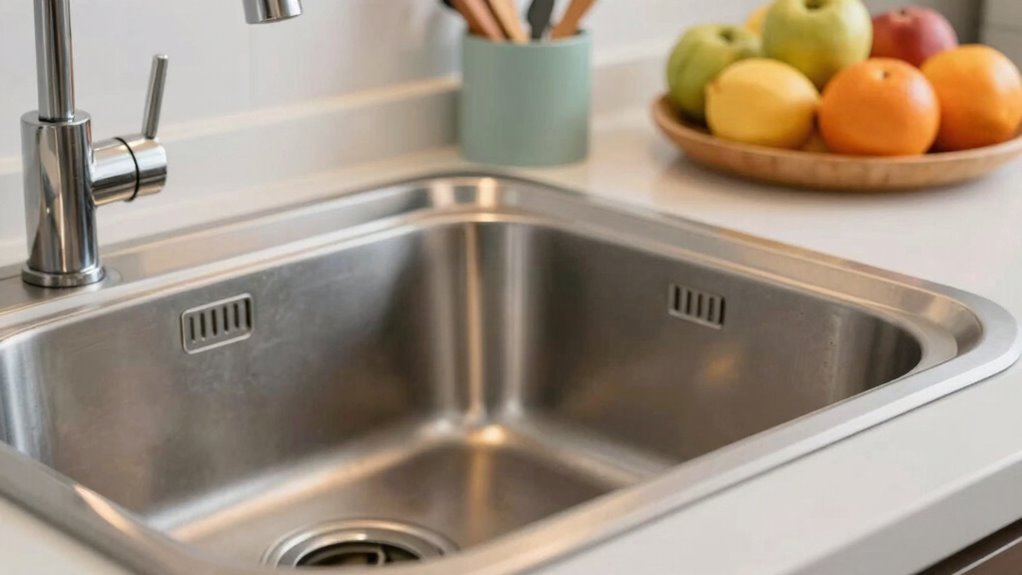
Stainless steel can seem intimidating at first, with its sleek, industrial appearance and reputation for being tough to work with. You might worry about scratches, fingerprints, or finding the right cleaning tips to keep it looking pristine. But once you understand how to care for it, stainless steel becomes much more approachable. Start by recognizing that regular maintenance is key. Use a soft cloth or microfiber towel to wipe down surfaces regularly, which prevents build-up of dust and smudges. When fingerprints or smudges do appear, a mixture of warm water and mild dish soap usually does the trick. Avoid harsh abrasives or steel wool, which can scratch the surface and make it look dull. For stubborn spots, a vinegar solution or specialized stainless steel cleaner can restore shine without damaging the finish. Always wipe in the direction of the grain to avoid streaks and ensure a smooth, professional look. Understanding stainless steel’s durability can help you feel more confident in maintaining its appearance over time, especially since its corrosion resistance makes it well-suited for various environments. Additionally, knowing how environmental factors influence stainless steel can help you choose the right type for your specific needs. Recognizing the importance of proper cleaning techniques can further extend the lifespan and appearance of your stainless steel surfaces. If you’re looking to incorporate stainless steel into your space through design ideas, keep it simple and cohesive. Pair it with warm wood tones or colorful accents to soften its industrial edge. You can also add decorative elements like glass or soft textiles to balance the sleekness. When selecting appliances or fixtures, consider matte finishes or brushed textures, which tend to hide fingerprints better and add visual interest. For countertops, using contrasting materials like stone or tile can break up the uniformity and make the space feel inviting rather than cold. Embracing modern design trends can help you create a balanced aesthetic that feels both stylish and welcoming. Remember, the key is to embrace its modern aesthetic while balancing it with elements that add warmth and personality.
stainless steel cleaning cloth
As an affiliate, we earn on qualifying purchases.
As an affiliate, we earn on qualifying purchases.
Frequently Asked Questions
Can Stainless Steel Be Recycled Easily?
Yes, stainless steel can be recycled easily. During the recycling process, it’s melted down and reformed without losing quality, making it highly sustainable. You can contribute to reducing environmental impact by recycling stainless steel instead of discarding it. This process conserves resources, lowers energy consumption, and minimizes waste. So, when you’re done with stainless steel items, make sure to recycle them properly for a greener, more eco-friendly future.
Is Stainless Steel Safe for Food Contact?
Imagine you’re in a medieval kitchen—stainless steel is your trusty, modern armor. Yes, it’s safe for food contact because it offers excellent food safety and surface durability. Its non-reactive surface resists corrosion and doesn’t leach harmful substances, making it a top choice for cookware and utensils. You can confidently use stainless steel in your kitchen, knowing it keeps your food safe while enduring daily use without tarnishing.
How Does Stainless Steel Resist Corrosion?
Stainless steel resists corrosion thanks to its surface finish and alloy composition. The surface finish, often polished or passivated, creates a protective layer that prevents rust. Its alloy composition includes chromium, which forms a thin, stable oxide layer on the surface, shielding it from moisture and chemicals. This combination helps stainless steel withstand harsh environments, making it durable and ideal for various applications where corrosion resistance is essential.
What Are Common Mistakes When Cleaning Stainless Steel?
Did you know improper cleaning can damage 70% of stainless steel surfaces? When cleaning stainless steel, avoid common pitfalls like using abrasive scrubbers, harsh chemicals, or steel wool, which can scratch or dull the finish. Instead, use gentle cleaning techniques like soft cloths and mild cleaners. Always wipe in the direction of the grain and avoid leaving behind water spots, ensuring your stainless steel stays shiny and undamaged.
Does Stainless Steel Require Special Maintenance?
Stainless steel doesn’t require special maintenance, but proper cleaning techniques help keep it looking its best. Use gentle cleansers and soft cloths to avoid scratches, and avoid harsh chemicals. For added protection, consider surface treatments like oiling or applying protective coatings that repel fingerprints and stains. Regularly wiping down with a microfiber cloth keeps it shiny and prevents build-up. With these simple steps, stainless steel stays sleek and inviting, not intimidating.
matte stainless steel appliances
As an affiliate, we earn on qualifying purchases.
As an affiliate, we earn on qualifying purchases.
Conclusion
Remember, stainless steel might seem intimidating at first, but with a little confidence, you can handle it with ease. Did you know that stainless steel accounts for over 70% of all corrosion-resistant steel produced worldwide? That’s a proof to its durability and versatility. So, don’t let the shiny surface scare you—embrace the challenge, and soon you’ll see it as a reliable, stylish ally in your kitchen or workspace. You’ve got this!
stainless steel fingerprint remover
As an affiliate, we earn on qualifying purchases.
As an affiliate, we earn on qualifying purchases.
stainless steel countertop cleaner
As an affiliate, we earn on qualifying purchases.
As an affiliate, we earn on qualifying purchases.