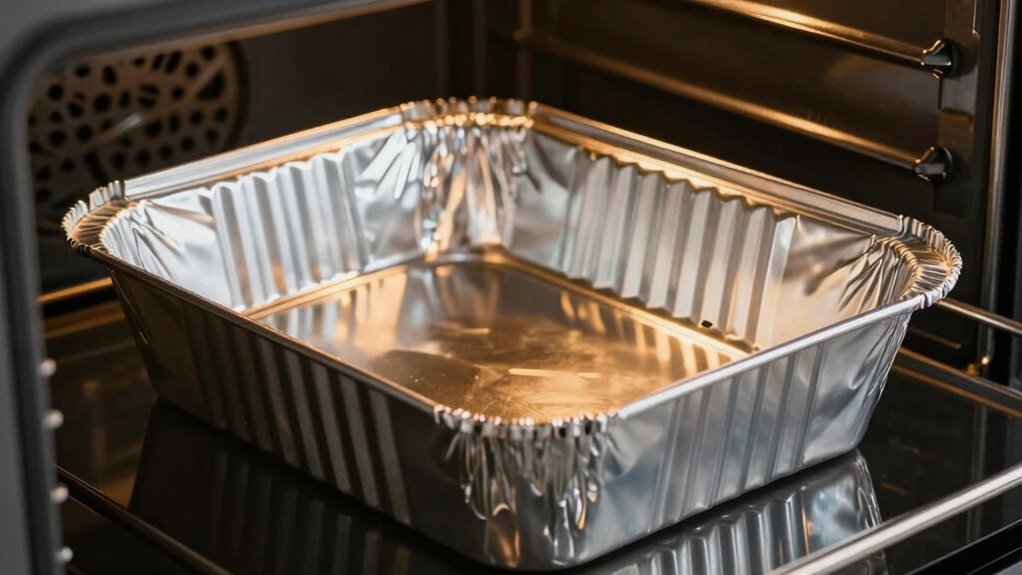
Sheet pans warp in the oven because they’re often exposed to sudden temperature changes and high heat, which cause the metal to expand unevenly. When you place a cold pan into a hot oven or run it at maximum temperature regularly, it stresses the metal and leads to deformation over time. Thinner or lower-quality pans are more susceptible. To understand how to prevent warping and protect your pans, keep exploring these common causes and tips.

Get kitchen staples and gadgets delivered free — and shop member deals
- Fast, free delivery on millions of items
- Access to Prime Big Deal Days deals on October 6–7
- Prime Video, Amazon Music and more included
Key Takeaways
- Excessive oven temperatures exceeding the pan’s tolerance cause metal expansion and warping.
- Rapid temperature changes or placing cold pans in hot ovens induce stress and deformation.
- Thin or low-quality materials heat unevenly, increasing the risk of warping during use.
- Repeated exposure to high heat or maximum oven settings weakens the pan’s structure.
- Improper handling, such as sudden temperature shifts or rough storage, accelerates warping.

If you’ve ever noticed your sheet pans warping in the oven, you’re not alone. Warping is a common issue that many home cooks and professionals face, and it usually happens during baking or roasting. One of the main reasons for this is the oven temperature, which can sometimes be higher than what the pan can handle comfortably. When the oven heats up, metal expands, and if the temperature gets too hot, the expansion can cause the pan to bend or distort. This is particularly true if you’re cooking at very high temperatures or if you frequently switch between cold and hot environments, such as from the fridge to a hot oven.
Another key factor is the material composition of your sheet pans. Most pans are made from metals like aluminum or steel, each with different properties. Aluminum pans are lightweight and conduct heat quickly, but they also tend to distort more easily when exposed to extreme heat because aluminum expands more than other metals. Steel pans, especially those made of thicker gauge steel, are more resistant to warping due to their sturdiness, but they can still distort if subjected to rapid temperature changes or prolonged high heat. Some pans also have a non-stick coating or a layered construction, which can influence their heat response. If the materials aren’t designed to withstand high temperatures, they’re more likely to distort over time. Additionally, the quality of manufacturing and the heat treatment process can impact how well a pan resists warping. Using pans with a uniform thickness can help distribute heat more evenly and reduce warping.
The way you handle your sheet pans can also contribute to warping. Placing a cold pan directly into a hot oven, for example, causes rapid temperature changes that can stress the metal and lead to warping. Similarly, frequent exposure to extreme temperature fluctuations or using the oven at its maximum setting for extended periods increases the likelihood of deformation. To minimize this, you should avoid sudden temperature shifts and try to preheat your oven gradually. Using pans that are specifically labeled as oven-safe at higher temperatures can make a difference too. Proper care and storage can also help extend the life of your pans and prevent warping over time.
In addition, the thickness and quality of the material play essential roles. Thinner pans tend to heat unevenly and are more prone to warping, especially if they’re made from cheaper or lower-quality materials. Investing in thicker, higher-quality sheet pans can help them withstand the heat better and last longer without warping. Understanding how your oven temperature, material composition, and metal expansion interact helps you choose the right cookware and use it properly, reducing the chances of warping and extending the life of your pans.
As an affiliate, we earn on qualifying purchases.
Frequently Asked Questions
Can Certain Foods Cause Sheet Pans to Warp More Than Others?
Certain foods can cause sheet pans to warp more than others, especially when they have high acidity or moisture, like tomatoes or citrus. If your pan has a non-stick coating, the warping might be worsened by uneven heat transfer. Also, handle design can influence how the pan responds to temperature changes. Using a sturdy, well-designed pan and avoiding sudden temperature shifts helps prevent warping caused by specific foods.
How Does the Type of Oven Influence Sheet Pan Warping?
Your fancy oven might seem impressive, but it can influence sheet pan warping more than you think. The type of oven impacts material durability and heat distribution—poor heat flow causes uneven expansion, leading to warping. If your oven’s hot spots are intense, your sheet pans won’t stand a chance. To avoid warping, choose a durable material and make sure your oven distributes heat evenly, or risk an unintentional modern art display.
Are There Specific Cleaning Methods That Prevent Warping?
To prevent warping, avoid dishwasher cleaning for your sheet pans, especially if they have non-stick coatings, as harsh detergents can weaken the material. Instead, gently hand wash with warm, soapy water and a soft sponge. Avoid using abrasive scrubbers that could damage the coating or warp the pan. Proper cleaning and gentle handling help maintain the pan’s shape, prolonging its lifespan and performance.
Do Thicker or Thinner Sheet Pans Warp More Easily?
Thinner sheet pans tend to warp more easily because they lack material durability and are less resistant to heat. Pan thickness plays a vital role; thicker pans distribute heat more evenly and withstand high temperatures better, reducing warping. When choosing a sheet pan, opt for a thicker one made of durable material to minimize warping. You’ll find that investing in quality, sturdy pans makes a noticeable difference in oven performance and longevity.
Can Avoiding Preheating Help Reduce Warping?
Avoiding preheating can help reduce warping, especially if you choose pans made of durable materials like heavy-duty aluminum or stainless steel. Notably, 60% of warping issues stem from rapid temperature changes. Proper storage solutions also prevent unnecessary stress on your pans. By gradually heating your sheet pan and selecting high-quality materials, you protect its integrity and extend its lifespan, minimizing warping during baking.
heavy gauge stainless steel baking sheets
As an affiliate, we earn on qualifying purchases.
As an affiliate, we earn on qualifying purchases.
Conclusion
So, next time you’re baking, remember that nearly 60% of sheet pans warp due to temperature fluctuations and poor material quality. To keep yours flat and sturdy, choose thicker, high-quality pans and avoid sudden temperature changes. A warped pan might seem minor, but it can cause uneven cooking or spills. By taking these simple steps, you’ll guarantee your baked goods come out perfect every time—no warping, just delicious results.
non-warping aluminum baking pans
As an affiliate, we earn on qualifying purchases.
As an affiliate, we earn on qualifying purchases.
high temperature resistant sheet pans
As an affiliate, we earn on qualifying purchases.
As an affiliate, we earn on qualifying purchases.
NFL season / tailgating Picks
team gear
As an affiliate, we earn on qualifying purchases.