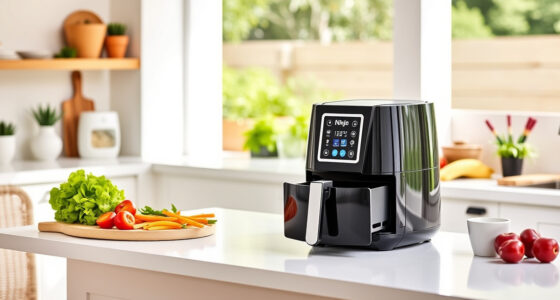
You might notice your appliance runs constantly or seems less effective, which often indicates it’s the wrong size. High energy bills and frequent repairs can also signal poor fit, causing extra stress on the unit. If it takes longer to do laundry or your fridge wastes energy, size mismatch is likely the cause. Space constraints or difficulty fitting the appliance properly are additional signs. Keep going to discover more clues that could save your time and money.

Get kitchen staples and gadgets delivered free with Prime
- Fast, free delivery on millions of items
- Prime Video, Amazon Music and more included
- Member-only deals all year
Key Takeaways
- The appliance runs constantly or frequently cycles on and off, indicating improper sizing.
- Utility bills are unusually high due to inefficient operation caused by incorrect size.
- The appliance struggles to handle your household needs, such as clothes not drying or food not cooling properly.
- Installation is difficult or requires modifications because the appliance is too large or small for the space.
- You notice increased wear and tear, or the appliance wears out prematurely from overworking or underperforming.
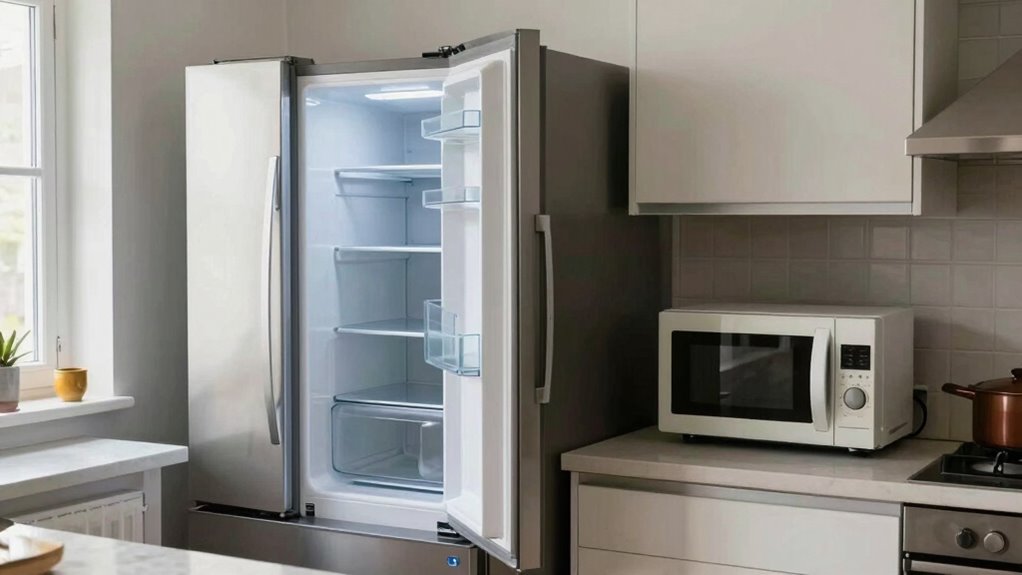
Choosing the right appliance size is vital because the wrong fit can lead to frustration and inefficiency. When you select an appliance that’s too small, it might struggle to meet your needs, causing frequent cycles or longer operating times. Conversely, an oversized appliance can waste energy and space, ultimately costing you more money. One of the key signs you’ve bought the wrong size is your energy bills. If your utility costs are unusually high, and your appliance runs constantly without properly completing its tasks, it’s a clear indicator that the size isn’t appropriate. Larger appliances tend to consume more energy, and if they’re not necessary for your household needs, you’re wasting resources.
Choosing the right appliance size prevents frustration, saves energy, and ensures optimal performance for your household needs.
Another common sign relates to installation challenges. When an appliance is too large, it can be difficult to install in your space, especially if the area isn’t designed to accommodate it. You might encounter issues fitting the unit into existing cabinetry, doorways, or designated spaces. This can delay setup, increase installation costs, and sometimes even require modifications to your home, which adds to your frustration. On the other hand, an appliance that’s too small might not fit properly or may require additional adjustments, which can be equally inconvenient. Proper installation is vital for peak performance, and when size mismatches occur, it often results in compromises on performance or safety. Additionally, space constraints can make the decision process more complex, emphasizing the importance of precise measurements before purchasing. Being aware of appliance capacity** and how it matches your household needs can help prevent these issues from the start. Furthermore, understanding the size specifications** of appliances ensures you select a model that fits seamlessly into your living space.
An improperly sized appliance can also impact performance by causing it to work harder than necessary, which can lead to premature wear and tear. You’ll also notice that an improperly sized appliance doesn’t operate efficiently. For example, a washing machine that’s too small may leave your clothes damp or unclean because it doesn’t have enough capacity to handle your laundry load. An oversized fridge, on the other hand, might keep running constantly, trying to maintain the temperature, which wastes energy and reduces its lifespan. Additionally, electricity consumption is directly impacted by the size of the appliance, further emphasizing the importance of selecting the correct size for your needs. Over time, this inefficiency damages the appliance’s overall performance and shortens its durability.
Lastly, if you find yourself constantly adjusting settings or feeling dissatisfied with the appliance’s output, it could signal a size mismatch. Appliances are designed to operate at their best within specific dimensions and capacities. When they’re too big or too small, you spend more time managing their performance rather than benefiting from their intended efficiency. Recognizing these signs early can save you money, prevent unnecessary hassle, and guarantee you get the most out of your investment. The key is choosing an appliance that aligns with your household’s needs, space, and energy efficiency goals.
washer and dryer capacity calculator
As an affiliate, we earn on qualifying purchases.
As an affiliate, we earn on qualifying purchases.
Frequently Asked Questions
How Can I Measure My Space Accurately for Appliance Fitting?
To measure your space accurately for appliance fitting, start with measuring tools like a tape measure or a ruler. Use these tools to take precise dimensions of the area, including height, width, and depth. During space planning, account for clearance space around the appliance for ventilation and access. Double-check your measurements and compare them to the appliance’s specifications to guarantee a perfect fit and smooth installation.
What Are the Long-Term Costs of Wrong-Sized Appliances?
Using a wrong-sized appliance is like bringing a sword to a gunfight—you’ll face higher long-term costs. You might see reduced appliance durability and decreased energy efficiency, leading to skyrocketing utility bills and frequent repairs. Over time, these costs add up, making your investment less worthwhile. To avoid this, always choose appliances that fit your space properly, ensuring they operate efficiently and last longer, saving you money in the long run.
Are There Specific Brands Better for Sizing Flexibility?
Some brands are better for sizing flexibility because they prioritize brand compatibility and adhere to consistent sizing standards. Look for manufacturers known for versatile appliance options, as they often offer more adjustable features to fit your space. Brands with a reputation for innovation and customer support tend to be more accommodating when it comes to sizing, helping you avoid issues caused by mismatched dimensions or incompatible models.
How Do I Adjust or Upgrade a Wrongly Sized Appliance?
Sure, upgrading a wrongly sized appliance is a breeze—just ignore your appliance warranty and installation services! In reality, you should contact professionals to adjust or replace it properly. They’ll guarantee the new appliance fits perfectly, and your warranty remains intact. Skipping proper installation might save time initially, but it could cost you more in repairs later. Always trust experts for upgrades to avoid costly mistakes.
Can Incorrect Appliance Size Affect Household Safety?
Yes, incorrect appliance size can impact household safety. An appliance that’s too large may overload circuits, increasing fire risk, while a too-small appliance might overwork, causing overheating or electrical issues. These issues elevate household risks and compromise appliance safety. Always make sure your appliances match the recommended specifications to prevent accidents, avoid electrical problems, and maintain a safe environment. Proper sizing helps protect everyone in your home from potential hazards.
As an affiliate, we earn on qualifying purchases.
Conclusion
Now, picture your space once more—cluttered, cramped, or eerily empty—each sign whispering that you chose the wrong size. When appliances don’t fit, they disrupt your daily rhythm, turning smooth routines into frustrating puzzles. But knowing these signs helps you act before chaos takes hold. Choose wisely, and let your appliances blend seamlessly into your life, like a perfectly timed note in a song—smooth, balanced, and just right.
As an affiliate, we earn on qualifying purchases.
energy-efficient washing machine
As an affiliate, we earn on qualifying purchases.
As an affiliate, we earn on qualifying purchases.
NFL season / tailgating Picks
team gear
As an affiliate, we earn on qualifying purchases.