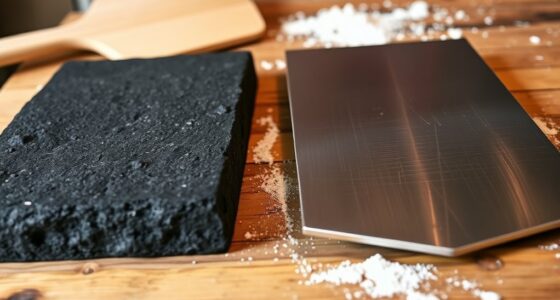
Honing and sharpening serve different purposes for your knives. Honing realigns the microscopic edge, keeping it smooth and straight without removing metal, which helps maintain performance longer. Sharpening, however, involves grinding away metal to create a new, sharper edge when the blade feels dull or requires more effort. Knowing when to hone or sharpen can extend your knife’s life and keep your cuts effortless. Keep going to discover how to do both effectively.

Get kitchen staples and gadgets delivered free — and shop member deals
- Fast, free delivery on millions of items
- Access to Prime Big Deal Days deals on October 6–7
- Prime Video, Amazon Music and more included
Key Takeaways
- Honing realigns the existing edge without removing metal, while sharpening removes material to create a new, sharper edge.
- Honing is a quick maintenance step done regularly; sharpening is a more intensive process needed less frequently.
- Honing maintains blade straightness and smoothness; sharpening restores a dull or damaged edge by metal removal.
- Honing uses ceramic rods or steels; sharpening uses stones, grinding devices, or professional sharpeners.
- Signs for honing include dullness despite regular use; sharpening is needed when honing no longer restores sharpness.
As an affiliate, we earn on qualifying purchases.
Understanding the Purpose of Honing and Sharpening

Understanding the purpose of honing and sharpening is essential to maintaining your tools effectively. Throughout history, the evolution of knife maintenance has reflected cultural significance, from ancient civilizations using stones to modern honing steels and sharpeners. Honing has long been valued as a routine practice to realign the blade’s edge, keeping it functional and safe. Sharpening, on the other hand, involves removing material to restore a dull or damaged edge, often marked by technological advances over centuries. Recognizing these differences helps you preserve your knives’ performance and longevity. Proper maintenance ensures your knives stay efficient and safe to use. Additionally, being aware of knife care techniques and proper maintenance practices can help extend the lifespan of your blades.
As an affiliate, we earn on qualifying purchases.
How Honing Extends the Life of Your Knife
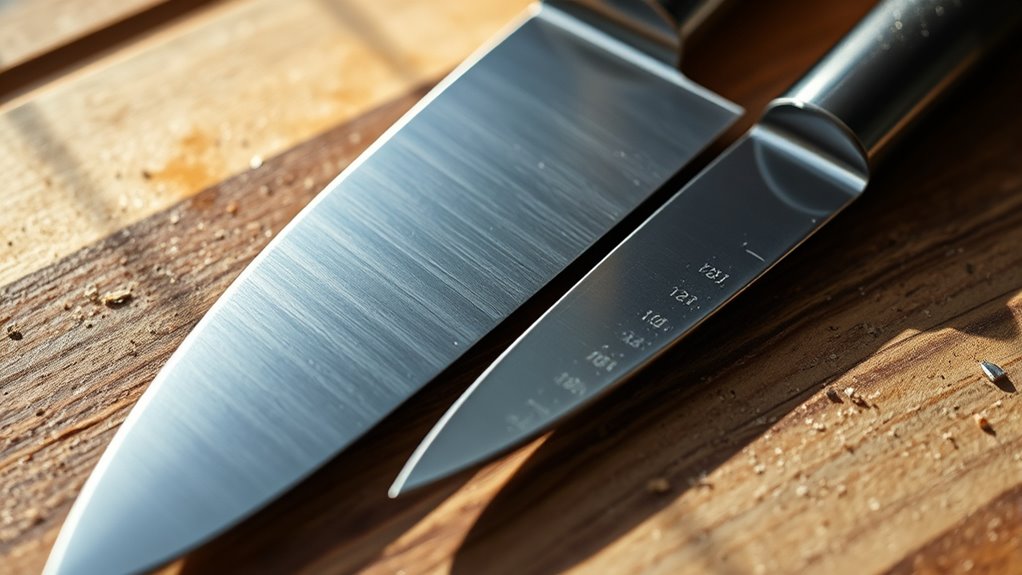
Honing keeps your knife’s edge aligned, so it cuts smoothly and stays sharper longer. By realigning the blade, you reduce unnecessary wear and tear, preventing damage over time. Regular honing is an easy way to extend your knife’s lifespan and maintain its performance. Additionally, understanding edge maintenance techniques can help ensure your knives remain in optimal condition for years to come. Incorporating the proper knife storage methods can further protect your blades from damage and maintain their sharpness over time. Using proper cleaning practices also plays a crucial role in preserving the quality of your knives and preventing corrosion. Moreover, adopting consistent maintenance routines can significantly contribute to the longevity and overall performance of your cutlery.
Realigns Blade Edge
When you hone your knife regularly, you’re actively realigning the blade’s microscopic edge, preventing tiny bends and dents from developing. This process maintains proper blade alignment and guarantees your knife cuts smoothly. By skillfully realigning the edge, honing stops small imperfections from becoming bigger problems. It’s like giving your knife a quick tune-up, extending its sharpness and effectiveness. Regular honing preserves the integrity of the blade edge, saving you money on replacements or professional sharpening. It also reduces the risk of uneven wear, keeping your knife balanced.
- Prevents tiny bends and dents
- Maintains proper blade alignment
- Extends overall knife lifespan
- Ensures consistent cutting performance
- Saves time and money in the long run
Reduces Wear and Tear
Regular honing reduces the overall wear and tear on your knife by keeping the edge aligned and intact. When you hone regularly, you minimize the stress on the blade during cutting, which helps prevent chips and dull spots. This process supports blade longevity by maintaining a sharp, consistent edge without removing metal like sharpening does. Incorporating honing into your maintenance routines ensures your knife stays in prime condition longer, reducing the frequency of more aggressive sharpening. By preventing unnecessary damage, honing preserves the integrity of the blade and extends its lifespan. Consistent honing not only improves cutting performance but also saves you money and effort over time, making it an essential part of proper knife care. Additionally, understanding the importance of edge alignment can help you choose the right technique and tools for optimal maintenance.
professional knife sharpening stone
As an affiliate, we earn on qualifying purchases.
As an affiliate, we earn on qualifying purchases.
The Sharpening Process: Restoring a Dull Edge
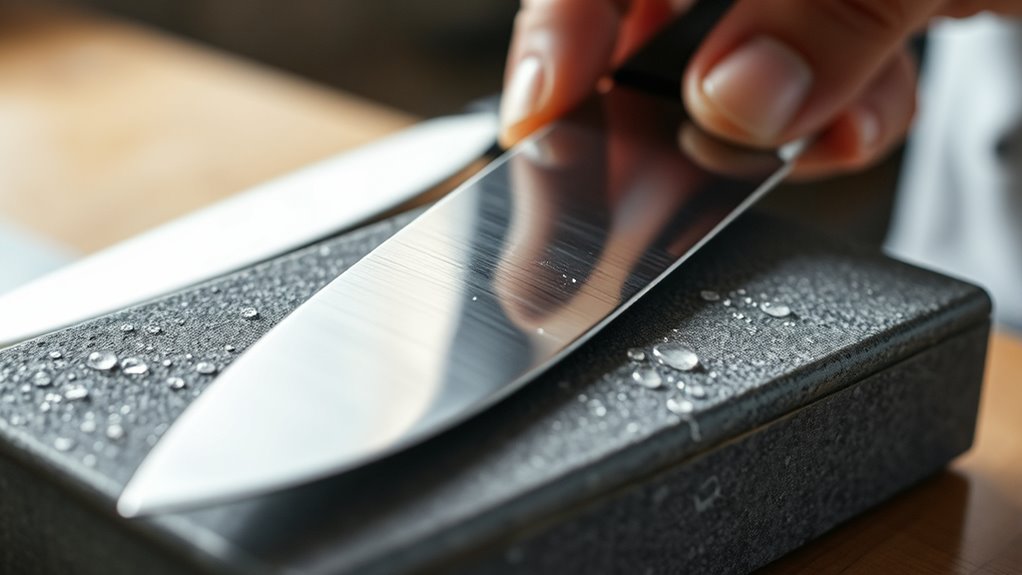
A dull edge can make even simple tasks frustrating, but restoring it is straightforward if you understand the sharpening process. To sharpen your knife, you’ll need to remove metal to create a new, sharp edge. Consider whether to use ceramic vs. steel sharpening tools, as ceramics are gentler, while steel stones are more aggressive. Decide between manual vs. electric sharpeners; manual give you control, while electric devices are faster. Focus on the angle you maintain—typically 15-20 degrees for kitchen knives—for effective results. Here’s what to keep in mind:
- Choose the right sharpening tool based on your experience
- Maintain a consistent angle throughout
- Use gentle, even strokes
- Regularly check your progress
- Finish with honing for a polished edge
- Proper technique can prevent unnecessary wear and prolong the lifespan of your blades by avoiding frequent repairs.
As an affiliate, we earn on qualifying purchases.
Tools Used for Honing and Sharpening
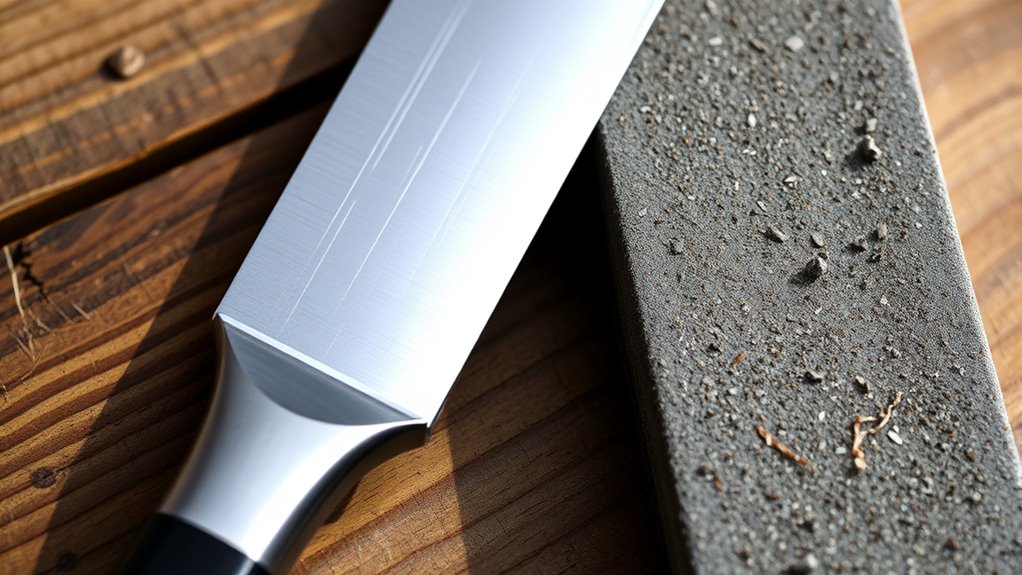
The right tools make all the difference in achieving a sharp, well-maintained edge on your knives. For honing, honing steels are essential—they straighten the edge without removing material, keeping it aligned. A good honing steel, whether steel or ceramic, helps maintain your knife’s sharpness during regular use. Ceramic rods are also excellent for honing; they’re gentle yet effective at realigning the edge and are particularly durable. When it comes to sharpening, you’ll need sharpening stones or professional guides that remove material to restore a dull edge. While honing tools like ceramic rods and steels keep your knife in top shape daily, sharpening tools are for deeper restoration when the edge becomes considerably dull. Using the right tools ensures your knives stay sharp and safe to use. Regular maintenance with proper knife care techniques prolongs the lifespan of your blades and enhances their performance. Additionally, understanding the proper frequency of honing versus sharpening can help maintain optimal knife condition over time. Proper tuning of your knives through the correct tools ensures they perform at their best. Incorporating proper cleaning and storage habits can further extend the effectiveness of your sharpening and honing routines. Also, being aware of the effects of improper maintenance can prevent damage and ensure longevity of your blades.
When to Hone Versus When to Sharpen
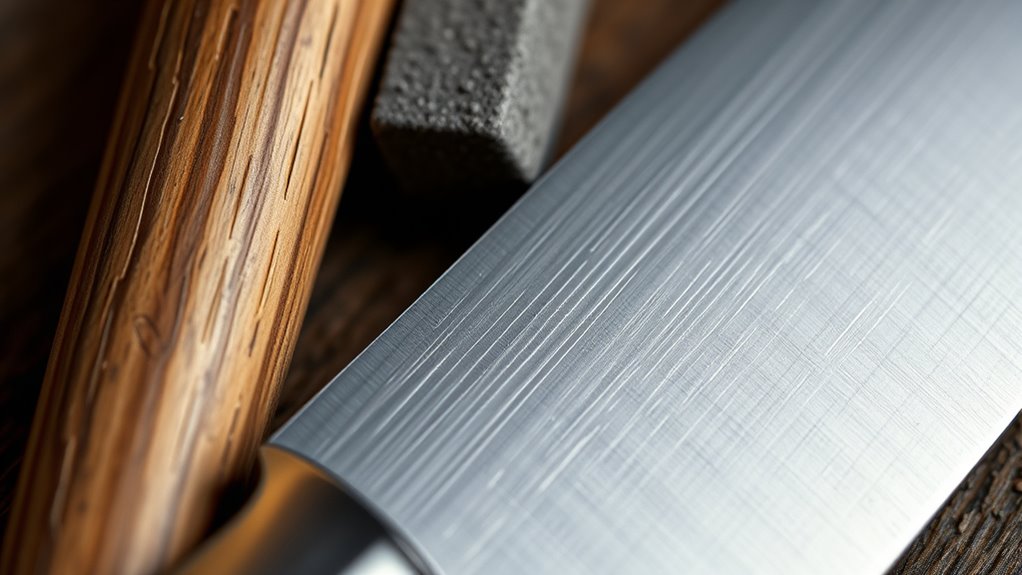
You’ll want to hone your knife regularly if you notice it’s dragging or requiring more force. Sharpen it when the edge becomes dull or chipped, indicating more significant damage. Pay attention to how often you use it and the visible condition of the blade to decide the right approach. Regular honing helps maintain the sharpness of the blade, while sharpening restores its original cutting ability.
Frequency of Use
Ever wonder how often you should hone or sharpen your knives? The frequency depends on how often you use them and the blade materials. For daily use, honing every 1-2 weeks keeps your edge aligned, especially if you store your knives properly in designated storage solutions. Regular honing maintains a fine edge, while sharpening restores a blunt blade. Sharpening, however, is less frequent—about every 6-12 months—when the blade becomes dull despite honing. Pay attention to signs like increased force needed during cutting or uneven slices. Consider your knife’s usage and storage habits to create a maintenance schedule. Remember, different blade materials may require adjustments in how often you hone or sharpen to extend their lifespan. Additionally, understanding the difference between honing and sharpening can help you choose the right maintenance method at the appropriate time. Proper care, including blade material considerations, can significantly prolong the effectiveness of your knives and ensure optimal performance. For optimal results, also consider asset division principles that emphasize strategic planning and timely actions to maintain value. Incorporating yarn for scarves or other maintenance techniques can help keep your knives in top condition, especially if you use them regularly.
Knife Condition Indicators
Recognizing when to hone or sharpen your knives depends on observing specific signs of wear. If your blade material starts to feel dull despite regular honing, it’s time to sharpen. Look for a loss of edge, difficulty slicing, or the need to apply more pressure. Handle ergonomics also matter—if your grip becomes uncomfortable or the knife feels unsteady, it could be a sign the blade needs more than honing. Honing realigns the edge, making it sharper temporarily, but a dull edge indicates it’s time to sharpen. Regularly check your knives’ performance, and pay attention to these indicators to maintain ideal sharpness and safety. Properly evaluating the condition ensures your knives stay effective and long-lasting. Being aware of performance indicators can help you determine the right maintenance action at the right time. Additionally, understanding catering and delivery trends can inspire innovative ways to keep your kitchen well-stocked with sharp, reliable knives for efficient meal prep, especially when considering projector compatibility with gaming consoles for entertainment options during downtime. Recognizing the blade condition through visual and tactile cues is crucial for maintaining kitchen safety and efficiency.
Step-by-Step Guide to Honing Your Knife
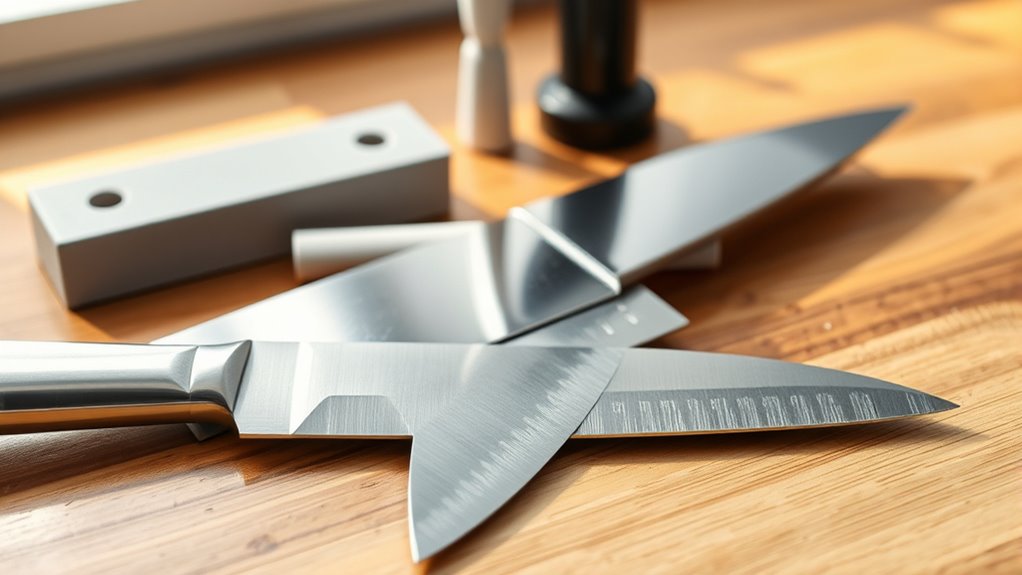
Honing your knife effectively begins with understanding the proper technique to maintain its edge. To do this safely and efficiently, focus on proper handling and kitchen safety. Start by placing your sharpening steel vertically on a stable surface. Hold the handle firmly with one hand, keeping your fingers clear of the blade path. Position the blade at a 20-degree angle against the steel. Use smooth, controlled strokes, pulling the blade down and across the steel from heel to tip. Repeat this process 5-10 times per side. Remember, honing isn’t about removing metal but realigning the edge. Incorporate these simple steps into your culinary techniques to keep your knives sharp, safe, and effective for all your kitchen tasks.
Choosing the Right Method for Your Kitchen Needs

Choosing the right method to sharpen or maintain your knives depends on how you use them and your kitchen environment. If your knives have a softer metal composition, like high-carbon stainless steel, honing tools might suffice for regular upkeep. For harder metals, such as tool steel or ceramics, sharpening may be necessary more often to restore a fine edge. Additionally, consider your knife’s blade curvature; a curved blade, common in chef’s knives, benefits from sharpening techniques that follow the contour, while straight-edged blades are easier to hone regularly. Understanding these factors helps you select between honing and sharpening to keep your knives performing their best. Proper maintenance reduces wear and extends the life of your knives, making your prep work safer and more efficient.
Frequently Asked Questions
Can Honing and Sharpening Be Done With the Same Tools?
You can’t use the same tools for honing and sharpening your knives because they serve different blade maintenance purposes. Honing realigns the cutting edge and is done with a honing steel or rod, keeping your blade straight and efficient. Sharpening, however, removes material to restore a dull or damaged edge, typically using a sharpening stone or electric sharpener. Using the right tools guarantees your knife stays sharp and performs well.
How Often Should I Hone My Knives?
Think of your knife as a dancer needing regular practice to stay graceful. You should hone your knives every 1-2 weeks to keep their edge aligned, ensuring ideal blade maintenance and cutting performance. If you notice the knife isn’t slicing smoothly, it’s time to hone more often. Regular honing maintains your blade’s precision, just like practice keeps a dancer’s moves sharp and fluid, making every cut effortless.
What Signs Indicate My Knife Needs Sharpening?
You’ll know your knife needs sharpening when you notice increased resistance while cutting, or if the blade starts tearing or crushing food instead of slicing smoothly. Dull blades compromise cutting performance and hinder proper blade maintenance. A visual check for a dull, rounded, or chipped edge also signals it’s time to sharpen. Keeping your knives sharp guarantees peak cutting performance and makes food prep safer and easier.
Are Electric Sharpeners Better Than Manual Ones?
Electric sharpeners are generally better for quick, consistent results, especially if you lack experience with sharpening techniques. They automate the process, making it easier to achieve a sharp edge. Manual sharpeners give you more control and can be gentler on delicate blades, but they require practice. If you prefer convenience and speed, go for electric. If you want precision and control, manual sharpeners are a good choice.
Does Honing Damage the Knife Over Time?
Honing doesn’t damage your knife over time if done correctly. It realigns the blade edge, maintaining proper blade alignment and edge durability. However, excessive honing can cause wear, so use it only when needed. Proper technique and regular maintenance help keep your knife sharp without harming the blade, ensuring it stays effective and safe for longer. Remember, honing is about edge maintenance, not removal of metal like sharpening.
Conclusion
Remember, honing keeps your knife’s edge like a gentle breeze smoothing out wrinkles, while sharpening restores it like a master sculptor carving a masterpiece. By knowing when to hone and when to sharpen, you’ll keep your blades performing like new. Think of your knives as trusted tools that need regular care—treat them well, and they’ll serve you faithfully in the kitchen, slicing through tasks with the precision of a well-practiced artist.
Halloween Picks
halloween
As an affiliate, we earn on qualifying purchases.