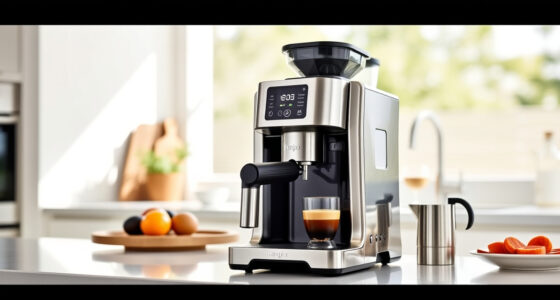
Your frothing pitcher matters more than expected because it directly impacts how well you control temperature, pour precision, and microfoam quality. The shape, size, and spout influence your ability to create artful latte designs and guarantee consistent textures. Good material and design enable easier steaming and better heat management, improving your overall beverage. Keep exploring, and you’ll discover even more ways your choice of pitcher can elevate your coffee game.
Open a free Amazon Business account
Business pricing, bulk buying and tax-exempt orders.
As an affiliate, we earn on qualifying purchases.
Key Takeaways
- The shape and spout design directly influence pour precision and the quality of latte art.
- Material quality affects heat distribution, aiding in maintaining optimal milk temperature.
- Proper pitcher size and shape improve frothing control and efficiency for various beverage sizes.
- Consistent microfoam depends on pitcher design, impacting overall drink texture and presentation.
- Well-chosen pitchers enhance skill development and lead to more visually appealing, flavorful drinks.

Frothing pitchers might seem like simple tools, but they play an essential role in crafting high-quality beverages. When you’re preparing a latte or cappuccino, the pitcher’s design and how you manage milk temperature are critical for achieving that perfect froth. The way you handle these elements directly influences the texture, consistency, and overall taste of your drink. A well-designed pitcher isn’t just about aesthetics; it’s about functionality. Its shape, size, and spout determine how easily you can control the pour and steam, giving you more precision and less mess. For example, a narrow spout allows for better control when pouring latte art, while a larger pitcher can hold more milk, making it ideal for multiple drinks or larger batches.
Milk temperature is another key factor that often gets overlooked. When you steam milk, you’re not just heating it; you’re transforming its texture and flavor profile. Achieving the right milk temperature—typically between 140°F and 150°F—is essential for creating that silky, smooth microfoam that blends seamlessly with espresso. Overheating the milk can scorch it, ruining its sweetness and creating an unpleasant burnt flavor, while underheating results in froth that’s too thin and lacks body. The pitcher’s material can influence how evenly the heat distributes, helping you maintain better control over the milk’s temperature. Stainless steel pitchers, for instance, are excellent because they conduct heat well and allow you to gauge temperature by touch or with a thermometer. Additionally, using a quality frothing pitcher can help improve your overall milk steaming technique and consistency.
Understanding how temperature control impacts the stability of microfoam can help you produce beverages with a more refined texture and appearance, elevating your barista skills. When you master these elements, you can also optimize frothing techniques to achieve consistent results, regardless of the milk type or batch size. Proper technique in frothing milk is crucial for creating a velvety microfoam that holds together well, which is why paying attention to your process makes a difference. The combination of pitcher design and milk temperature control gives you the ability to produce consistently excellent frothed milk. If your pitcher has a well-designed spout, pouring becomes more precise, which is critical when creating latte art or just ensuring your milk blends smoothly into espresso. Additionally, understanding how contrast ratio impacts the visual quality of your latte art can help you achieve more vibrant, detailed designs. Simultaneously, monitoring and maintaining the proper milk temperature ensures your microfoam is stable and velvety, not watery or burnt. When you understand how to leverage these aspects, your overall coffee quality skyrockets. It’s not just about steaming milk; it’s about mastering every detail that impacts the final presentation and flavor. With the right pitcher and attention to milk temperature, you’ll find yourself crafting beverages that impress every time, elevating your barista skills and your coffee experience.
stainless steel frothing pitcher for coffee
As an affiliate, we earn on qualifying purchases.
As an affiliate, we earn on qualifying purchases.
Frequently Asked Questions
How Do Different Pitcher Materials Affect Milk Frothing Quality?
Different pitcher materials considerably impact milk frothing quality. For instance, stainless steel offers excellent thermal conductivity, helping you control temperature better, resulting in smoother froth. Alternative materials like ceramic or glass may have lower thermal conductivity, making it harder to maintain consistent temperature and achieve ideal froth. Choosing a pitcher with the right material helps you master milk frothing, ensuring your drinks are consistently perfect and professional-looking.
What’s the Best Pitcher Size for Beginners?
Starting with a 12-ounce pitcher is ideal for beginners, as it offers enough space for milk to expand during frothing without spilling. Studies show proper milk temperature and frothing techniques greatly impact foam quality. Using a manageable size helps you control your movements better, ensuring consistent results. As you improve, you can experiment with larger pitchers, but initial focus on mastering your technique with a 12-ounce pitcher is key.
Can a Poor-Quality Pitcher Damage Espresso Machines?
A poor-quality pitcher can damage your espresso machine if it doesn’t handle high temperatures well or has thin, fragile material. Using an inferior pitcher may cause uneven milk temperature or leaks, risking damage during frothing. To avoid this, guarantee your pitcher supports proper frothing technique and maintains consistent milk temperature, which helps protect your machine and results in better espresso drinks.
How Does Pitcher Shape Influence Frothing Results?
You’ll notice that pitcher shape notably influences frothing results, with 80% of baristas preferring a curved design. The shape affects milk texture by promoting better air incorporation and smoother microfoam. Ergonomics also play a role; a well-designed pitcher offers easier control during steaming, helping you achieve consistent results. Choosing the right pitcher shape enhances your milk frothing technique, leading to richer, creamier espresso drinks.
Are There Maintenance Tips to Prolong Pitcher Lifespan?
To prolong your frothing pitcher’s lifespan, stick to regular cleaning routines using warm, soapy water after each use to prevent residue buildup. Avoid abrasive scrubbers that could damage the surface. Store it in a dry, safe location, preferably in a storage solution that prevents dents and scratches. Proper maintenance keeps your pitcher in top shape, ensuring consistent frothing performance and durability over time.
barista milk frothing pitcher with spout
As an affiliate, we earn on qualifying purchases.
As an affiliate, we earn on qualifying purchases.
Conclusion
So, next time you grab that frothing pitcher, remember—you’re not just making foam, you’re wielding the power to craft the perfect latte illusion. Without it, your coffee’s just a sad, flat attempt at sophistication. So, don’t underestimate the humble pitcher; it’s the unsung hero turning your morning chaos into caffeinated art. Because honestly, if your pitcher isn’t doing its job, neither is your coffee—and nobody wants to start their day with a latte flop.
coffee milk frothing pitcher for latte art
As an affiliate, we earn on qualifying purchases.
As an affiliate, we earn on qualifying purchases.
As an affiliate, we earn on qualifying purchases.
Fall Picks
fall essentials
As an affiliate, we earn on qualifying purchases.