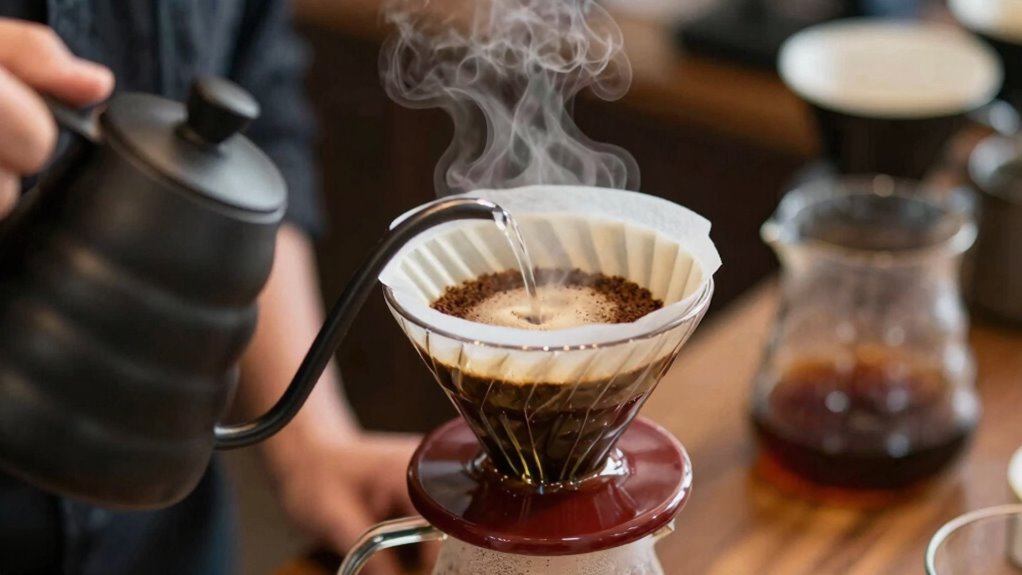

The brew method you choose greatly impacts how strong your coffee seems by affecting flavor extraction, body, and clarity. Longer contact times, like with French press or AeroPress, make the coffee richer and more intense, while quick methods like pour-over produce a lighter taste. Temperature also plays a role—hotter water extracts more flavor, making it seem stronger. Different brewing techniques can make the same caffeine content taste noticeably stronger or milder. Keep going to discover how you can customize your perfect cup.

Get kitchen staples and gadgets delivered free with Prime
- Fast, free delivery on millions of items
- Prime Video, Amazon Music and more included
- Member-only deals all year
Key Takeaways
- Longer contact times in brewing methods like French press enhance flavor extraction, making coffee seem stronger.
- Higher brew ratios increase concentration, affecting perceived strength regardless of caffeine content.
- Hotter water speeds up extraction, intensifying flavor and perception of strength.
- Methods like espresso use pressure and high temperature to produce concentrated, intensely flavored coffee.
- Cold brew’s low temperature and long steeping produce a mellow profile, reducing perceived strength even with similar caffeine.
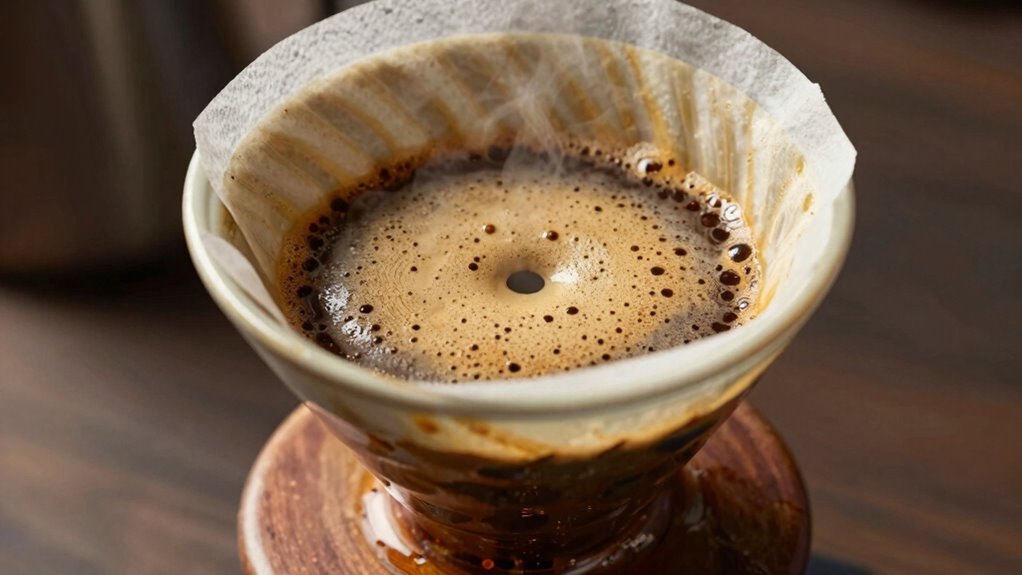
The way you brew your coffee markedly influences how strong it seems, even if the actual caffeine content remains the same. One key factor in this perception is flavor extraction, which depends heavily on your brewing method. When you choose a brewing method, you’re fundamentally deciding how long and at what rate the water interacts with the coffee grounds. This interaction determines how much of the coffee’s flavors are released and how concentrated the final brew feels. For example, methods like French press or AeroPress allow for longer contact times, leading to richer flavor extraction. This results in a more robust taste, making your coffee seem stronger, even if the caffeine levels are identical to a quicker brew like a pour-over. Additionally, the brew ratio of coffee to water can significantly influence perceived strength, as a higher ratio typically yields a more intense flavor profile.
Brewing temperature plays a vital role in flavor extraction as well. Hotter water tends to extract more flavors from the coffee grounds more quickly, heightening the perception of strength. If your water isn’t hot enough, the extraction will be incomplete, resulting in a weaker, more underdeveloped flavor profile. Conversely, excessively high temperatures can over-extract, introducing bitterness and astringency that might mask the coffee’s natural strength. Striking the right balance with brewing temperature is essential; most ideal extraction occurs between 195°F and 205°F. Within this range, you maximize flavor extraction without adding unwanted bitterness, which enhances the perceived strength of your brew. Additionally, understanding the extraction process can help you fine-tune your brewing technique for desired taste outcomes. A proper understanding of flavor chemistry can further help in adjusting brewing variables for optimal results.
Your choice of brew method also influences the clarity and body of the coffee, impacting perceived strength. For example, espresso uses high pressure and temperature to produce a concentrated shot with intense flavor, making it seem much stronger than a drip brew of the same caffeine content. On the other hand, a cold brew, brewed over many hours at low temperatures, results in a smooth, mellow drink that might have less apparent strength, despite similar caffeine levels. The physical process of extraction, combined with brewing temperature, shapes how your taste buds perceive the coffee’s strength. Recognizing these factors can help you select the best brewing style for your desired flavor profile and perceived potency. Furthermore, understanding brewing variables can empower you to customize your coffee experience to match your taste preferences.
In the end, it’s not just about how much caffeine is in your cup but how the coffee is brewed. The method you pick, along with the brewing temperature you use, determines how flavors are released and perceived. If you want a stronger-tasting coffee, opt for methods that promote thorough flavor extraction at the right temperature. Adjust your brewing process, and you’ll find that even with the same caffeine, your coffee can seem considerably more or less potent, based solely on how you brew it.
As an affiliate, we earn on qualifying purchases.
Frequently Asked Questions
How Does Grind Size Affect Perceived Coffee Strength?
You’ll notice that grind size considerably impacts perceived coffee strength because it affects grind consistency and particle distribution. Finer grinds create more surface area, leading to a bolder, stronger taste, while coarser grinds produce a milder flavor. Uniform particle distribution ensures even extraction, enhancing flavor balance. So, adjusting your grind size influences not just strength but overall flavor, making your brew tailored to your preferred intensity.
Does Water Temperature Influence Perceived Coffee Strength?
Water temperature acts like a dial, shaping your coffee’s strength perception. When you use the right temperature, your brew release essential flavors, making it feel bolder or smoother. Water quality and brewing consistency also play vital roles—clean, well-maintained equipment guarantees the temperature’s effect is precise. Too hot or cold, and your coffee might seem weaker or overly intense. Keep your water just right for a consistent, satisfying cup each time.
Can Brewing Time Alter the Strength Perception?
Brewing time definitely influences how strong your coffee feels, affecting flavor balance and aroma intensity. A longer brew extracts more compounds, resulting in a richer taste and heightened aroma, making it seem stronger. Conversely, shorter brewing times produce a lighter flavor, reducing perceived strength. You can tweak the brewing time to find your ideal balance, enhancing aroma and flavor without over-extraction, ensuring your coffee matches your strength preference.
How Do Different Coffee Bean Types Impact Perceived Strength?
Different coffee bean types considerably impact perceived strength through their flavor profiles and bean origins. For example, robusta beans tend to produce a stronger, more bitter flavor, making your coffee feel bolder. Meanwhile, Arabica beans from high-altitude regions often yield a smoother, nuanced taste. Your perception of strength depends on these factors, so choosing beans from distinct origins allows you to tailor your coffee’s intensity to match your preference.
Does Serving Size Change the Perception of Coffee Strength?
Serving size definitely influences your perception of coffee strength. Larger cups may dilute flavor intensity and aroma profile, making the coffee seem milder, even if the caffeine content stays the same. Conversely, smaller servings concentrate these elements, enhancing perceived strength. So, if you want a bold flavor experience, opt for smaller portions. This way, your sense of flavor intensity and aroma profile align with your expectations of a strong brew.
As an affiliate, we earn on qualifying purchases.
Conclusion
So, next time you brew your coffee, remember how your method shapes its strength—sometimes in surprising ways. It’s almost like the universe conspired to make your perfect cup just the way you prefer, whether it’s a bold French press or a delicate pour-over. The more you experiment, the more you realize that even small changes can unexpectedly transform your experience. Coffee’s magic isn’t just in the beans—it’s in how you bring them to life.
As an affiliate, we earn on qualifying purchases.
As an affiliate, we earn on qualifying purchases.
NFL season / tailgating Picks
team gear
As an affiliate, we earn on qualifying purchases.