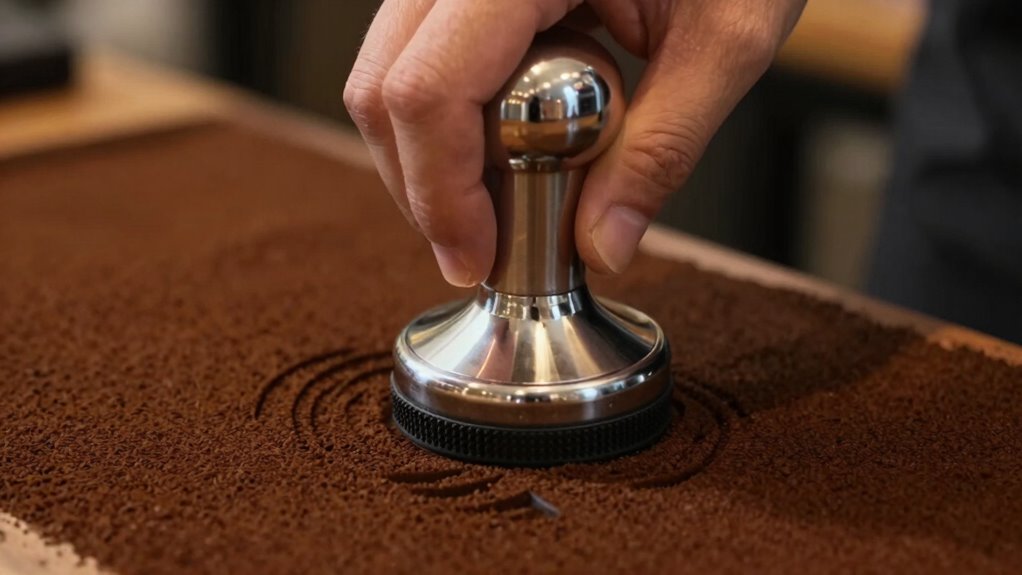

Using the right tamper improves how evenly your coffee grounds are compressed, which leads to more consistent extraction and better flavor. When you tamp correctly, water flows evenly through the grounds, reducing over- or under-extraction. It helps you control variables like grind size and dose, making your shots more reliable. Proper tamping also develops your skills and keeps your brew steady. Keep going to discover how mastering tamping can elevate your espresso game even further.

Get kitchen staples and gadgets delivered free with Prime
- Fast, free delivery on millions of items
- Prime Video, Amazon Music and more included
- Member-only deals all year
Key Takeaways
- Ensure uniform compression of coffee grounds for consistent extraction and flavor.
- Promote even water flow through the coffee puck, reducing under- or over-extraction.
- Help achieve predictable brewing results by standardizing tamping pressure and technique.
- Enhance machine performance by enabling optimal pressure and temperature control during extraction.
- Support skill development and consistency in espresso making through controlled, steady tamping.
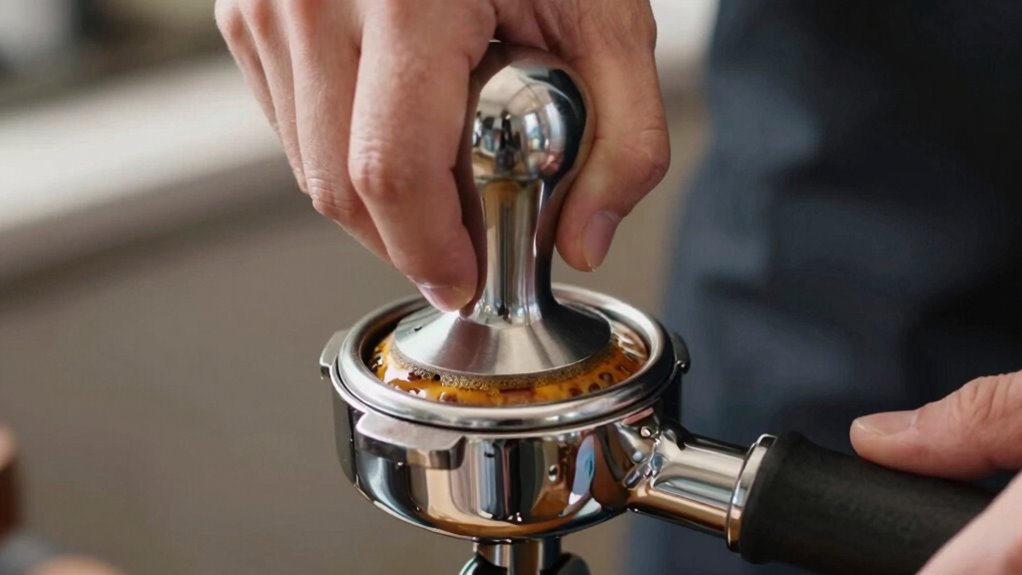
Have you ever wondered why your espresso shot might taste off? One key factor often overlooked is the quality of your tamping process. When you use a tamper correctly, you’re fundamentally shaping the coffee grounds into a uniform puck, which directly impacts grind consistency. If your tamp isn’t even or firm enough, water will flow through the coffee unevenly, leading to over-extraction in some areas and under-extraction in others. This inconsistency results in a shot that’s sour, bitter, or weak. Proper tamping helps create a flat, evenly compressed surface, ensuring that water encounters the coffee grounds uniformly. This way, the extraction process becomes more predictable, and you’re more likely to get that rich, balanced flavor you’re aiming for.
Another aspect that tampers improve is the interaction with machine calibration. Your espresso machine relies on precise pressure and temperature settings to produce the best shot. When your tamping pressure is inconsistent, it hampers the machine’s ability to reach peak extraction. Think of it like trying to tune a musical instrument; if the piano is out of tune, even the best player can’t make beautiful music. Similarly, if your coffee puck isn’t tamped properly, even a well-calibrated machine can’t deliver the ideal espresso. Consistent tamping helps your machine perform at its best, reducing variables that can lead to poor results. It ensures that the machine’s pressure is effectively applied to the coffee grounds, allowing the extraction to be more controlled and uniform.
Achieving good tamping technique also influences how well you control other variables like grind size and dose. When you tamp evenly, you reinforce the importance of grind consistency—because if your grind size is off, no amount of tamping can fully compensate. Mastering tamping not only improves the immediate quality of your shot but also helps you understand how different variables interact in the espresso-making process. Over time, this awareness makes you a better barista at home or in a café. Remember, the goal isn’t just pushing down hard; it’s applying steady, even pressure to create that perfect coffee puck. When you do this consistently, you’re taking a significant step toward pulling espresso shots that are flavorful, balanced, and satisfying every single time. Tamping technique plays a crucial role in achieving consistent extraction and flavor.
espresso tamper with adjustable pressure
As an affiliate, we earn on qualifying purchases.
As an affiliate, we earn on qualifying purchases.
Frequently Asked Questions
How Does Tamper Weight Affect Espresso Quality?
Your tamper weight impacts espresso quality by influencing coffee bean density and grind size consistency. A heavier tamper applies more uniform pressure, compacting the coffee grounds evenly, which helps optimize extraction. This results in better flavor, aroma, and crema. Conversely, a lighter tamper may lead to uneven tamping, causing inconsistent extraction. By choosing a tamper with appropriate weight, you enhance the overall espresso quality through improved density and consistency.
Can Tamping Technique Influence Extraction Time?
Yes, your tamping technique can influence extraction time. When you apply even pressure and maintain a consistent approach, you help guarantee uniform coffee bed density, which promotes ideal extraction. This consistency enhances flavor, providing a balanced and rich taste, while also improving crema development. Proper tamping reduces channeling, leading to more predictable extraction times and better overall espresso quality, including flavor consistency and crema enhancement.
What Materials Are Best for Tampers?
Choosing the right tamper is like picking a finely tuned instrument—you want precision and comfort. The best materials for tampers are stainless steel or aluminum because they’re durable and easy to clean. Look for a tamper that offers good ergonomics, fitting comfortably in your hand to apply consistent tamping pressure. These materials and features help you achieve even extraction and improve overall espresso quality with less effort.
Is a Heavier Tamper Always Better?
A heavier tamper isn’t always better because it can make consistent tamping harder, especially if your coffee grinder produces uneven grounds. You want a tamper that feels comfortable and allows you to apply even pressure, which helps maintain the ideal brewing temperature and extraction. Focus on your technique and consistency rather than just weight. Proper tamping, combined with a good grinder, ensures better flavor and espresso shot quality.
How Do I Know if I’M Tamping Evenly?
Like a knight with a trusty sword, you can tell if you’re tamping evenly by checking your coffee puck after extraction. Look for a smooth, level surface—any cracks or uneven spots mean your tamping wasn’t consistent. To improve, focus on grind consistency and water temperature; these factors help guarantee even tamping. Practice with a tamper guide or leveler to develop muscle memory and achieve uniform pressure every time.
As an affiliate, we earn on qualifying purchases.
Conclusion
Think of tamping as the secret handshake to a perfect espresso. When you apply consistent pressure, you guarantee even extraction, resulting in richer flavor and better crema. Imagine you’re making espresso for a friend, and they comment on its smooth, bold taste—chances are, your tamping was spot-on. So, next time you prep, remember: a steady tamp isn’t just a step; it’s the key to opening your brew’s full potential.
As an affiliate, we earn on qualifying purchases.
As an affiliate, we earn on qualifying purchases.
Fall Picks
fall essentials
As an affiliate, we earn on qualifying purchases.