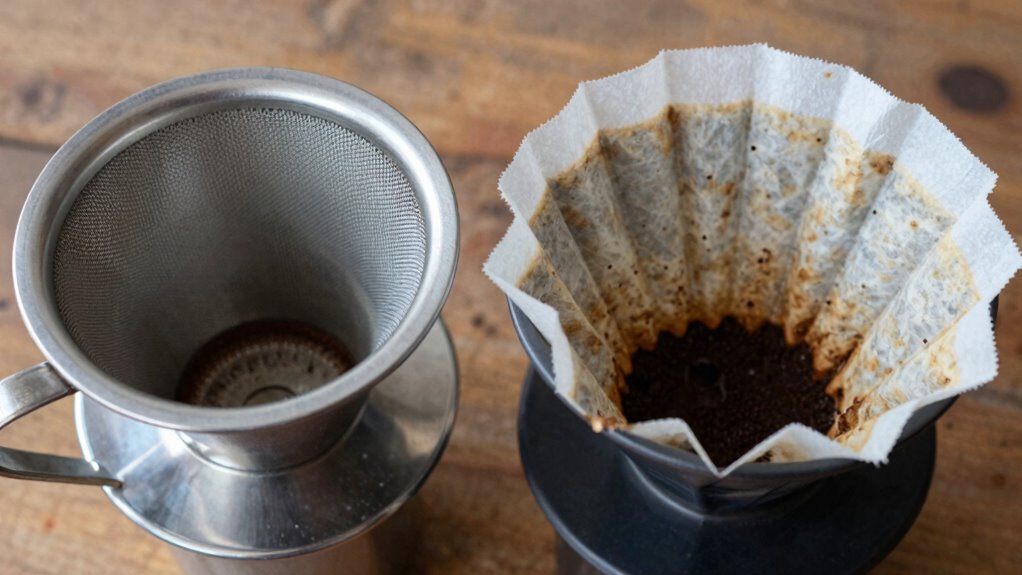

Switching from paper to reusable filters impacts your coffee routine, environment, and wallet. Reusable filters are durable, produce less waste, and lower long-term costs, while paper ones are affordable upfront but require ongoing purchases and create more trash. If you value convenience, paper filters are simple to use, but reusable options require cleaning and maintenance. Want to discover which option best suits your lifestyle and helps you make eco-friendly choices? Continue to explore more details.

Get kitchen staples and gadgets delivered free with Prime
- Fast, free delivery on millions of items
- Prime Video, Amazon Music and more included
- Member-only deals all year
Key Takeaways
- Reusable filters reduce waste and environmental impact over time compared to disposable paper filters.
- Material differences (metal, plastic vs. paper) influence durability and filtration quality.
- Reusable filters involve higher upfront costs but save money long-term with repeated use.
- Paper filters offer convenience with minimal maintenance but generate more waste.
- Choice depends on priorities like sustainability, convenience, brewing frequency, and budget.
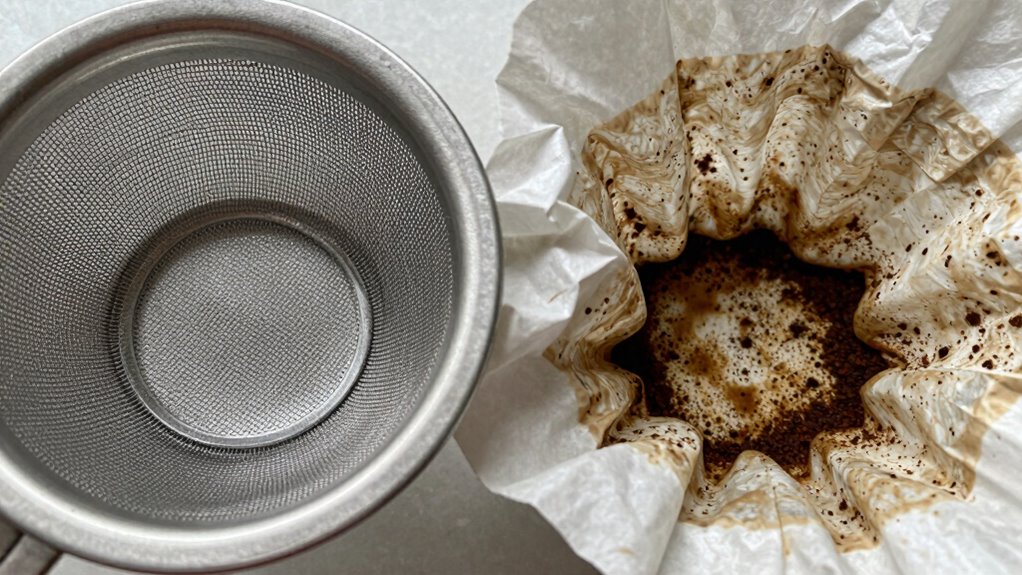
When choosing a coffee filter, you might wonder whether reusable or paper filters are the better option. The decision often boils down to factors like environmental impact and cost comparison, which can significantly influence your choice. Reusable filters are typically made from materials like metal or durable plastic, while paper filters are disposable and designed for single use. Understanding how each impacts the environment helps you make a more informed decision.
Choosing between reusable and paper coffee filters involves environmental impact and cost considerations.
In terms of environmental impact, reusable filters generally have the advantage. Since they can be used repeatedly, they produce less waste over time. You don’t need to toss them out after every brew, which means fewer filters end up in landfills. Paper filters, on the other hand, contribute to waste because they are discarded after each use. Although many paper filters are biodegradable and can decompose relatively quickly, the manufacturing process involves resource consumption — from tree harvesting to processing — that leaves a carbon footprint. If sustainability is a priority for you, opting for a durable, reusable filter reduces the overall environmental burden. Additionally, the resource consumption involved in manufacturing disposable filters emphasizes the importance of choosing more sustainable options.
Furthermore, some reusable filters are designed with advanced filtration techniques that can improve the flavor profile of your coffee, offering a better tasting experience over time. Incorporating natural materials like stainless steel or ceramic can also enhance the durability and performance of reusable filters, making them a smart choice for eco-conscious consumers.
Cost comparison is another important consideration. Reusable filters often have a higher upfront cost, but they tend to save you money in the long run. Instead of continually purchasing paper filters, you only need to buy a quality reusable filter once. Over time, this can add up to substantial savings, especially if you brew coffee frequently. Paper filters are inexpensive per piece, but the recurring expense can accumulate. For occasional coffee drinkers, the cost difference might be negligible, but for daily brewers, reusable filters usually prove more economical.
Additionally, reusable filters often require a bit of maintenance — like rinsing or occasional deep cleaning — but this effort is minimal compared to the ongoing expense of buying paper filters. The convenience factor also plays a role; some people prefer the simplicity of just tossing a paper filter away, while others value the durability and sustainability of reusable options.
Ultimately, your choice depends on your priorities. If minimizing waste and saving money over time are your main concerns, a reusable filter is likely the better fit. If convenience and simplicity are more important, you might lean toward paper filters, despite their higher long-term cost and environmental impact. Both options have their pros and cons, but understanding how each affects the environment and your budget helps you make a decision that aligns with your values and lifestyle.
stainless steel reusable coffee filter
As an affiliate, we earn on qualifying purchases.
As an affiliate, we earn on qualifying purchases.
Frequently Asked Questions
Are Reusable Filters More Environmentally Friendly Than Paper Filters?
Yes, reusable filters are generally more environmentally friendly than paper filters. They reduce waste and have a lower environmental impact over time because you reuse them instead of discarding them after each use. Reusable filters also offer sustainability benefits by decreasing paper consumption and waste production. By choosing a reusable filter, you support eco-friendly practices and help minimize your carbon footprint, making a positive difference for the environment.
How Often Should Reusable Filters Be Replaced or Cleaned?
You should clean your reusable filter every 1 to 2 months, depending on your filter material and usage. Regular cleaning prevents buildup and maintains peak performance. Don’t worry—many think cleaning is complicated, but it’s simple: rinse with water, gently scrub if needed, and make sure it’s dry before reuse. Proper cleaning frequency keeps your filter effective, extends its lifespan, and guarantees your coffee tastes fresh every time.
Do Reusable Filters Affect the Flavor Profile of Brewed Coffee?
Reusable filters can enhance your coffee’s flavor profile by allowing better flavor retention, as they don’t absorb oils like paper filters do. This results in a richer, more full-bodied brew. Plus, because they don’t trap aromatic compounds, your coffee retains its nuanced flavors. Overall, using a reusable filter can considerably improve your brew’s aroma and taste, making each cup a more satisfying and flavorful experience.
Can Reusable Filters Be Used With All Coffee Machines?
Sure, reusable filters can seem like the universal key to coffee bliss—until you realize compatibility concerns hit harder than a caffeine crash. Not all machines love every filter material option, from metal to cloth, and some might even throw a tantrum, refusing to brew. Check your machine’s specifications first; otherwise, you’re just betting on filter roulette. Better safe than soggy, right?
What Is the Initial Cost Difference Between Reusable and Paper Filters?
You’ll find that reusable filters typically cost more upfront than paper filters, mainly due to their durable filter material like metal or silicone. The initial cost comparison shows reusable filters often range from $10 to $30, while paper filters usually cost just a few cents each. Although the initial investment is higher for reusable filters, they can save you money over time since you won’t need to keep buying disposable ones.
paper coffee filters for drip coffee
As an affiliate, we earn on qualifying purchases.
As an affiliate, we earn on qualifying purchases.
Conclusion
Choosing between reusable and paper filters isn’t just about practicality; it’s about finding a little harmony in your daily routine. While each has its subtle charms, the real magic lies in how you connect with your coffee ritual. Whether you opt for eco-friendly charm or convenience, remember, the best choice is the one that makes your mornings brighter and more enjoyable. After all, it’s the small touches that turn a routine into a cherished moment.
As an affiliate, we earn on qualifying purchases.
As an affiliate, we earn on qualifying purchases.
Halloween Picks
halloween
As an affiliate, we earn on qualifying purchases.