
If you’re choosing between traditional tea kettles and electric ones for daily use, consider your priorities. Electric kettles boil water faster, are more energy-efficient, and often have useful features like temperature control and cordless design, making them great for busy mornings. Traditional kettles offer classic aesthetics and don’t need electricity, which is handy during power outages. To discover which option suits your routine best, explore the details further.

Get kitchen staples and gadgets delivered free — and shop member deals
- Fast, free delivery on millions of items
- Access to Prime Big Deal Days deals on October 6–7
- Prime Video, Amazon Music and more included
Key Takeaways
- Electric kettles boil water faster and more efficiently, ideal for quick daily routines.
- Traditional tea kettles offer a classic aesthetic and can be used without electricity, suitable for outdoor or power outage use.
- Electric models often include features like temperature control and cordless operation for added convenience.
- Traditional kettles are simpler, requiring minimal maintenance, and appeal to those valuing timeless design.
- Electric kettles are more energy-efficient and cost-effective over time, making them better for daily, frequent use.

When it comes to boiling water for your daily tea or coffee, choosing between a traditional tea kettle and an electric kettle can considerably impact your routine. The decision often hinges on factors like boiling speed and energy efficiency, which directly influence convenience and cost. A traditional tea kettle, usually made of metal or glass, relies on a stovetop to heat water. It’s simple and timeless, but its boiling speed depends on your stove’s heat output. If you’re in a hurry, a stovetop kettle might take longer to bring water to a boil, especially if your stovetop isn’t very powerful. In contrast, electric kettles are designed specifically for boiling water quickly. They heat water directly with an internal element, allowing for faster boiling times. If speed is your priority, an electric kettle generally outperforms a traditional kettle, boiling water in just a few minutes. This quick boiling speed can be a game-changer during busy mornings or when you need hot water in a hurry.
Energy efficiency also plays a significant role in your choice. Traditional kettles, heated on a stove, can be less efficient because heat is dispersed into the surrounding air, especially if your stovetop isn’t well-insulated or if the kettle’s design isn’t optimal. Electric kettles, on the other hand, are usually more energy-efficient because they transfer heat directly into the water with minimal wastage. Many models even have automatic shut-off features that prevent energy from being wasted once the water boils. If you’re environmentally conscious or want to cut down on energy bills, an electric kettle might be the smarter choice. It heats water faster and uses less energy overall, making it a more sustainable option for daily use.
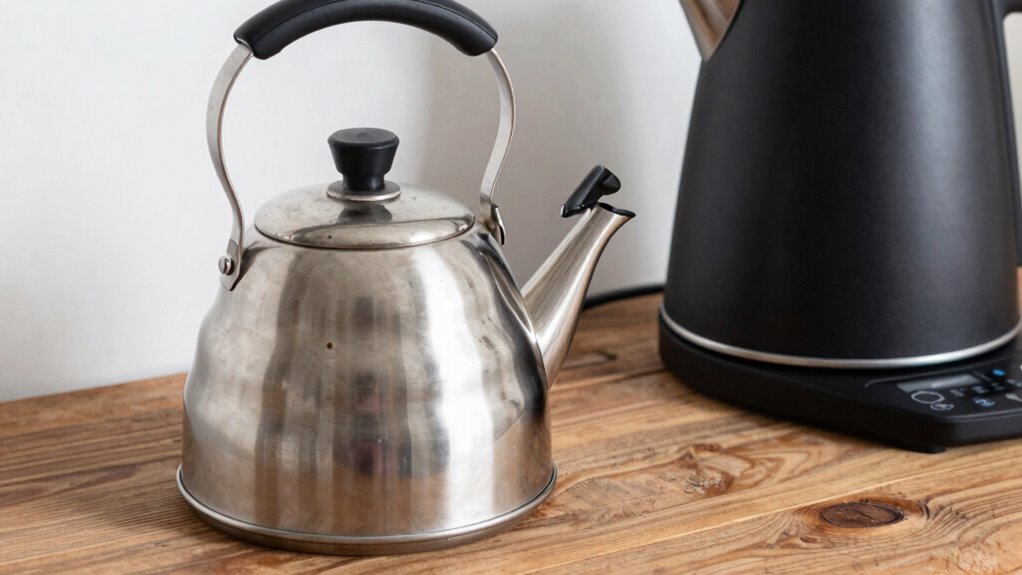
However, traditional kettles often appeal to those who prefer a more classic aesthetic or enjoy the ritual of boiling water over a stovetop. They don’t require electricity, which can be advantageous during power outages or when camping. Electric kettles are compact and often come with additional features like temperature control and cordless operation, adding to their convenience. Ultimately, your choice depends on your priorities: if you value rapid boiling and energy savings, an electric kettle is likely the better fit. But if you appreciate tradition and simplicity, a classic stovetop kettle might be more your style. Either way, understanding these differences ensures you make an informed decision, enhancing your daily tea or coffee routine.
electric kettle with temperature control
As an affiliate, we earn on qualifying purchases.
As an affiliate, we earn on qualifying purchases.
Frequently Asked Questions
Which Type of Kettle Is More Energy-Efficient for Daily Use?
Electric kettles are more energy-efficient for daily use because they heat water faster and consume less energy overall. Their precise temperature control reduces energy waste, and they typically have automatic shut-off features. This lower energy consumption not only saves you money on your electricity bill but also minimizes environmental impact. So, if you’re looking for efficiency, an electric kettle is the better choice for regular use.
Are Electric Kettles Safer Than Traditional Stovetop Kettles?
Electric kettles are generally safer than traditional stovetop kettles because they have automatic shut-off features, reducing safety concerns like boiling over or dry boiling. Visualize an electric kettle’s safety as a built-in guardrail, while a stovetop kettle relies on your attention. Material safety is essential; choose BPA-free plastics or stainless steel. Electric kettles minimize risks, but always make certain proper usage and maintenance for maximum safety.
Can Electric Kettles Be Used for Boiling Water for Cooking?
Yes, electric kettles can be used for boiling water for cooking applications. You simply fill the kettle with water, turn it on, and wait for it to boil. Once boiling, you can use the hot water for preparing instant noodles, pouring over vegetables for blanching, or other quick cooking tasks. Just make sure your electric kettle is designed for continuous boiling if you plan to use it frequently for cooking purposes.
How Long Do Tea Kettles Typically Last With Regular Use?
A good-quality tea kettle can last you a lifetime if you treat it well. Typically, with regular use, a vintage design kettle made from durable materials like stainless steel or cast iron can last 10 to 15 years or more, aging like fine wine. Proper care and cleaning maintain its material durability, ensuring your kettle stays a trusty companion in your daily tea rituals.
Do Electric Kettles Require Special Cleaning or Maintenance?
Electric kettles don’t require special cleaning, but you should follow regular cleaning routines to keep them in top shape. Descaling processes are essential if you have hard water, as mineral buildup can affect performance. To maintain your electric kettle, regularly wipe the exterior, clean the lid, and descale every few months, especially if you notice longer boiling times or mineral deposits. Proper maintenance guarantees your kettle stays efficient and lasts longer.
stainless steel traditional tea kettle
As an affiliate, we earn on qualifying purchases.
As an affiliate, we earn on qualifying purchases.
Conclusion
Choosing between a tea kettle and an electric kettle is like picking the right tool for your daily brew. If you cherish the classic whistling reminder, a traditional kettle is your loyal companion. But if speed and convenience are your priorities, an electric kettle is like having a personal barista at your fingertips. Whichever you choose, remember that your daily cup of tea is the treasure, and your kettle is the vessel that unveils it.
As an affiliate, we earn on qualifying purchases.
As an affiliate, we earn on qualifying purchases.
Fall Picks
fall essentials
As an affiliate, we earn on qualifying purchases.