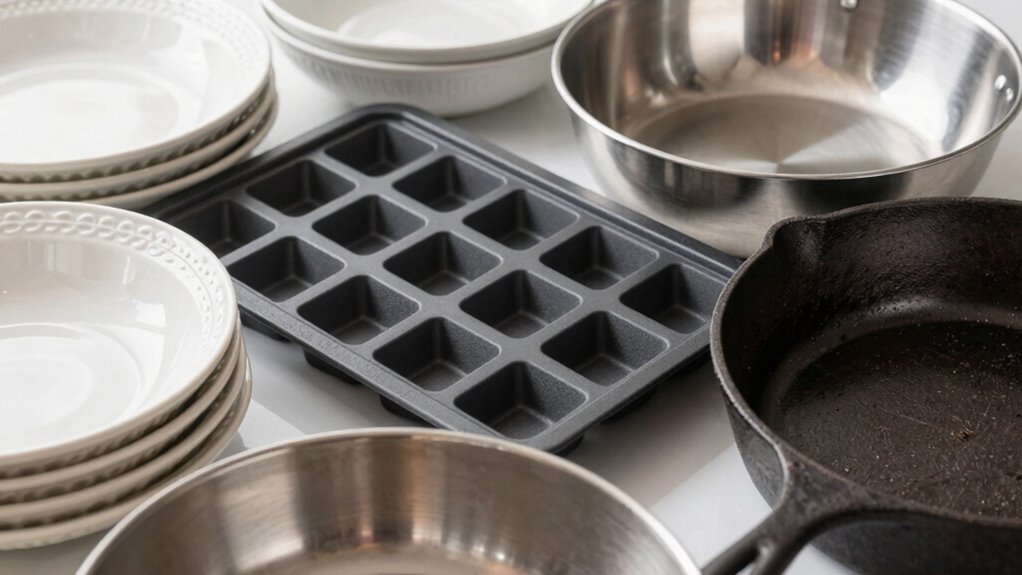

The material of your bakeware directly impacts your baking results. Metal pans, especially dark or heavy-duty ones, heat quickly and promote browning, which can lead to quicker or more uneven baking if not monitored carefully. Glass bakeware heats more slowly, offering even cooking and visual cues for doneness. The choice between these materials affects how your baked goods look and turn out internally. Stick around to discover more about how choosing the right bakeware can elevate your baking game.
Key Takeaways
- Metal pans conduct heat quickly, leading to faster baking and potential browning or burning.
- Glass bakeware heats slowly and retains heat, promoting even cooking and visual monitoring.
- Dark metals absorb more heat, causing quicker browning, while shiny metals reflect heat for controlled results.
- Glass enhances visual cues during baking but requires longer or adjusted baking times.
- Material choice impacts crust color, texture, and overall baking consistency.
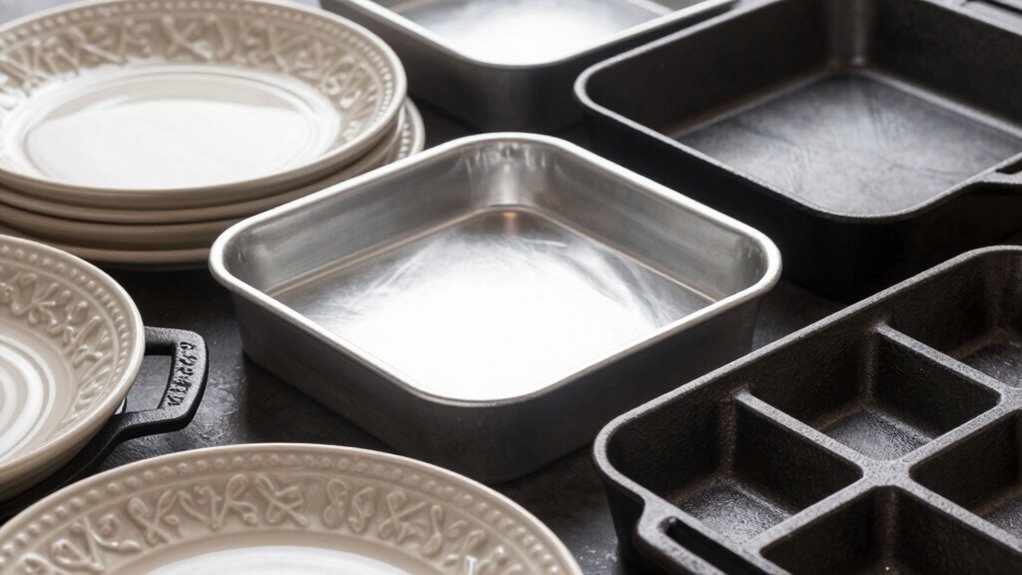
Choosing the right bakeware materials can profoundly impact the outcome of your baked goods. When selecting your pans, consider how different materials influence heat conduction, baking time, and the final appearance. Metal bakeware, for example, is known for its durability and excellent heat conduction. High-quality metals, like aluminized steel or anodized aluminum, distribute heat evenly, helping your baked items cook uniformly. Metal’s durability means your pans will withstand frequent use without warping or cracking, making them a reliable choice for everyday baking. However, be mindful that darker metal pans tend to absorb more heat, which can cause quicker browning or even burning if not monitored carefully. Lighter-colored or shiny metal pans reflect heat better, resulting in a more controlled baking process.
On the other hand, glass bakeware offers a different set of advantages. One of its key benefits is glass clarity, which allows you to see your baked goods as they cook, giving you visual cues that can prevent overbaking. This transparency also adds a level of elegance to serving, as you can present your desserts directly in the dish. Glass bakeware heats more slowly and retains heat longer, meaning you may need to adjust your baking times accordingly. This slower heat transfer helps guarantee even cooking, especially for casseroles, quiches, and other dishes where consistent heat distribution is essential. Glass is non-reactive, so it won’t alter the taste or color of your food, and it’s microwave-safe, offering added convenience. Additionally, understanding the different bakeware materials can help you choose the best option for specific recipes and cooking styles. Proper maintenance of these materials can also extend their lifespan, ensuring consistent results over time. Using heat conduction knowledge can further optimize your baking outcomes. To enhance your understanding, exploring the impact of material properties on baking results can provide deeper insights into selecting the right bakeware.
Both materials come with their own maintenance needs. Metal pans are generally dishwasher safe but can scratch or develop a non-stick coating over time. Glass bakeware, on the other hand, is usually also dishwasher safe, but it can chip or break if handled roughly. When choosing between these options, think about the types of baked goods you make most often. If you prefer quick, evenly baked cookies or cakes, metal pans might be your best bet. For casseroles, roasting, or dishes where visual monitoring is helpful, glass can be advantageous. Ultimately, understanding how metal durability influences performance and how glass clarity enhances visual control will help you select the perfect bakeware for your needs, leading to more consistent, beautiful results every time.
As an affiliate, we earn on qualifying purchases.
Frequently Asked Questions
Are There Eco-Friendly Bakeware Options Available?
Yes, eco-friendly bakeware options are available. You can choose products made from recycled materials or that participate in recycling programs, reducing waste. Look for bakeware with eco-friendly coatings that are non-toxic and biodegradable, minimizing environmental impact. These options help you bake responsibly without sacrificing quality, and many brands now prioritize sustainability. By selecting eco-conscious bakeware, you support a greener planet while enjoying your favorite baked goods.
How Do I Store Different Bakeware Materials Properly?
You might worry about damaging your bakeware, but proper storage guarantees longevity. Use storage tips like stacking bakeware carefully, avoiding heavy objects on top, and keeping different materials separated to prevent scratches or warping. Material compatibility is key—store metal, glass, and silicone separately to avoid reactions or damage. By organizing your bakeware thoughtfully, you preserve its quality and extend its lifespan, making your baking experience smoother and more enjoyable.
Can Metal Bakeware Be Used in Microwave Ovens?
Metal bakeware isn’t microwave safe because metal safety concerns, like sparks and fires, make it incompatible with microwave ovens. When you use metal in a microwave, it can reflect microwave energy, causing damage or accidents. Always choose microwave-compatible materials like glass or ceramic. Protect your appliance and guarantee safe cooking by avoiding metal bakeware in microwaves, and stick to recommended cookware for microwave use.
Which Bakeware Materials Are Best for Baking Bread?
Imagine giving your bread the perfect cradle—clay or ceramic bakeware offers gentle warmth, aiding in ideal bread shaping and dough proofing. These materials distribute heat evenly, helping your loaf rise beautifully and develop a crisp crust. While metal pans are quick and responsive, glass or ceramic bakeware provides a more consistent environment, making them the best choice for baking bread that boasts both texture and appearance.
Do Certain Materials Affect Baking Time or Temperature?
Yes, certain materials do affect baking time and temperature. Materials with higher heat conduction, like metal, transfer heat quickly, leading to shorter baking times and potentially crisper crusts. Conversely, materials like glass or ceramic heat more slowly, causing longer baking times and more even heat distribution. These baking time variations mean you may need to adjust your oven temperature or baking duration depending on the bakeware material you’re using.
As an affiliate, we earn on qualifying purchases.
Conclusion
Choose your bakeware wisely—choose materials that heat evenly, that resist sticking, and that last through countless recipes. Whether you prefer the warmth of ceramic, the durability of metal, or the flexibility of silicone, your selection shapes your baking success. With the right bakeware, you get consistent results, easier cleanup, and the confidence to create. So, pick your perfect material, embrace the process, and enjoy every delicious outcome that follows.
As an affiliate, we earn on qualifying purchases.
transparent glass casserole dish
As an affiliate, we earn on qualifying purchases.
As an affiliate, we earn on qualifying purchases.