
Copper cookware offers outstanding heat conductivity, giving you precise temperature control and quick responses to changes. It heats evenly, reducing hotspots, which makes it ideal for delicate tasks like melting chocolate or making sauces. Its natural antimicrobial properties keep your kitchen hygienic, and its warm, attractive appearance adds style. While it requires regular maintenance to prevent tarnishing, its performance and aesthetic appeal are worth the effort. Keep exploring to discover more about how copper can elevate your cooking experience.

Get kitchen staples and gadgets delivered free with Prime
- Fast, free delivery on millions of items
- Prime Video, Amazon Music and more included
- Member-only deals all year
Key Takeaways
- Copper offers exceptional heat conductivity for precise, even temperature control, making it ideal for delicate cooking tasks.
- Its quick responsiveness allows for rapid adjustments, enhancing cooking accuracy and reducing hotspots.
- Naturally antimicrobial properties promote a hygienic environment, inhibiting bacterial growth without coatings.
- Copper’s aesthetic appeal adds elegance and can develop a vintage patina, making it a stylish kitchen statement piece.
- Regular maintenance is required to prevent tarnishing and preserve performance and visual appeal over time.
Copper cookware is renowned for its exceptional heat conductivity, allowing you to cook with precise temperature control. When you use copper pots and pans, you’ll notice how quickly they respond to changes in heat, giving you an edge in delicate cooking tasks like making sauces or melting chocolate. This responsiveness is what makes copper a favorite among professional chefs and home cooks alike. But beyond its performance in the kitchen, copper also offers unique benefits that contribute to its overall appeal.
One standout feature of copper cookware is its antimicrobial properties. Unlike other materials, copper naturally inhibits the growth of bacteria and fungi on its surface. When you handle copper pots and pans, you can feel reassured knowing that the material actively fights germs, making it a hygienic choice for food preparation. This antimicrobial ability doesn’t require any special coatings or treatments, so it remains effective over time. It’s especially valuable in busy kitchens where cleanliness is paramount, and you want cookware that not only performs well but also contributes to a safer cooking environment. Additionally, copper’s seasonal variations can influence cooking techniques and maintenance routines, adding to its versatility and charm.
In addition to its functional benefits, copper’s aesthetic appeal plays a significant role in its popularity. When you own copper cookware, you’re bringing a piece of art into your kitchen. The warm, rich hue of polished copper adds a touch of elegance and sophistication that few other materials can match. Over time, copper develops a natural patina, giving your cookware a vintage or rustic charm that many find attractive. You have the option to maintain its shiny finish or embrace the aged look, depending on your style preferences. This visual allure makes copper not just cookware but also a statement piece that enhances your kitchen decor. Moreover, the thermal responsiveness of copper means it can adapt to various cooking styles, further elevating its versatility.
Another aspect to consider is that copper’s conductivity allows for quick and even heat distribution, which enhances cooking precision and helps prevent hotspots. While copper excels in heat responsiveness, you should also consider the maintenance it requires. Copper can tarnish and discolor easily, so regular cleaning and polishing are necessary to preserve its beauty. Some people enjoy this process as part of caring for their cookware, turning it into a ritual that keeps their kitchen looking its best. Proper copper maintenance is essential to prevent tarnishing and maintain its aesthetic appeal. Despite this upkeep, many find the investment worthwhile because of the material’s performance and visual appeal.
As an affiliate, we earn on qualifying purchases.
Frequently Asked Questions
How Long Does Copper Cookware Typically Last With Proper Care?
With proper care, copper cookware can last for decades, showcasing impressive durability and longevity. Regular maintenance routines, like cleaning with gentle abrasives and polishing to prevent tarnish, help preserve its quality. Avoiding high heat and using appropriate utensils also extend its lifespan. By following these simple steps, you guarantee your copper pots and pans remain functional and beautiful for many years, making them a worthwhile investment.
Is Copper Cookware Safe to Use With All Types of Food?
Is copper cookware safe to use with all types of food? Generally, yes, but you should be cautious with acidic foods, which can react with copper and cause leaching. Copper’s aesthetics make it a beautiful addition to your kitchen, yet maintenance costs can add up due to its need for regular polishing and lining. To keep it safe and looking great, make certain your cookware has a proper lining and avoid cooking highly acidic dishes directly in bare copper.
Can Copper Cookware Be Used on Induction Stovetops?
Yes, you can use copper cookware on induction stovetops, but you’ll need a magnetic base for it to work properly. Copper itself isn’t magnetic, so it requires a compatible layer, often stainless steel, to guarantee induction compatibility. Keep in mind, regular copper maintenance is essential to preserve its shiny appearance and prevent tarnishing. Proper care boosts your cookware’s durability, ensuring it remains functional and attractive over time.
How Does Copper Cookware Compare to Stainless Steel in Heat Distribution?
Copper cookware offers superior heat distribution compared to stainless steel, ensuring your dishes cook evenly and precisely. Its aesthetic appeal adds a classic, high-end look to your kitchen, making it a stylish choice. However, consider the cost considerations, as copper tends to be more expensive and requires more maintenance. If you prioritize consistent heat and beautiful design, copper is a better option, but stainless steel offers durability and affordability.
Are There Specific Cleaning Methods to Prevent Tarnishing?
Sure, tarnish prevention is a breeze if you love copper polishing! You’ll want to clean your cookware regularly with a gentle copper cleaner or a homemade paste of lemon juice and salt. Avoid harsh abrasives to prevent damage. Ironically, a quick wipe after cooking keeps tarnish at bay, ensuring your copper shines bright and remains a stunning centerpiece, rather than a tarnished relic.
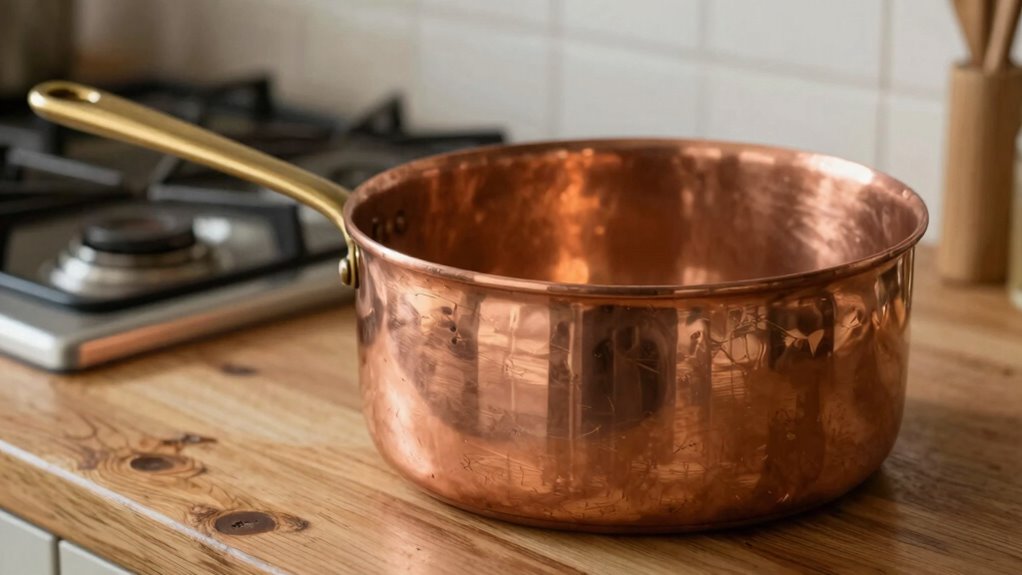
copper saucepans for precise heat control
As an affiliate, we earn on qualifying purchases.
As an affiliate, we earn on qualifying purchases.
Conclusion
In the end, copper cookware offers a gleaming promise of precision and beauty, much like a finely tuned instrument. Yet, beneath its shiny surface lies the need for constant care, akin to tending a delicate garden. While it heats evenly and looks stunning, its high maintenance can feel like chasing shadows. So, if you’re ready for a blend of artistry and effort, copper might just be your perfect kitchen partner—bright, demanding, and undeniably mesmerizing.
antimicrobial copper pots and pans
As an affiliate, we earn on qualifying purchases.
As an affiliate, we earn on qualifying purchases.
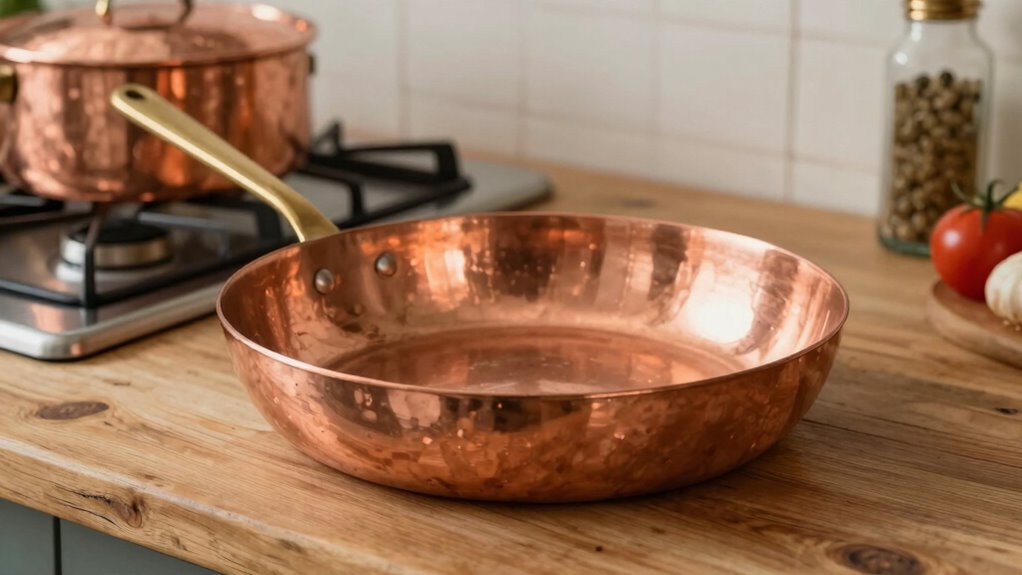
copper frying pan with patina finish
As an affiliate, we earn on qualifying purchases.
As an affiliate, we earn on qualifying purchases.
NFL season / tailgating Picks
team gear
As an affiliate, we earn on qualifying purchases.