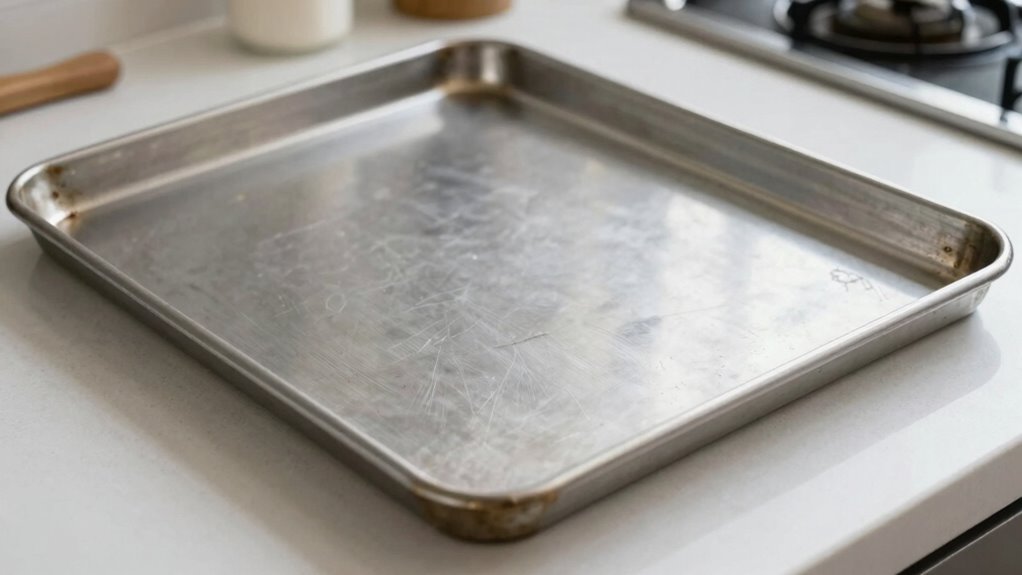

To make a baking sheet last longer, choose one made from high-quality, durable materials like aluminized steel or anodized aluminum, which resist warping and corrosion. Look for reinforced edges and impact-resistant features for added strength. Proper care matters too—avoid metal utensils, hand wash instead of dishwashing, and store carefully to prevent scratches and warping. With the right choice and maintenance, your baking sheet will perform well for years; learn more to maximize its lifespan.

Get kitchen staples and gadgets delivered free with Prime
- Fast, free delivery on millions of items
- Prime Video, Amazon Music and more included
- Member-only deals all year
Key Takeaways
- Choose high-quality materials like heavy-gauge aluminized steel or anodized aluminum for durability.
- Opt for non-stick coatings that resist chipping and peeling, such as PTFE or ceramic-based coatings.
- Handle with care by avoiding metal utensils and harsh cleaners to prevent coating damage.
- Store properly and avoid impacts to prevent warping and surface damage.
- Regularly clean and maintain the sheet to preserve its non-stick properties and structural integrity.
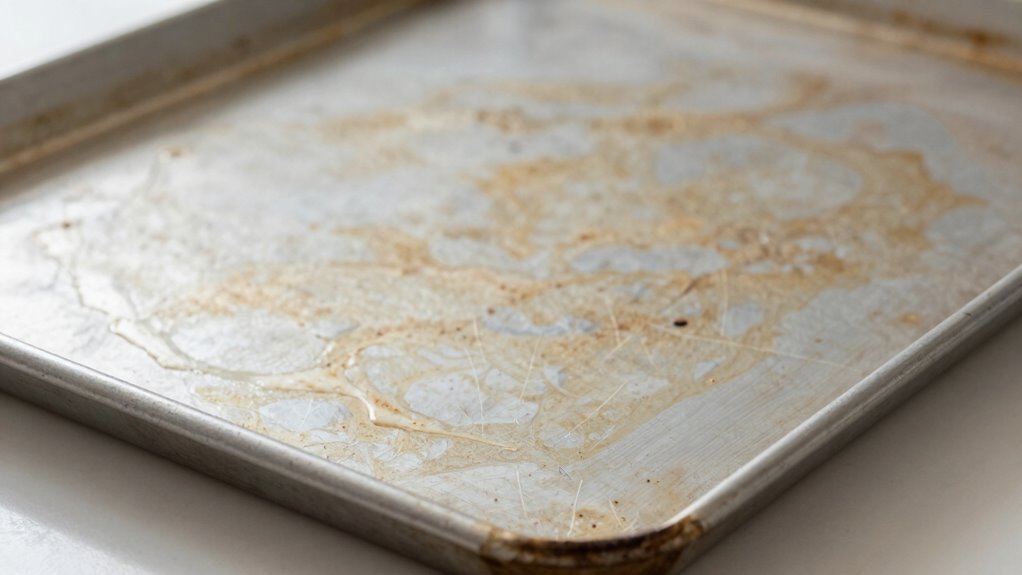
Ever wondered what qualities make a baking sheet last longer? When you’re investing in a good baking sheet, durability is key. You want a pan that withstands frequent use without warping, scratching, or losing its performance over time. Two essential factors contribute to this longevity: the non-stick coating and the material durability of the sheet itself. Understanding how these features work together can help you choose a baking sheet that stands the test of time.
Durable baking sheets combine strong materials and high-quality non-stick coatings for long-lasting performance.
The non-stick coating plays a key role in both ease of use and longevity. A high-quality non-stick coating ensures your baked goods release smoothly, reducing the need for excessive greasing or scrubbing. However, not all coatings are created equal. Cheaper or poorly applied non-stick finishes tend to chip, peel, or wear off after repeated use, shortening the lifespan of your baking sheet. Instead, look for sheets with durable, PTFE or ceramic-based coatings designed to resist scratching and withstand high oven temperatures. Proper care, such as avoiding metal utensils and harsh cleaning agents, also extends the life of the non-stick surface. When maintained correctly, a good non-stick coating can remain effective for years, saving you both time and frustration. Additionally, some non-stick coatings now incorporate advanced technology to improve durability and performance. Using proper cleaning techniques can further enhance the longevity of your coating. A well-made baking sheet should also include features like reinforced edges or impact-resistant construction, which add to its durability during regular handling.
Material durability is another essential aspect. The best baking sheets are made from sturdy materials like heavy-gauge aluminized steel, stainless steel, or anodized aluminum. These materials resist warping, even after multiple heating and cooling cycles. Thinner or cheaper metals tend to bend or warp, which can compromise even heat distribution and cause uneven baking. A resilient material also resists scratches and corrosion, ensuring your baking sheet stays in good condition through regular cleaning. Anodized aluminum, in particular, offers excellent resilience because it’s treated to be resistant to corrosion and scratches, while also providing even heat conduction. Additionally, choosing a sheet with a non-reactive surface minimizes the risk of food discoloration and flavor transfer, further extending its lifespan. Proper storage and handling, such as stacking carefully and avoiding unnecessary impacts, can also help prolong its usefulness. Recognizing the importance of these material qualities can guide you to select a long-lasting baking sheet that performs reliably over time.
Ultimately, the longevity of your baking sheet hinges on both these qualities working together. A sturdy, durable material provides the structural integrity needed for frequent use, while a high-quality non-stick coating makes baking and cleanup easier. By choosing a sheet with these features and caring for it properly—avoiding metal utensils, hand washing instead of dishwashing, and storing it carefully—you can extend its lifespan greatly. Investing in a well-made baking sheet means fewer replacements, better baking results, and a more satisfying baking experience overall.
heavy-gauge aluminized steel baking sheet
As an affiliate, we earn on qualifying purchases.
As an affiliate, we earn on qualifying purchases.
Frequently Asked Questions
Can You Use Metal Utensils on Non-Stick Baking Sheets?
You shouldn’t use metal utensils on non-stick baking sheets because they can damage the non-stick coating, compromising its safety and effectiveness. Stick to silicone, wooden, or plastic utensils to guarantee utensil compatibility and protect the coating. Using metal utensils may scratch or peel the non-stick surface, reducing its lifespan and risking ingestion of coating particles. Prioritizing gentle tools helps your baking sheet last longer and keeps your food safe.
How Often Should I Replace My Baking Sheet?
You should replace your baking sheet when it shows significant signs of wear, such as warping, deep scratches, or rust, which can affect its baking performance and safety. Typically, the baking sheet lifespan varies with use and care, but most last about 3-5 years. Monitoring its condition helps determine the right replacement frequency, ensuring your baked goods turn out perfect and your kitchen stays safe.
Are Ceramic Baking Sheets More Durable Than Metal Ones?
Ceramic baking sheets are generally more durable than metal ones when considering ceramic safety, as they resist rust and corrosion better. However, metal baking sheets often last longer because they withstand high temperatures without cracking. While ceramic offers even heat distribution, be cautious of chips or cracks, which can compromise safety and durability. Ultimately, your choice depends on your baking needs and how well you care for them.
What’s the Best Way to Remove Stubborn Stains?
To remove stubborn stains from your baking sheet, try using stain removal techniques like a paste of baking soda and water. Let it sit for a few hours or overnight, then scrub with a non-abrasive scrubber. For tougher stains, soaking in warm vinegar or using a commercial cleaner can help. Follow these cleaning tips to keep your baking sheet in top shape and extend its lifespan.
Can Baking Sheets Be Safely Cleaned in a Dishwasher?
Yes, baking sheets can often be safely cleaned in a dishwasher, but it depends on the material. Check the manufacturer’s cleaning methods and dishwasher safety instructions first. For metal sheets, use gentle cycles to avoid warping or damage. Avoid abrasive detergents or scrubbing tools that could harm the surface. In general, dishwasher cleaning can be convenient, but hand washing might be better for preserving your baking sheet’s longevity.
anodized aluminum non-stick baking tray
As an affiliate, we earn on qualifying purchases.
As an affiliate, we earn on qualifying purchases.
Conclusion
To make your baking sheet last longer, treat it like a trusted friend—handle it gently, keep it clean, and avoid harsh scrubbing. Regular maintenance and proper storage are key, much like caring for a favorite tool that never lets you down. When you give your baking sheet the attention it deserves, it’ll serve you well, like a reliable compass guiding your baking adventures. With care, your baking sheet will be around for many delicious moments to come.
As an affiliate, we earn on qualifying purchases.
As an affiliate, we earn on qualifying purchases.
NFL season / tailgating Picks
team gear
As an affiliate, we earn on qualifying purchases.