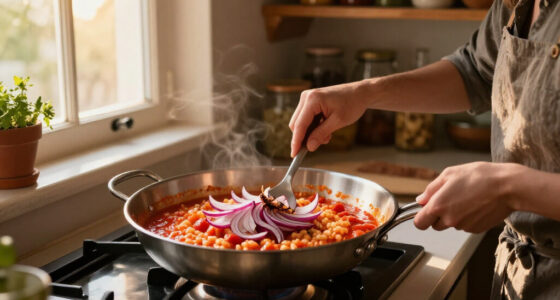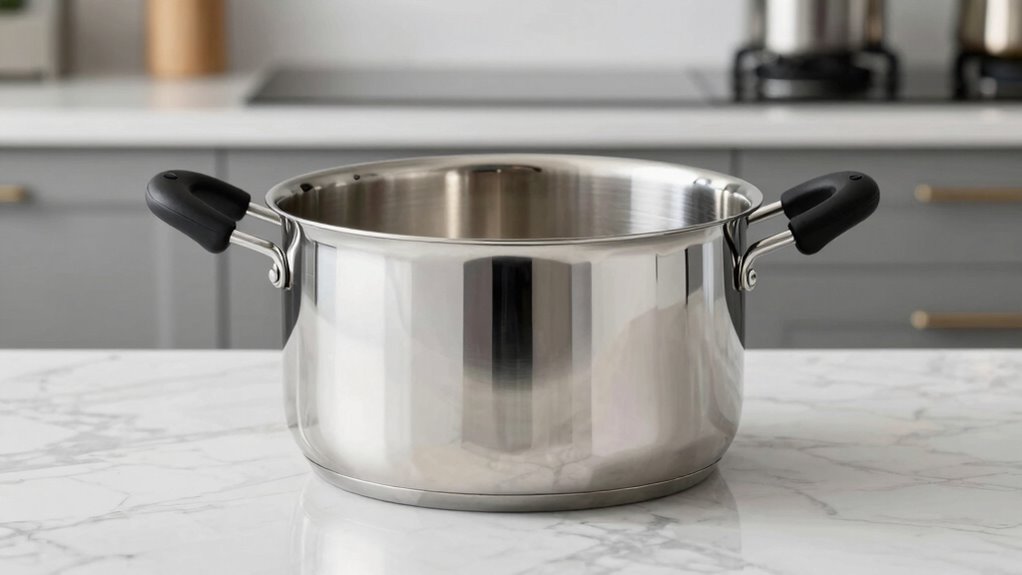

A good stock pot for modern kitchens is built with durable materials like stainless steel or multi-layered construction for even heat distribution and long-lasting use. It should have ergonomic handles that stay cool and provide a secure grip, even with oven mitts. An effective lid with vents helps trap heat or release steam safely, while balanced weight and a sturdy base make it easy to handle. Keep exploring to discover tips for choosing the perfect one for your needs.

Get kitchen staples and gadgets delivered free with Prime
- Fast, free delivery on millions of items
- Prime Video, Amazon Music and more included
- Member-only deals all year
Key Takeaways
- Durable materials like stainless steel ensure longevity, rust resistance, and easy maintenance.
- Ergonomic handles that stay cool and provide a secure grip enhance safety and comfort.
- Multi-layered construction promotes even heat distribution and better heat retention.
- Tight-fitting, vented lids improve cooking efficiency and safety by trapping moisture or releasing steam.
- High-quality manufacturing techniques ensure consistent performance and long-lasting durability.

A good stock pot is essential for any modern kitchen, especially if you enjoy making soups, broths, or large batches of stews. When choosing the right one, the material durability should be at the top of your list. You want a pot that can withstand frequent use without warping, cracking, or degrading over time. Stainless steel is often the best choice because it’s tough, resistant to rust, and easy to clean. Aluminum, on the other hand, heats quickly and evenly, but it’s softer and can dent easily. Cast iron is incredibly durable and retains heat well, but it’s heavy and requires more maintenance. The key is to select a material that balances longevity with your cooking needs, guaranteeing your investment lasts for years without compromising performance.
Equally important is the ergonomic design of your stock pot. It should feel comfortable in your hand, especially if you’re lifting or pouring from it frequently. Look for sturdy, well-attached handles that stay cool during cooking, so you don’t risk burns. The shape and size of the handles also matter; they should provide a secure grip, even when wearing oven mitts. The lid’s design plays a role as well. A tight-fitting lid helps trap heat and moisture, speeding up cooking times and conserving energy. Some lids come with a vent to release excess steam, preventing overflows. An ergonomic lid handle that’s easy to grip enhances safety and convenience. Incorporating traditional practices such as using natural materials for handles or lids can enhance both functionality and cultural connection. Additionally, understanding material technology can help you make an informed choice for your kitchen needs.
Beyond comfort, consider the overall construction. A well-designed stock pot features a thick base that distributes heat evenly, preventing hot spots that can scorch your ingredients. The sides should be high enough to accommodate large quantities of liquids and ingredients, especially if you plan to make big batches. The weight of the pot should feel balanced—not too heavy to maneuver easily, but substantial enough to remain stable on the stove. This balance ensures you can stir, lift, and pour with confidence, reducing fatigue during extended cooking sessions. Furthermore, selecting a pot with a multi-layered construction can significantly improve heat retention and distribution, making your cooking more efficient. The use of advanced manufacturing techniques in creating these layers often results in enhanced durability and performance over time.
stainless steel stock pot with vented lid
As an affiliate, we earn on qualifying purchases.
As an affiliate, we earn on qualifying purchases.
Frequently Asked Questions
Are Non-Stick Stock Pots Suitable for High-Temperature Cooking?
Non-stick stock pots aren’t ideal for high-temperature cooking because their non-stick coating often lacks durability under intense heat. You might find that the non-stick durability diminishes, leading to peeling or damage. Plus, many non-stick coatings aren’t heat resistant enough for searing or boiling at very high temperatures. For such cooking, opt for stainless steel or cast iron, which are better suited for handling high heat without compromising safety or performance.
How Do I Choose Between Stainless Steel and Cast Iron Stock Pots?
Think of choosing between stainless steel and cast iron as selecting the perfect dance partner. Stainless steel offers durability and quick heat conductivity, making it ideal for precise, even cooking. Cast iron, though heavier, provides unmatched material durability and excellent heat retention, perfect for slow, simmering flavors. Your choice depends on your cooking style: swift, responsive tasks or slow, hearty simmering. Both shine in their own culinary choreography.
Can I Use a Stock Pot on Induction Cooktops?
Yes, you can use a stock pot on induction cooktops if it’s made with magnetic materials like stainless steel or cast iron. Aluminum durability isn’t compatible with induction, but some stainless steel options work well. Bonus: a glass lid benefits your cooking by letting you monitor your stew without lifting it, helping maintain heat and energy efficiency. Just check your pot’s bottom for an induction-compatible symbol to be sure.
What Safety Features Should I Look for in a Stock Pot?
Imagine the steam rising safely from your kitchen, a sign of secure cooking. You should look for a stock pot with safety features like sturdy handle design that stay cool and slip-resistant, preventing burns or spills. Also, verify material compatibility with your stove, especially if you use induction. These features keep you safe, easy to handle, and prevent accidents, making your cooking experience more secure and enjoyable.
How Do I Properly Clean and Maintain a Stock Pot?
To properly clean and maintain your stock pot, start with simple cleaning techniques like hand washing with warm water and mild detergent after each use. Avoid abrasive scrubbers that can damage the surface. Regular maintenance tips include checking for warping, avoiding sudden temperature changes, and seasoning if needed. Dry thoroughly to prevent rust, and occasionally deep clean with baking soda or vinegar to keep your stock pot in top shape.
multi-layered stock pot for even heat distribution
As an affiliate, we earn on qualifying purchases.
As an affiliate, we earn on qualifying purchases.
Conclusion
So, don’t let worries about storage or price hold you back. A good stock pot doesn’t have to be fancy or bulky; it’s about choosing one that’s durable, versatile, and fits your cooking style. With the right pot, you’ll make hearty soups, stews, and broths that impress. Investing in quality now means you’ll enjoy delicious homemade meals for years to come—so go ahead, upgrade your kitchen with confidence!
As an affiliate, we earn on qualifying purchases.
large capacity stock pot for soups
As an affiliate, we earn on qualifying purchases.
As an affiliate, we earn on qualifying purchases.
NFL season / tailgating Picks
team gear
As an affiliate, we earn on qualifying purchases.