
If you’re choosing between Japanese and German chef knives for daily prep, consider your comfort, cutting style, and maintenance preference. Japanese knives are sharper, ideal for precise, delicate work, but require careful upkeep. German knives are more durable, easier to sharpen, and great for heavier chopping. If you prefer finesse, Japanese might suit you better; for everyday versatility, German works well. Keep exploring to find the best fit for your cooking needs.

Get kitchen staples and gadgets delivered free with Prime
- Fast, free delivery on millions of items
- Prime Video, Amazon Music and more included
- Member-only deals all year
Key Takeaways
- Japanese knives offer superior precision and sharpness, ideal for delicate daily tasks like slicing herbs or sashimi.
- German knives provide more durability and comfort, suitable for heavy-duty chopping and everyday kitchen use.
- Handle ergonomics differ: Japanese handles promote accuracy, while German handles prioritize comfort for prolonged prep.
- Japanese blades require careful maintenance and sharpening, whereas German blades are easier to sharpen regularly.
- Overall, Japanese knives excel in finesse tasks, while German knives are better for durability and versatile daily prep.
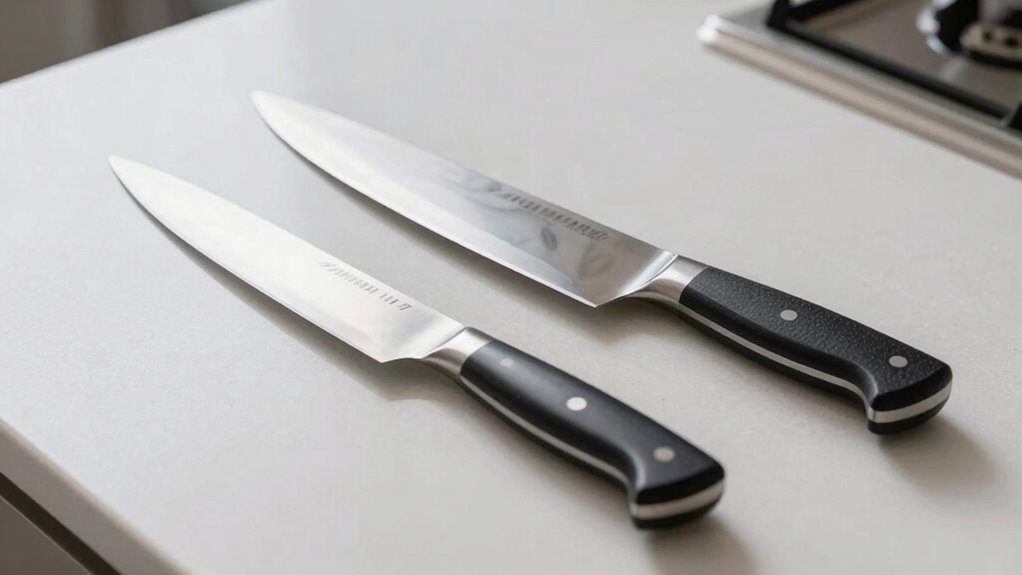
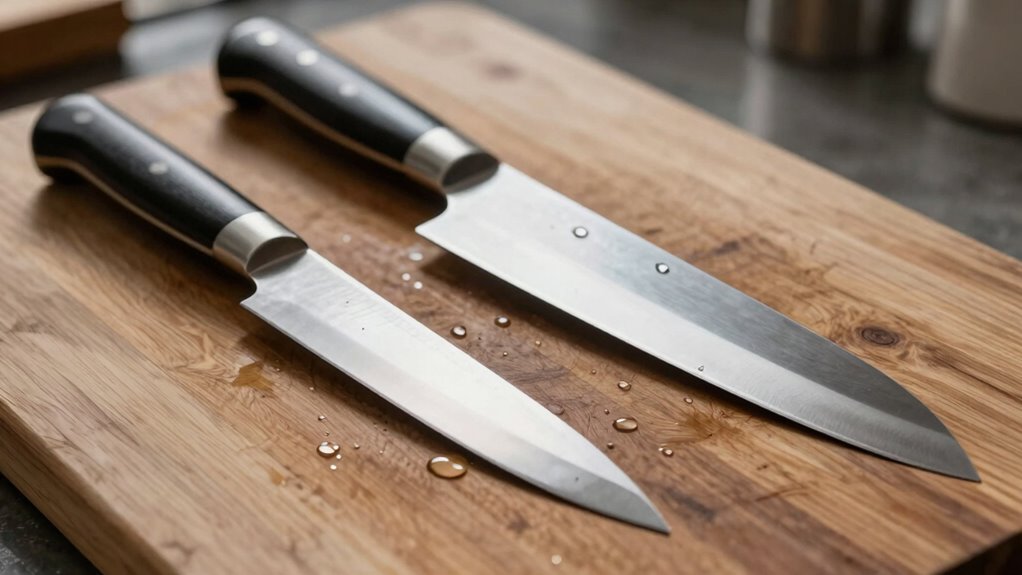
When choosing a chef knife, understanding the differences between Japanese and German styles can significantly impact your cooking experience. One of the most noticeable distinctions lies in the design of the knife handle ergonomics. Japanese knives typically feature slimmer, more streamlined handles that promote a precise, controlled grip, making them ideal for delicate tasks like slicing sashimi or finely chopping herbs. In contrast, German knives often have thicker, more contoured handles designed for comfort during prolonged use, providing a secure grip that reduces hand fatigue when handling larger, tougher ingredients. Considering your hand size, grip preference, and the types of prep work you do most frequently can help determine which handle style suits you best. Blade construction, including the steel quality, also plays an essential role in their performance and maintenance. Japanese blades tend to have a harder steel core, often with a very sharp, fine edge that excels at slicing through ingredients with minimal effort. This sharpness makes blade sharpening techniques especially important; you’ll want to use a whetstone or honing rod regularly to maintain that razor-sharp edge. German knives, on the other hand, usually feature softer steel and a thicker, more robust blade. They are generally easier to sharpen with standard sharpening stones or electric sharpeners, which is a significant advantage if you prefer a low-maintenance approach. The softer steel also means they tend to hold their edge longer during heavy-duty chopping but may require more frequent honing if the edge begins to dull. Additionally, understanding the blade geometry can help you choose a knife that aligns with your cutting style and tasks, whether it’s a thin, agile blade for precision or a sturdier one for heavy-duty chopping. Proper blade maintenance is crucial for preserving the performance of both Japanese and German knives, especially considering their different steel qualities. From a cost perspective, Japanese knives tend to be more expensive initially due to their specialized steel and craftsmanship, but their sharpness and precision can justify the investment for serious cooks. When it comes to daily prep, your choice might hinge on how much time you’re willing to dedicate to maintenance and sharpening. Japanese knives, with their finer edge, demand more careful blade sharpening techniques but reward you with exceptional precision. German knives, being more forgiving in this department, can handle rougher use and are easier to restore to a functional edge quickly. Furthermore, considering the ergonomic design of the handle can influence your comfort and control during extended chopping sessions. Both styles have their benefits: Japanese knives offer exceptional finesse for intricate tasks, while German knives provide durability and comfort for everyday chopping and slicing. Ultimately, selecting between the two depends on your cutting style, the feel you prefer in your hand, and how much effort you’re willing to invest in sharpening and maintenance to keep your knives performing their best.
Japanese chef knife for precision slicing
As an affiliate, we earn on qualifying purchases.
As an affiliate, we earn on qualifying purchases.
Frequently Asked Questions
Which Knife Is More Affordable for Beginners?
For beginners, German chef knives are usually more affordable. They tend to have a thicker, more durable blade with good material durability, making them forgiving for everyday use. While Japanese knives often feature sharper edges, they can be pricier and require more maintenance. If you’re starting out and want a reliable, budget-friendly option, a German knife offers excellent knife sharpness and durability without breaking the bank.
How Do Maintenance Routines Compare Between Japanese and German Knives?
Ever wonder how maintenance routines compare? Japanese knives often require more delicate care, needing regular honing and careful washing to preserve their blade durability. German knives, with their robust construction, are more forgiving, typically needing less frequent sharpening. Handle comfort matters too—Japanese handles are lighter and may need gentler handling, while German handles are sturdier and easier to grip during routine maintenance. Would you choose ease or precision?
Are Japanese Knives Suitable for Heavy-Duty Tasks?
Japanese knives are generally not suitable for heavy-duty tasks because their blades have higher hardness, which improves edge retention but makes them more brittle. You might find they chip or break under intense use. If you need a knife for tough work, look for one with a slightly softer blade, like a German knife, which offers more durability while still maintaining good edge retention.
Which Type of Knife Offers Better Balance and Ergonomics?
Imagine a knife that feels like an extension of your hand—your grip steady, your motion smooth. Japanese knives often excel with their blade craftsmanship, offering precise, lightweight balance, while German knives shine with handle design, providing robust ergonomics. For better balance and comfort, choose a knife that aligns with your hand’s natural shape. Ultimately, the ideal knife feels effortless, making daily prep a seamless, enjoyable experience.
Can Japanese Knives Be Used for Slicing Bread?
Japanese knives are not ideal for bread slicing because their thin, fine blades can tear the bread instead of cleanly slicing through it. While they excel in precision and knife durability for tasks like slicing fish or vegetables, they lack the broader, serrated edge needed for bread. For bread slicing, a serrated bread knife is better, offering durability and a saw-like edge that preserves the loaf’s texture.
German chef knife for heavy chopping
As an affiliate, we earn on qualifying purchases.
As an affiliate, we earn on qualifying purchases.
Conclusion
In the end, whether you choose a Japanese or German chef knife hinges on your personal style and daily needs. It’s almost like fate nudging you toward one, as if the right knife finds you just when you need it most. Sometimes, the perfect blade appears during a routine grocery run, subtly reminding you that the best tools often come when you least expect them. Trust your instincts—your ideal knife might be closer than you think.
Japanese stainless steel kitchen knife
As an affiliate, we earn on qualifying purchases.
As an affiliate, we earn on qualifying purchases.
As an affiliate, we earn on qualifying purchases.
Fall Picks
fall essentials
As an affiliate, we earn on qualifying purchases.