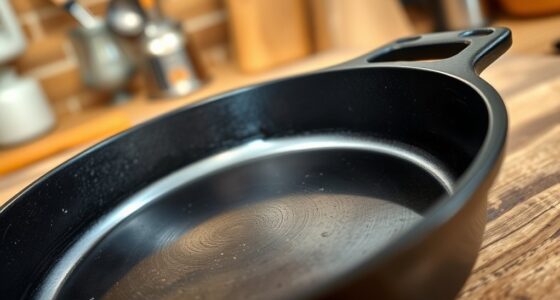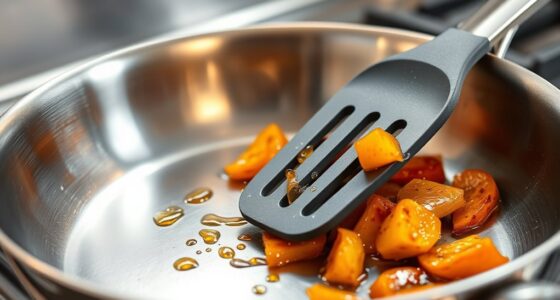
When choosing between carbon steel and cast iron pans, consider their heat response, seasoning, and maintenance. Cast iron retains heat longer and offers steady, even cooking, which is great for searing or slow dishes. Carbon steel heats up faster and responds quickly, making it ideal for precise, rapid cooking like sautéing or stir-frying. Proper care and seasoning improve both pans’ performance, so you’ll find each has unique benefits depending on your cooking style—discover more insights ahead.
Key Takeaways
- Cast iron retains heat longer and provides even cooking, ideal for slow, steady dishes; carbon steel heats up faster and offers quick responsiveness.
- Carbon steel pans are lighter and heat more rapidly, making them easier to re-season and ideal for quick, high-temperature cooking.
- Proper seasoning for both builds a non-stick surface, but re-seasoning carbon steel is easier and more frequent due to its lighter weight.
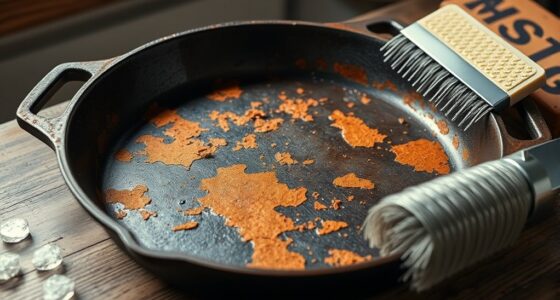
- Cast iron requires thorough drying to prevent rust, while carbon steel is more adaptable and quicker to re-season for maintenance.
- For versatile, rapid adjustments in cooking temperature, carbon steel is preferable; cast iron excels in steady, long-duration heat tasks.

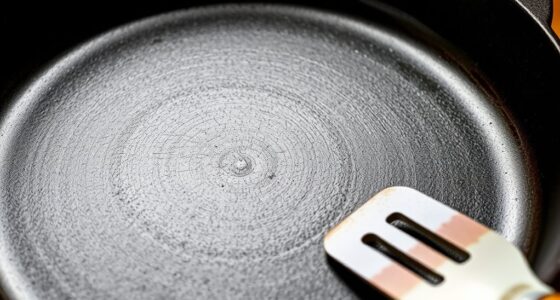
When it comes to seasoning techniques, both types of pans benefit from proper prep to build a non-stick surface and prevent rust. For cast iron, seasoning involves applying a thin layer of oil and baking it at high heat to create a durable, polished coating. This process can be repeated multiple times to enhance the surface’s non-stick properties. Carbon steel pans also require seasoning, but they tend to develop a smoother, more responsive surface more quickly. To season a carbon steel pan, you typically heat it with a thin layer of oil until it smokes, then let it cool. Regular seasoning maintains these surfaces, but a key difference is that carbon steel pans are easier to re-season due to their lighter weight, making them more adaptable if you need to refresh their coating frequently. Additionally, dreams about cookware can sometimes symbolize a desire for better tools or improvements in your cooking routine. Heat retention is another vital factor. Cast iron excels in this area, holding onto heat for a long time once heated, which makes it ideal for searing meats or slow-cooking dishes. This ability to retain heat ensures even cooking, especially when you’re preparing large quantities or using high heat. Carbon steel, while also good at retaining heat, heats up faster and cools down more quickly. This responsiveness allows you to make quick temperature adjustments, which is especially beneficial when sautéing or stir-frying. If you prefer a pan that can go from high heat to low heat seamlessly, carbon steel might be your best choice. Conversely, if you’re looking for a pan that can maintain a consistent temperature throughout a long cooking process, cast iron will serve you better.

Merten & Storck Pre-Seasoned Carbon Steel 12” Frying Pan Skillet, Use on Induction, Stove and Grill, Durable, Even-Heating, for Searing, Grilling, Oven Use, and Campfire, Indoor/Outdoor
NEW YORK MAGAZINE’S The Strategist: Selected as the top budget-friendly carbon steel option, noted for being “a no-nonsense…
As an affiliate, we earn on qualifying purchases.
As an affiliate, we earn on qualifying purchases.
Frequently Asked Questions
Can Carbon Steel and Cast Iron Pans Be Used on Induction Stoves?
Yes, both carbon steel and cast iron pans are induction compatible because of their magnetic properties. You can use them on induction stoves without issue, as they are made from ferrous metals that respond to magnetic fields. Just make sure the pan’s bottom is flat for proper contact, and you’ll enjoy even heating. These pans are durable and versatile, making them great choices for induction cooking.
Which Pan Type Is More Eco-Friendly to Produce and Dispose Of?
Think of eco-friendliness like comparing two trees—one grows faster and is easier to recycle. Cast iron pans are more eco-friendly to produce and dispose of because they involve sustainable manufacturing and are made from highly recyclable materials. Carbon steel also scores well, but cast iron’s durability means you replace it less often. Both are good choices, but cast iron has a slight edge for a greener footprint.
How Do Seasoning Requirements Differ Between Carbon Steel and Cast Iron?
You’ll find that seasoning requirements differ between carbon steel and cast iron pans. With cast iron, you need a thorough seasoning process initially and regular maintenance routines to build up a strong non-stick surface over time. Carbon steel pans, however, heat up quickly and develop a seasoning layer faster, requiring less frequent seasoning. Both need proper maintenance routines to keep their surfaces well-seasoned and rust-free for ideal performance.
Are There Health Considerations When Cooking With Each Material?
You don’t need to worry much about toxicity concerns when cooking with either material, as both carbon steel and cast iron are safe and non-toxic when properly maintained. They can leach small amounts of iron into your food, which is generally beneficial for health. However, guarantee your pans are well-seasoned and free of rust to avoid any potential health implications from contaminants, and always clean them thoroughly.
What Are the Best Cleaning Methods for Maintenance and Longevity?
When it comes to cleaning techniques, skip the dishwasher and embrace hand-washing with hot water and a brush—no soap needed! For maintenance tips, dry your pan thoroughly and apply a light coat of oil after each use to prevent rust. Reserve steel wool for stubborn spots, but generally, gentle scrubbing keeps your pan in prime condition. Keep it seasoned, and your cookware will thank you with years of stellar service.

Lodge Seasoned Cast Iron Skillet – PFAS-Free, Non-Toxic Cookware – Use with an Oven, Stove, Grill, or Campfire – Naturally Non-Stick & Oven Safe – 10.25 Inches
Quality Cast Iron Frying Pan: The Lodge Seasoned Cast Iron Skillet is loved for its great heat retention,…
As an affiliate, we earn on qualifying purchases.
As an affiliate, we earn on qualifying purchases.
Conclusion
So, which pan suits your cooking style better—carbon steel or cast iron? Both offer durability and great heat retention, but your choice depends on your needs and preferences. Will you prioritize quick heating and lighter weight or prefer a heavier pan with a classic seasoning process? Whatever you pick, with proper care, these pans can become kitchen staples for years to come. Ready to embrace the cast iron or carbon steel lifestyle?
Lodge Seasoned Cast Iron Skillet – PFAS-Free, Non-Toxic Cookware – Use with an Oven, Stove, Grill, or Campfire – Naturally Non-Stick & Oven Safe – 10.25 Inches
Quality Cast Iron Frying Pan: The Lodge Seasoned Cast Iron Skillet is loved for its great heat retention,…
As an affiliate, we earn on qualifying purchases.
As an affiliate, we earn on qualifying purchases.
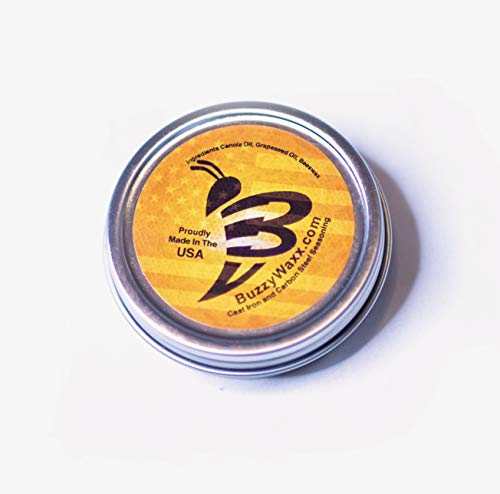
BuzzyWaxx Original Blend – Cast Iron and Carbon Steel Seasoning
Experience the pinnacle of cast iron care with our exceptional Cast Iron Seasoning Blend. Crafted from a harmonious…
As an affiliate, we earn on qualifying purchases.
As an affiliate, we earn on qualifying purchases.