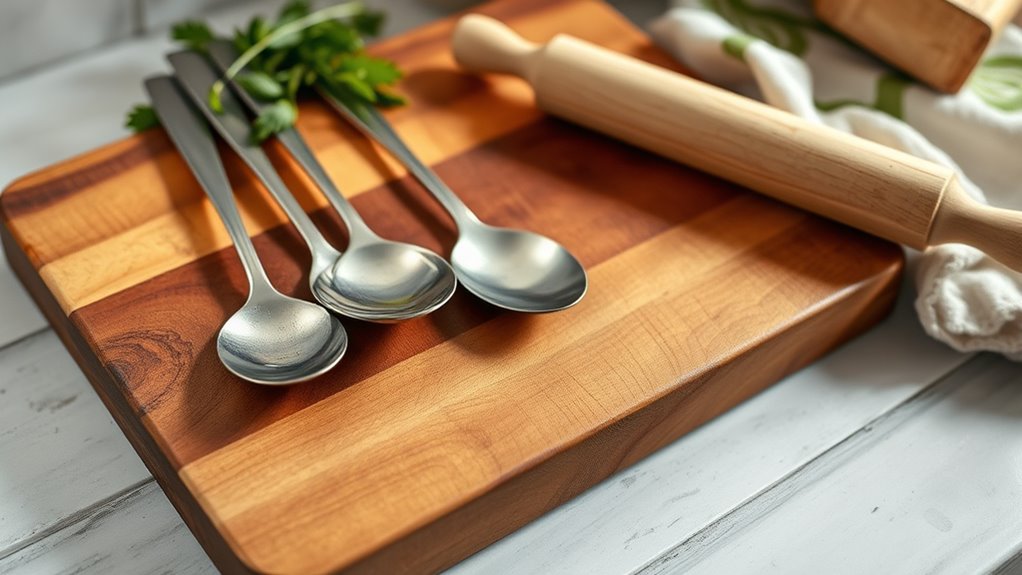

To make your wooden utensils and cutting boards last, clean them with warm water and gentle soap, avoiding harsh chemicals, and dry immediately. Store in a dry, well-ventilated area and avoid soaking or dishwashers. Regularly condition them with food-safe oils like mineral or beeswax, applying along the grain for even coverage. Check for damage and repair or replace when needed. Keep your tools hygienic and cared for—more helpful tips await if you continue.
Key Takeaways
- Clean wooden utensils with warm water and mild soap, then dry immediately to prevent moisture absorption and mold growth.
- Store in a dry, well-ventilated area away from direct sunlight to avoid warping and cracking.
- Regularly apply food-safe oils like mineral or beeswax to condition and protect the wood surface.
- Inspect periodically for cracks, soft spots, or damage, and replace if necessary to maintain safety and longevity.
- Avoid soaking or dishwasher cleaning; instead, hand wash and air dry to preserve the wood’s integrity.
Regular Cleaning and Proper Washing Techniques
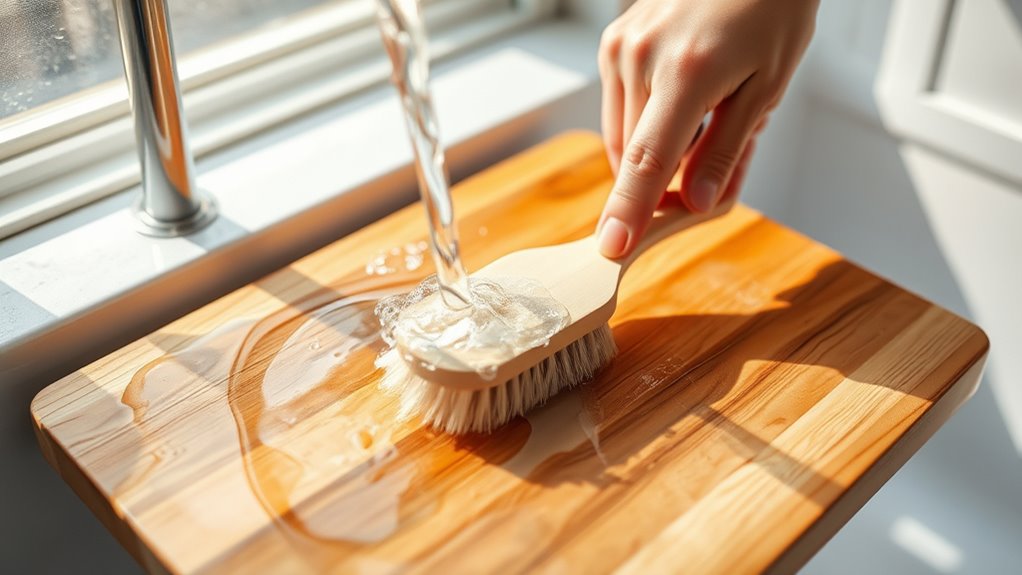
To keep your wooden utensils and cutting boards in good condition, it’s essential to clean them regularly with proper techniques. Start by rinsing them with warm water and mild dish soap, avoiding harsh chemicals that can damage the wood. Use a soft sponge or cloth to scrub away food residues gently. After washing, it’s important to dry them immediately with a clean towel to prevent moisture absorption, which can cause warping or cracking. Incorporate wooden seasoning into your routine by applying a food-safe oil periodically to maintain the wood’s integrity and appearance. Proper utensil storage also plays a role in their longevity; store your wooden tools in a dry, well-ventilated area to prevent mold and bacteria buildup. Regularly checking kitchen tools for cleanliness and maintaining them with proper care ensures your wooden utensils last longer and stay in top condition. Additionally, understanding the importance of wooden surface maintenance can help you take proactive steps to preserve their lifespan. Staying informed about advances in woodworking care can also provide new techniques to keep your utensils in optimal condition.
How to Dry and Store Your Wooden Tools Correctly
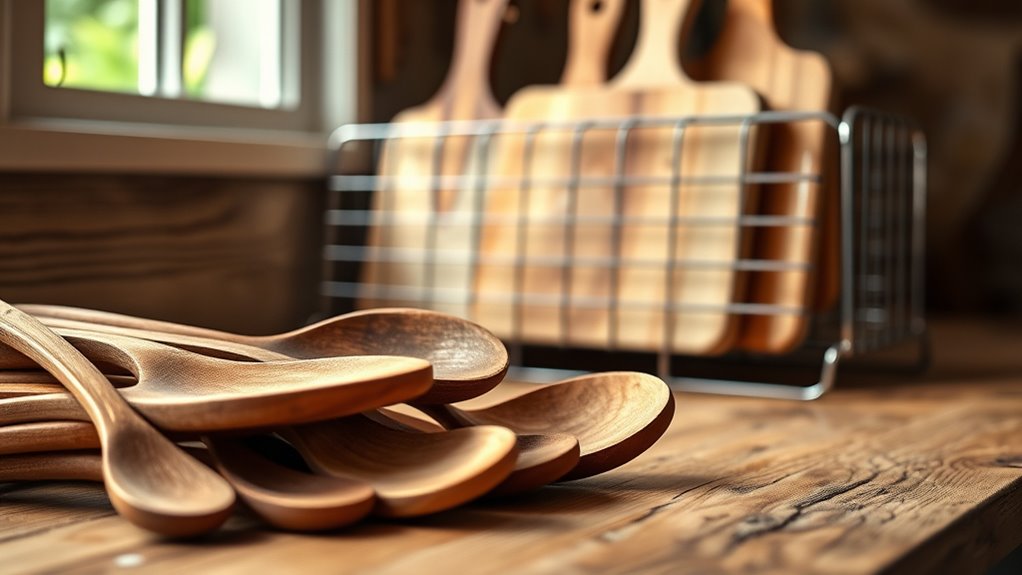
After washing your wooden tools, it’s crucial to dry them thoroughly to prevent moisture from seeping into the wood. Proper drying helps avoid warping and cracking over time. Use a clean towel to gently pat your utensils dry, removing excess water. Then, place them on a drying rack or choose suitable drying rack options that allow air circulation around each piece. Avoid stacking wet utensils tightly together, as trapped moisture promotes mold and bacteria growth. Store your wooden utensil storage in a dry, well-ventilated area, away from direct sunlight, which can cause fading or cracking. Additionally, understanding the material properties of wood can help you select the best cleaning and maintenance practices to preserve your tools. Using the right drying techniques ensures your utensils dry evenly and thoroughly, reducing the risk of damage. Proper ventilation during storage is also important to keep moisture levels low and prevent mold formation. Ensuring your tools are completely dry before storage helps extend their lifespan and maintains their appearance. Incorporating proper storage methods that consider the moisture absorption characteristics of wood can further enhance durability and longevity. Proper drying and storage are essential steps in caring for your wooden utensils effectively, especially considering the moisture absorption characteristics of wood that can influence its durability.
Conditioning and Oiling for Longevity

To keep your wooden utensils and cutting boards durable, you need to choose the right oil that penetrates well and protects the wood. Applying it evenly and properly guarantees your tools stay conditioned without streaks or gaps. Make regular maintenance a habit to extend their lifespan and keep them looking and performing their best. Incorporating knowledge about AI-driven innovations can also help identify the most effective conditioning techniques and products. Being aware of regional resources and local product availability can further enhance your maintenance routine. Understanding personal development techniques like goal setting and mindfulness can also motivate you to maintain your tools consistently. Additionally, selecting aesthetic wall organization solutions can inspire a more organized and visually appealing kitchen environment, promoting better care for your utensils. Considering essential oil safety guidelines when choosing conditioning oils can help prevent potential damage or health issues.
Choosing the Right Oil
Have you ever wondered how to keep your wooden utensils and cutting boards looking their best? Choosing the right oil is key to maintaining their beauty and durability. Look for wooden finishes that are food-safe, BPA-free, and made from eco friendly oils. These options penetrate deeply, nourishing the wood and preventing cracks without harmful chemicals. Mineral oil, beeswax, and walnut oil are popular choices because they’re effective and safe for kitchen use. Avoid synthetic or petroleum-based finishes, which can be toxic or damage the wood over time. When selecting an oil, consider eco-friendly options that are sustainably sourced and biodegradable. The right oil will enhance the natural grain, provide a protective barrier, and extend the life of your utensils and cutting boards. Additionally, choosing oils with UV filters can help protect your wooden utensils from sun damage and color fading over time. To further improve durability, some experts recommend applying a seasoning of oil regularly to keep the wood conditioned and resilient. Regular oil application also helps to maintain the wood’s moisture balance and prevent warping. Incorporating proper cleaning practices will also prolong the lifespan of your wooden tools and prevent mold or bacteria buildup.
Applying Properly and Evenly
Applying oil properly and evenly is key to guaranteeing your wooden utensils and cutting boards stay protected and last longer. To achieve this, focus on wood grain care by applying oil along the natural lines of the wood. Use seasoning techniques such as spreading a small amount of oil with a clean cloth, working in circular motions to cover all surfaces. Make sure to get into corners and edges for complete coverage. This helps prevent uneven spots and enhances the wood’s natural beauty. Consistent, even application allows the oil to penetrate deeply, sealing the wood and maintaining its durability. Proper technique ensures your items stay moisture-resistant and look great over time. Remember, even coating is essential for long-lasting protection and peak performance.
Regular Maintenance Routines
Regular maintenance is essential to keep your wooden utensils and cutting boards in top condition and extend their lifespan. Consistently applying proper seasoning techniques helps protect the wood grain from moisture and prevents cracking. Regularly oil your utensils with food-safe mineral oil or beeswax to maintain their natural luster and durability. When conditioning, make sure you cover all surfaces evenly, paying attention to the grain direction to promote even absorption. This routine not only preserves the wood but also creates an invisible barrier against water and bacteria. Incorporating proper cleaning methods can further enhance the longevity of your wooden tools. Additionally, understanding security features for platforms like WordPress can help ensure your online content remains protected. Using the right paint preparation techniques can also prevent damage and maintain the appearance of your wooden utensils over time. By establishing a regular maintenance schedule, you’ll keep your wooden tools looking beautiful and functioning well for years to come. Remember, simple upkeep is key to maximizing your investment in quality wooden utensils and cutting boards.
Avoiding Common Mistakes That Damage Wood

To keep your wooden utensils and cutting boards in top shape, avoid exposing them to excessive moisture or soaking. Using harsh cleaners can strip away the wood’s natural oils and cause damage over time. Instead, stick to gentle cleaning methods to preserve their durability and appearance. Choosing proper maintenance practices can also help prevent warping or cracking as the wood ages.
Excessive Moisture Exposure
Exposing wooden utensils and cutting boards to excessive moisture can quickly lead to warping, cracking, or mold growth. To prevent this, you need to focus on humidity control and mold prevention. Keep your kitchen’s humidity level steady to avoid drastic moisture changes that damage wood. Always dry your utensils thoroughly after washing, never leave them sitting in water or a damp environment. Store them in a well-ventilated area to allow air circulation. Avoid placing wood near sinks or humid corners, which can trap moisture. Be mindful of the environment; high humidity zones increase the risk of mold and warping. Proper humidity control and diligent drying habits are essential to extend the life of your wooden tools and prevent costly damage.
Using Harsh Cleaners
Using harsh cleaners on your wooden utensils and cutting boards can do more harm than good. Harsh chemicals, like bleach cleaning products, can strip away the wood’s natural oils and cause deterioration over time. These strong agents can also lead to discoloration or cracking, reducing the lifespan of your tools. Instead, avoid using bleach or other aggressive cleaning agents that aren’t specifically designed for wood surfaces. Stick to gentle options like warm water, mild soap, or a vinegar solution for regular cleaning. If deeper sanitation is needed, consider natural disinfectants such as diluted hydrogen peroxide. By steering clear of harsh cleaners and bleach cleaning, you protect your wooden utensils and cutting boards from damage, ensuring they stay in good condition for many years.
Recognizing When to Repair or Replace Wooden Items
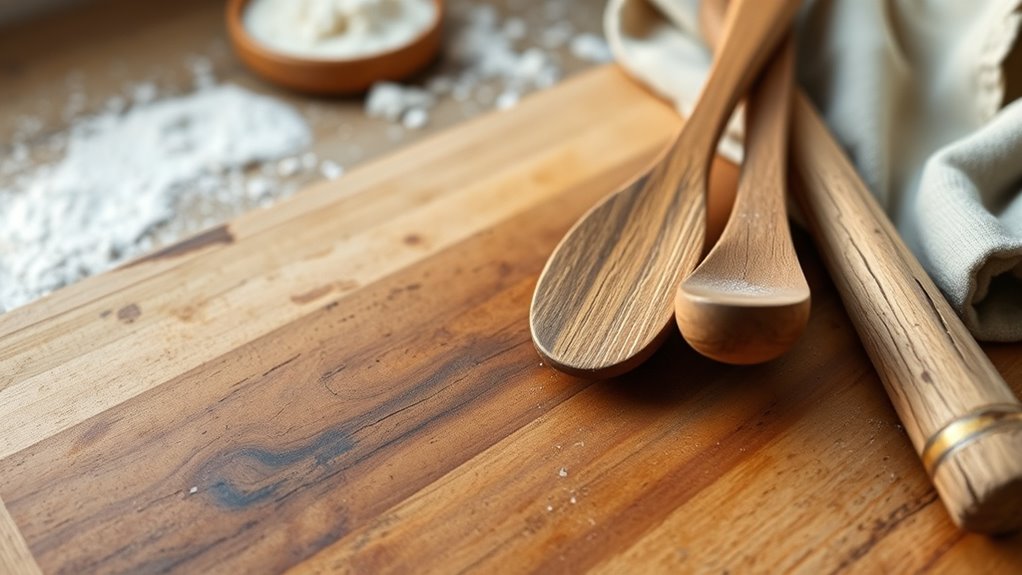
Knowing when to repair or replace your wooden utensils and cutting boards is essential to maintaining their safety and functionality. Look for signs like deep wooden cracks that can harbor bacteria, surface discoloration that won’t come off with cleaning, or areas where the wood feels spongy or soft. These issues compromise the integrity of your tools and pose health risks. Pay close attention to:
- Persistent stains or discoloration that won’t fade
- Cracks or splits in the wood that deepen over time
- Soft spots or areas that feel hollow or weak
If you notice any of these signs, it’s time to contemplate repairs or replacing the item. Proper maintenance can extend their life, but safety always comes first.
Tips for Maintaining Hygiene and Preventing Bacteria Growth
Ever wonder how to keep your wooden utensils and cutting boards truly clean and safe? Regular cleaning is essential to prevent bacteria growth. Use hot water and soap after each use, then dry thoroughly. Consider applying antibacterial coatings designed for wood, which add a protective layer against germs. Sterilization methods like rubbing alcohol or diluted bleach solutions can be used periodically to disinfect surfaces. Avoid soaking or dishwasher cleaning, as moisture promotes bacteria. To help visualize, here’s a quick comparison:
| Method | Pros |
|---|---|
| Rubbing alcohol | Quick, effective, safe for wood |
| Diluted bleach solution | Kills bacteria, deep disinfects |
| Antibacterial coatings | Long-lasting bacteria prevention |
Implementing these tips keeps your utensils hygienic and your family safe.
Frequently Asked Questions
Can I Put Wooden Utensils in the Dishwasher Safely?
You shouldn’t put wooden utensils in the dishwasher because it compromises dishwasher safety and can damage the wood. The high heat and moisture may cause warping, cracking, or splitting. Instead, clean them with gentle washing methods like hand washing with warm, soapy water. Dry thoroughly to prevent mold. Proper cleaning methods help extend their lifespan, keeping your wooden utensils in great shape without risking damage from dishwasher use.
How Often Should I Re-Oil My Wooden Cutting Board?
You should re-oil your wooden cutting board every 4 to 6 weeks, depending on usage and the seasoning schedule you follow. Regular oiling keeps the wood hydrated and resistant to cracks and bacteria. If your board looks dry or dull, it’s time to oil again. Oiling frequency varies with how often you use it, but consistent maintenance guarantees your cutting board stays in great condition and lasts longer.
Is It Okay to Soak Wooden Utensils Overnight?
Think of your wooden utensils like delicate sponges; overnight soaking isn’t ideal. It can cause the wood to swell, crack, or warp over time. I once left a wooden spoon in water overnight, and it never regained its smooth surface. To keep your wooden utensils in top shape, avoid soaking them overnight. Instead, wash promptly, dry thoroughly, and occasionally oil to maintain their durability and beauty.
What Natural Alternatives Can I Use for Conditioning Wood?
You can use natural oils like beeswax, coconut oil, or mineral oil for wood treatment. These natural alternatives penetrate deeply, conditioning the wood and preventing cracks. Before applying, make sure the surface is clean and dry. Rub a small amount of your chosen oil or beeswax into the wood with a cloth, then let it sit overnight. This routine keeps your utensils and cutting boards well-conditioned and protected naturally.
How Do I Remove Stains or Odors From Wooden Tools?
To remove stains or odors from your wooden tools, start by scrubbing the affected area with a mixture of baking soda and water to target stain removal. For odor elimination, rub the surface with a cut lemon or soak it in a vinegar solution. Let it sit for a few hours, then rinse thoroughly and dry. This natural approach helps refresh your wooden utensils and cutting boards effectively.
Conclusion
So, next time you neglect your wooden utensils, just imagine them quietly rotting away, secretly harboring bacteria while you enjoy your meal. With a little care—cleaning, oiling, and proper storage—you’ll keep them beautiful and functional. But forget, and they’ll turn into splinters of regret, reminding you that ignoring maintenance isn’t just neglecting wood—it’s inviting chaos into your kitchen. Treat your utensils well, or watch them crumble into the chaos you once feared.