Both cast iron and Dutch ovens excel in bread baking, thanks to their excellent heat retention and even distribution. Cast iron offers superior insulation and develops a natural non-stick surface with proper seasoning, while enamel-coated Dutch ovens are lower maintenance and still retain heat well. If you want ideal crust and consistent results, cast iron is ideal. For easier upkeep, a Dutch oven might suit you better. Continue for more details on choosing the best tool for your baking adventures.

Get kitchen staples and gadgets delivered free with Prime
- Fast, free delivery on millions of items
- Prime Video, Amazon Music and more included
- Member-only deals all year
Key Takeaways
- Cast iron offers superior heat retention and even distribution, leading to better crust development during bread baking.
- Enamel-coated Dutch ovens require less maintenance and seasoning, making them more convenient for consistent results.
- Both tools need preheating; cast iron’s thicker walls provide better insulation for high-temperature baking.
- Proper seasoning on bare cast iron enhances non-stick properties and flavor over time compared to enamel Dutch ovens.
- Choice depends on preference for maintenance, seasoning, and heat retention, with cast iron excelling in heat performance.

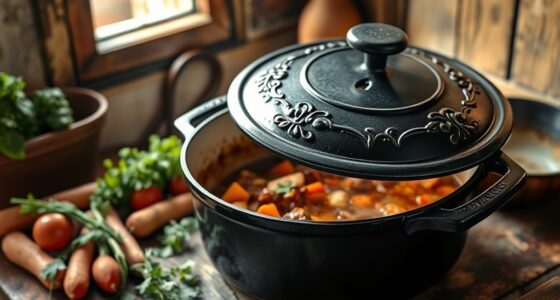
When choosing between cast iron and a Dutch oven, it’s important to understand their similarities and differences, as both are popular tools for versatile cooking. If you’re looking to bake perfect bread, knowing how each performs can make a big difference. One key factor is seasoning techniques. Both cast iron and Dutch ovens develop a natural non-stick surface through proper seasoning, which involves applying a thin layer of oil and heating the cookware repeatedly. This process creates a polymerized coating that enhances the non-stick properties and protects against rust. With cast iron, seasoning is especially essential because it’s a bare metal that benefits from a well-established seasoning layer. Dutch ovens, often made of cast iron with an enamel coating, don’t require seasoning in the same way, but if you have a bare cast iron Dutch oven, the seasoning process is similar. Proper seasoning guarantees your bread doesn’t stick and develops a beautiful crust, while also improving the flavor over time. seasoning techniques are crucial for both types of cookware to achieve optimal baking results. Another significant aspect to take into account is heat retention. Cast iron is renowned for its exceptional heat retention, which helps maintain a steady, even temperature during baking. This quality is indispensable when baking bread because it allows the dough to rise uniformly and develop that desirable crust. When you preheat your cast iron or Dutch oven, it holds onto the heat remarkably well, creating a mini oven effect. This consistent heat distribution ensures the bread bakes evenly from the outside in, resulting in a crisp crust and a well-cooked interior. While both options excel in heat retention, cast iron’s thicker walls generally provide superior insulation, making it ideal for high-heat baking like bread. With a Dutch oven, especially if it’s enameled, heat retention is still excellent, but the material’s construction may slightly influence how evenly the heat spreads.
Products Worth Considering

Le Creuset Enameled Cast Iron Round Dutch Oven, 5.5 Qt, Flame

Le Creuset Signature 6.5-Quart Deep Round Dutch Oven with Light Gold Crucible Knob, Enameled Cast Iron, Bleu Riviera

Le Creuset Enamemed Cast Iron Oval Dutch Oven, 5 qt., White/Crucible
As an affiliate, we earn on qualifying purchases.
Frequently Asked Questions
Can I Use a Dutch Oven for Other Types of Baking?
Yes, you can definitely use a Dutch oven for other types of baking. Its cookware versatility makes it perfect for roasting, baking casseroles, baking cobblers, and even making stews. The heavy lid traps moisture, which is great for baked dishes that benefit from a moist environment. So, beyond bread, a Dutch oven is a valuable tool for various alternative baking uses, helping you create a wide range of delicious meals and treats.
Which Material Retains Heat Better for Bread Baking?
You’ll find that cast iron generally retains heat better than most other materials, making it excellent for bread baking. This material comparison shows that cast iron’s thick walls and dense composition keep heat consistent, ensuring a perfectly crusty loaf. When choosing cookware, consider that cast iron’s superior heat retention helps maintain stable baking conditions, directly influencing your bread’s rise and crust quality.
Are Cast Iron and Dutch Ovens Safe for Dishwasher Cleaning?
Cast iron and Dutch ovens aren’t dishwasher safe, so you should avoid using them for dishwasher cleaning. Instead, stick to traditional cleaning methods like hand washing with warm water and a brush or sponge. For cast iron, dry it thoroughly and apply a light coat of oil to prevent rust. Proper cleaning methods guarantee your cookware stays in great condition and lasts longer, maintaining its performance over time.
How Do I Prevent Rust on My Cast Iron or Dutch Oven?
Did you know that unseasoned cast iron can rust within just a few days? To prevent rust, regularly apply a thin layer of seasoning oil after cleaning, especially if you notice dull spots. Use proper storage tips by keeping your cookware in a dry place and avoiding stacking it with other metals. Seasoning techniques like oven baking or stovetop heating help maintain a protective coating, ensuring your cast iron or Dutch oven stays rust-free and ready to use.
Which Cookware Is More Affordable for Beginner Bakers?
You’ll find that cast iron cookware is generally more affordable for beginner bakers compared to Dutch ovens. The price comparison shows cast iron’s lower initial cost, and maintenance costs remain manageable with regular seasoning and cleaning. Dutch ovens, especially those made with enameled surfaces, tend to be pricier upfront and may require more delicate care. If budget is your priority, cast iron offers great value and durability for starting your baking journey.
Conclusion
So, there you have it—your ultimate showdown between cast iron and Dutch oven. Honestly, whether you choose the classic charm of cast iron or the fancy allure of a Dutch oven, your bread will still turn out better than anything from a bread machine. Just remember, the real secret ingredient is your patience (and maybe a little bit of luck). Now go ahead, conquer that loaf—your kitchen’s about to get a whole lot more delicious.