
Copper cookware offers excellent heat conductivity, so you can cook with precise temperature control. Its timeless look adds warmth and charm to your kitchen. However, it’s soft and can scratch easily, requiring careful handling and regular polishing. Copper reacts with acidic foods, which means cleaning and maintenance are necessary to prevent tarnishing. If you want to discover more about its benefits, drawbacks, and proper care, keep exploring this versatile material.

Get kitchen staples and gadgets delivered free with Prime
- Fast, free delivery on millions of items
- Prime Video, Amazon Music and more included
- Member-only deals all year
Key Takeaways
- Copper cookware offers excellent heat conductivity and precise temperature control, ideal for delicate dishes.
- It is highly aesthetic, developing a patina over time, and adds vintage charm to your kitchen decor.
- Copper is reactive with acidic foods, which can cause tarnishing or greenish stains, requiring regular maintenance.
- Proper care involves gentle cleaning, polishing, and careful handling to prevent dents and scratches.
- While functional and beautiful, copper cookware can be expensive and may require lining with tin or stainless steel.

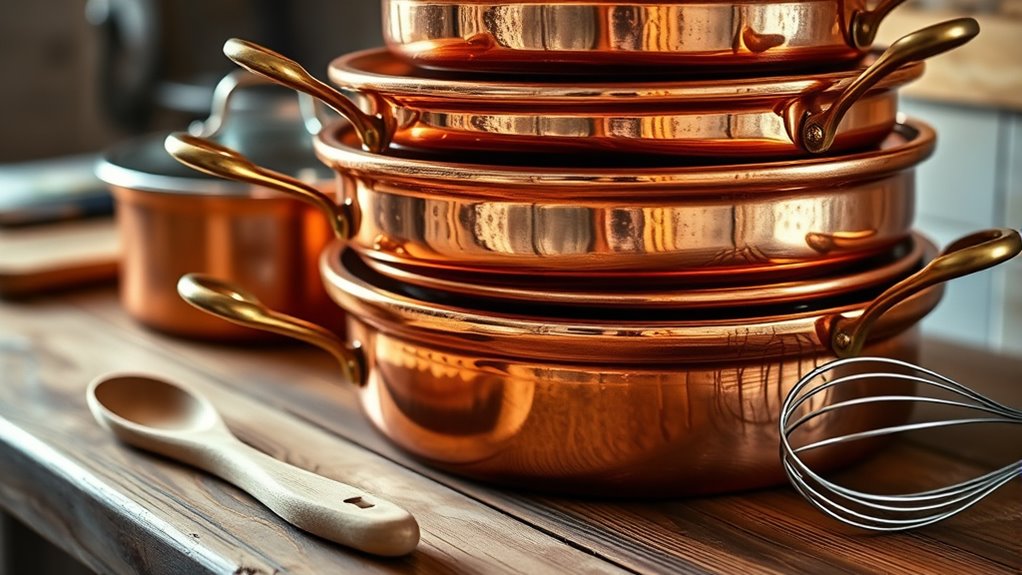
Copper cookware is prized for its excellent heat conductivity and timeless aesthetic, making it a popular choice among both professional chefs and home cooks. Its historical significance runs deep, dating back centuries when copper vessels were used in ancient civilizations for their durability and reliable heat distribution. This long-standing tradition has cemented copper’s reputation as a premium material for cookware. When you hold a piece of copper cookware, you’re connecting to a rich culinary history that spans cultures and centuries. The aesthetic appeal of copper is equally compelling. Its warm, reddish hue adds a touch of elegance and sophistication to any kitchen. Over time, the patina that develops can give your cookware a vintage charm, or you can polish it for a shiny, new look. Whether displayed openly or stored away, copper pots and pans serve as both functional tools and decorative accents.
You’ll notice that the beauty of copper isn’t just superficial; it also influences how you cook. Its superior heat conductivity means you get precise temperature control, which is especially useful when preparing delicate sauces or melting chocolate. This responsiveness allows you to adjust heat quickly, preventing scorching or uneven cooking. However, this high level of performance comes with some considerations. Copper is a soft metal, so it dents or scratches more easily than stainless steel or cast iron. You’ll need to handle it carefully, especially when cleaning or stacking. Additionally, copper’s reactive nature means it can tarnish or develop a greenish patina over time, particularly if you cook acidic foods like tomatoes or vinegar. While many appreciate the aged look, some prefer to maintain a shiny finish, which requires regular polishing with a specialized copper cleaner.
Proper care also involves understanding its reactive nature, which influences cleaning methods and storage practices. Caring for your copper cookware involves more than just cleaning; it’s about preserving both its functional and aesthetic qualities. You should avoid abrasive scrubbers that could scratch the surface, and instead, opt for gentle cleaning solutions. Many copper pots are lined with tin or stainless steel to prevent direct contact between the food and the metal, which helps maintain its appearance and prevents reactions. If your cookware is unlined, be extra cautious with acidic ingredients and promptly clean after use to prevent staining or corrosion. Proper storage also matters—storing copper in a dry environment and occasionally polishing it will keep your cookware looking beautiful and performing at its best. Understanding the historical significance and aesthetic appeal of copper cookware allows you to appreciate its unique qualities, making it a valuable investment for your kitchen.
As an affiliate, we earn on qualifying purchases.
Frequently Asked Questions
Is Copper Cookware Suitable for Induction Stoves?
Copper cookware isn’t suitable for induction stoves because of its non-magnetic properties, meaning it’s not induction compatible. Induction stoves rely on magnetic fields to generate heat, so if your copper pot doesn’t have a magnetic base or an induction-compatible layer like stainless steel, it won’t work efficiently. To use copper on induction, you’d need a specialized base or a copper-lined pan with magnetic properties.
How Often Should I Re-Tin My Copper Pots?
You should re-tin your copper pots every 1 to 3 years, depending on usage and tarnish removal. Regular cleaning helps prevent tarnish buildup, but re-tinning guarantees the copper stays protected and functional. Keep an eye on the interior surface; if you notice dullness or discoloration, it’s time for re-tinning. Proper maintenance preserves your cookware’s performance, so stay attentive to signs needing re-tinning to keep your pots in top shape.
Are Copper Pans Safe for Non-Stick Cooking?
Copper pans are like a blank canvas, but they aren’t typically safe for non-stick cooking. Most copper cookware doesn’t come with non-stick coatings, and adding one can pose health concerns if the coating wears off or contains harmful chemicals. For healthy cooking, stick to traditional non-stick pans or use copper pots for tasks that benefit from their excellent heat conduction, but avoid trying to convert copper pans into non-stick surfaces.
Can I Use Copper Cookware in the Oven?
Yes, you can use copper cookware in the oven, but you should verify if the handles and lining are oven-safe first. Copper maintains its appearance with proper maintenance, which helps preserve its durability. Avoid exposing unlined or delicate pieces to high heat, as this can damage the cookware. Always follow manufacturer instructions to ensure your copper cookware stays in good shape and lasts for years.
What Is the Best Way to Clean Tarnished Copper?
Think of tarnished copper like a dull mirror; it just needs a little polish to shine again. For copper cleaning and tarnish removal, mix equal parts vinegar and salt or lemon juice with baking soda to create a gentle scrub. Rub the paste onto your copper surface, then rinse and dry thoroughly. This method restores its glow, making your cookware look brand new and ready to impress.
As an affiliate, we earn on qualifying purchases.
Conclusion
Copper cookware is like a fiery dance partner—beautiful, responsive, but demanding your attention. With its radiant shine and excellent heat control, it elevates your cooking game. However, its need for regular polishing and delicate handling can feel like taming a wild flame. If you’re willing to nurture this gleaming companion, it’ll reward you with culinary brilliance. Embrace the sparkle and precision—your kitchen’s masterpiece awaits, ready to ignite your passion for cooking.
As an affiliate, we earn on qualifying purchases.
As an affiliate, we earn on qualifying purchases.
Halloween Picks
halloween
As an affiliate, we earn on qualifying purchases.