If you want the most hygienic option, silicone utensils are better than wooden ones. Their non-porous surface resists bacteria buildup and is easier to clean thoroughly, reducing the risk of cross-contamination. Wooden utensils, being porous, can trap food particles and bacteria if not properly maintained. Choosing silicone offers easier maintenance and better safety. To discover more about the differences and how to care for each, keep exploring these material options.

Get kitchen staples and gadgets delivered free with Prime
- Fast, free delivery on millions of items
- Prime Video, Amazon Music and more included
- Member-only deals all year
Key Takeaways
- Silicone utensils are non-porous, resisting bacteria buildup and easier to sanitize thoroughly.
- Wooden utensils are porous, trapping food particles and moisture, increasing bacteria risk without proper cleaning.
- Silicone’s non-porous surface prevents bacteria growth, making it more hygienic than porous wooden options.
- Wooden utensils require diligent cleaning and drying to maintain hygiene, as pores can harbor germs.
- Silicone utensils generally offer better hygiene and easier maintenance compared to wooden utensils.
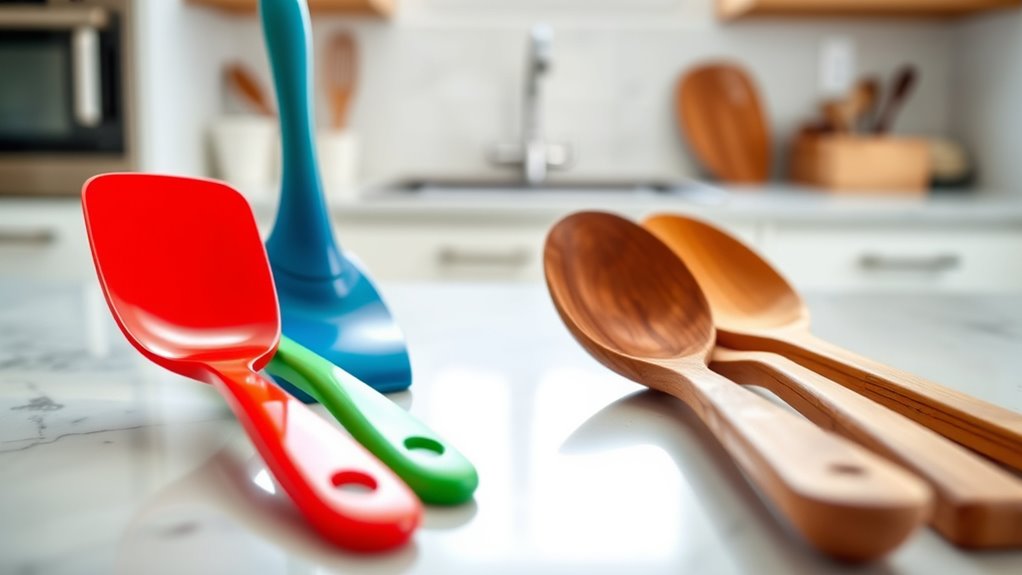
When choosing between silicone and wooden utensils, it’s important to take into account their durability, safety, and suitability for different cooking tasks. Both materials have unique benefits and drawbacks regarding food safety and environmental impact, which are vital factors to consider for hygienic cooking. Silicone utensils are non-porous, making them resistant to bacteria buildup. Because they don’t absorb liquids or odors, they’re easier to clean thoroughly, reducing the risk of cross-contamination. This characteristic makes silicone utensils particularly hygienic, especially when handling raw meats or delicate ingredients. On the other hand, wooden utensils are porous by nature, which means they can harbor bacteria if not cleaned properly. The tiny pores in wood can trap food particles and moisture, creating a breeding ground for germs. If you don’t wash and dry wooden utensils carefully, they may compromise food safety over time. That’s why many experts advise regular, diligent cleaning and occasional sanitizing of wooden tools to maintain hygiene standards.
From an environmental perspective, silicone utensils are often praised for their longevity and reusability. Made from synthetic rubber, they can last for years without degrading, which means fewer replacements and less waste over time. While the manufacturing process of silicone involves some environmental costs, their durability tends to offset this impact, especially when compared to single-use or disposable alternatives. Wooden utensils, by contrast, are biodegradable and generally have a lower environmental footprint during production, especially if sourced sustainably. They come from renewable resources, and when properly cared for, they can be composted or recycled at the end of their life cycle. However, they do require more frequent replacement if they become cracked or heavily stained, which can lead to increased waste.
When weighing hygiene, silicone utensils have an edge because their non-porous surface discourages bacteria growth and simplifies cleaning. Wooden utensils, while natural and biodegradable, demand more attention and care to guarantee they stay safe for food contact. From an environmental impact standpoint, both materials offer sustainability benefits, but silicone’s long-lasting nature gives it an advantage in reducing waste over time. Ultimately, your choice depends on your priorities: if food safety and ease of maintenance are paramount, silicone might be the better option. If environmental sustainability and natural materials matter most, wooden utensils could suit your needs better. Either way, proper cleaning and care are essential to keeping your utensils hygienic and safe, regardless of their material.
Products Worth Considering

Weber Searwood 600 Wood Pellet Smoker Grill, Black

Ninja Sizzle Indoor Grill and Griddle, 14-Inch, Grey/Silver (GR101)
Vitamix 5200 Professional-Grade Blender, 64 oz. Container, Black
As an affiliate, we earn on qualifying purchases.
Frequently Asked Questions
Are Silicone Utensils More Resistant to Bacterial Growth Than Wooden Ones?
Yes, silicone utensils are more resistant to bacterial growth than wooden ones. They often feature antibacterial coatings and are highly moisture-resistant, preventing bacteria from thriving. Unlike wood, which can absorb moisture and harbor bacteria in its pores, silicone’s non-porous surface makes it easier to clean thoroughly. This combination of moisture resistance and antibacterial properties makes silicone utensils a more hygienic choice for your kitchen.
Can Wooden Utensils Harbor Hidden Bacteria Even After Cleaning?
Even after cleaning, wooden utensils can harbor hidden bacteria like tiny reservoirs, making them more susceptible to bacterial growth due to their porosity. Their porous surface absorbs moisture and food particles, creating perfect hiding spots for bacteria that can’t be entirely washed away. So, yes, wooden utensils can harbor hidden bacteria, and you need to be vigilant with thorough cleaning and regular replacement to avoid potential health risks.
Do Silicone Utensils Emit Harmful Chemicals When Heated?
Silicone utensils generally don’t emit harmful chemicals when heated, making them safe for cooking. They are designed to withstand high temperatures without releasing toxic substances, addressing safety concerns. Unlike some materials, high-quality silicone is inert and won’t break down or emit chemical emissions during typical use. So, if you choose food-grade silicone, you can cook confidently without worrying about harmful chemical emissions or safety concerns.
How Do the Durability and Lifespan Compare Between Silicone and Wooden Utensils?
Think of silicone utensils like a trusty rubber band—they stretch and hold up well over time. Silicone generally outlasts wooden utensils in material longevity, resisting cracking and splitting. Wooden tools may look charming, but their usage lifespan is shorter as they can warp or crack with moisture. Silicone utensils tend to be more durable, making them a smarter choice if you’re after longevity and consistent performance in your kitchen.
Are There Any Environmental Concerns Associated With Disposing of Silicone Versus Wooden Utensils?
When disposing of silicone and wooden utensils, you’ll find that wooden ones are more environmentally friendly due to their biodegradability. Silicone has a lower biodegradability comparison, meaning it takes longer to break down and can pose recycling challenges. Wooden utensils can often be composted or recycled more easily, reducing environmental impact. So, if eco-friendliness matters to you, wooden utensils are generally the better choice for disposal.
Conclusion
Choosing between silicone and wooden utensils is like picking between a smooth river and a sturdy oak. Silicone offers a sleek, non-porous surface that resists bacteria, making it a hygienic choice. Wooden utensils, though natural and charming, can harbor germs if not cared for properly. Ultimately, your decision depends on your cleaning habits and preferences. Just remember, a clean utensil is the steady oar that keeps your kitchen voyage safe and smooth.