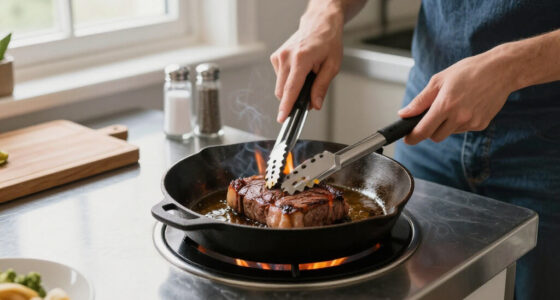
To prevent food from sticking to cast iron without scraping, focus on proper seasoning and temperature control. Apply a thin, even layer of oil with a high smoke point and heat the skillet well before adding food, ensuring the surface develops a natural non-stick layer. Keep the heat at medium or medium-high, and let food release naturally before trying to flip. Master these tips to make cleanup easier—if you keep going, you’ll discover even more ways to perfect your cast iron skills.

Get kitchen staples and gadgets delivered free with Prime
- Fast, free delivery on millions of items
- Prime Video, Amazon Music and more included
- Member-only deals all year
Key Takeaways
- Ensure the skillet is properly seasoned with a thin, even layer of high-smoke-point oil and heated adequately before cooking.
- Preheat the cast iron skillet fully to develop a natural non-stick surface prior to adding food.
- Cook at medium to medium-high heat to prevent oil breakdown and promote food release.
- Allow food to naturally release before flipping, avoiding premature stirring or scraping.
- After cooking, clean with hot water and a stiff brush, then dry thoroughly and apply a light oil coating for maintenance.

Ever wonder why food sometimes sticks to your cast iron skillet? It can be frustrating, especially when you’re trying to cook a perfect sear or delicate pancakes. The key to preventing sticking lies in understanding seasoning techniques and managing your cooking temperature. Seasoning isn’t just about adding a layer of oil; it’s about building a durable, smooth surface that repels food. Proper seasoning techniques involve applying a thin layer of oil—preferably one with a high smoke point like flaxseed or grapeseed oil—and then heating the skillet to a temperature that allows that oil to polymerize. This process creates a natural non-stick coating. The more you season your skillet correctly, the better its surface becomes at preventing food from sticking.
Alongside seasoning, controlling your cooking temperature is vital. Too high, and the oil can break down, creating a sticky residue that clings to your food. Too low, and the surface may not develop the necessary non-stick properties. Usually, medium to medium-high heat works best for most cooking tasks. When you add food, make sure your skillet is preheated adequately—this helps create a barrier that prevents sticking. If you notice food starting to stick, it’s often a sign your temperature is too low or that your skillet isn’t seasoned well enough. Always give your pan time to heat up evenly before adding ingredients; this ensures a consistent cooking surface that minimizes sticking.
Another tip is to guarantee your skillet is properly cleaned and seasoned regularly. After cooking, avoid using harsh soaps that can strip away the seasoned layer. Instead, rinse with hot water and use a stiff brush if needed. Once clean, dry the skillet thoroughly to prevent rust and then apply a light coat of oil before storing. Over time, this maintenance builds a better non-stick surface, reducing the need for scraping and making cleanup easier. When cooking, don’t rush to flip or move your food prematurely. Let it develop a natural release—this is a sign your seasoning and temperature are dialed in correctly. If food begins to stick, lift it gently to see if it releases easily; if it doesn’t, give it a bit more time or adjust the heat.
As an affiliate, we earn on qualifying purchases.
Frequently Asked Questions
Can I Cook Acidic Foods in Cast Iron Without Sticking?
Yes, you can cook acidic foods in cast iron without sticking if you prepare your pan properly. To prevent sticking, make sure your skillet is well-seasoned and heated before adding acidic ingredients. Cook at moderate temperatures, and avoid prolonged simmering. Regularly maintain your cast iron by re-seasoning it, which creates a natural non-stick surface. With these tips, acidic foods won’t stick, and your skillet stays in great shape.
Does Seasoning Cast Iron Prevent Sticking Long-Term?
Yes, seasoning your cast iron helps prevent sticking long-term. Proper seasoning durability creates a natural non-stick surface, making cooking smoother. To maintain it, regularly clean and lightly re-season your pan as needed, especially after cooking acidic or sticky foods. Consistent seasoning maintenance ensures a resilient, non-stick coating that improves with use, so your cast iron stays cooking effortlessly and resists sticking over time.
How Often Should I Reseason My Cast Iron Skillet?
Think of your cast iron skillet as a garden that needs regular tending. You should reseason it about once every 6 months or when you notice food sticking or dullness. Follow reseasoning tips like cleaning thoroughly, applying a thin coat of oil, and baking it until shiny. This keeps the seasoning vibrant, creating a natural non-stick surface that makes cooking smoother and cleanup easier over time.
Is It Okay to Store Food Directly in Cast Iron?
You can store food directly in your cast iron skillet, but it’s not ideal for seasoning maintenance. Food storage in the skillet can lead to rust and damage the seasoning layer over time. To keep your skillet in top shape, it’s best to transfer leftovers to another container. If you do store food in it temporarily, make sure to dry it thoroughly afterward to prevent rust and preserve your seasoning.
Can I Use Soap to Clean My Cast Iron Without Ruining the Seasoning?
You can use soap for cast iron cleaning occasionally without ruining the seasoning, as long as you rinse thoroughly afterward. Soap safety is generally okay if you don’t overdo it, since modern soaps won’t strip the seasoning like harsh detergents did in the past. After washing, dry your cast iron completely and apply a light coat of oil to maintain its non-stick surface and prevent rust.
high smoke point cooking oil for cast iron
As an affiliate, we earn on qualifying purchases.
As an affiliate, we earn on qualifying purchases.
Conclusion
With a little care, your cast iron pan can become your best kitchen partner, gliding through cooking like a well-rehearsed dance. Keep it seasoned, heat it properly, and use enough fat to create a natural non-stick surface. Think of your cast iron as a trusted friend who only gets better with time. When you treat it right, sticking becomes a thing of the past, and your cooking will flow smoothly, turning every meal into a masterpiece.
cast iron skillet cleaning brush
As an affiliate, we earn on qualifying purchases.
As an affiliate, we earn on qualifying purchases.
best cast iron skillet for non-stick cooking
As an affiliate, we earn on qualifying purchases.
As an affiliate, we earn on qualifying purchases.
Halloween Picks
halloween
As an affiliate, we earn on qualifying purchases.