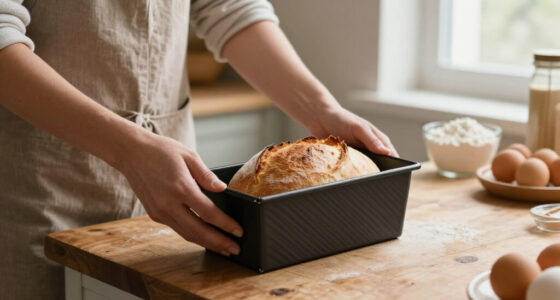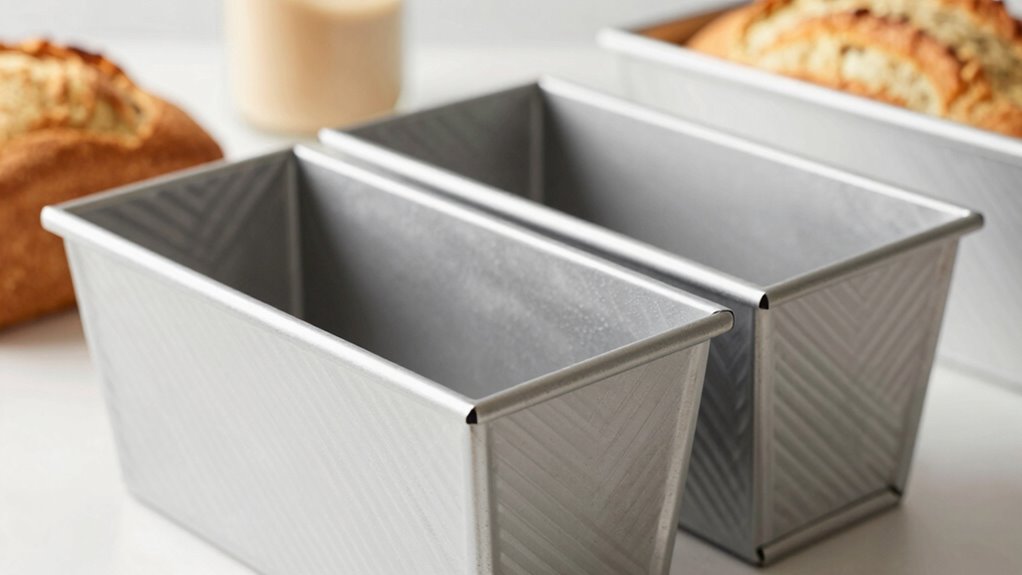

Using the wrong loaf pan size affects how heat transfers during baking, which can change how much your bread rises, its texture, and doneness. A larger pan causes batter to spread out more, leading to denser loaves and longer bake times, while smaller pans produce taller, domed loaves with quicker rise. Adjusting your temperature and baking time helps compensate for size differences. Keep exploring for more tips to perfect your baking results.

Get kitchen staples and gadgets delivered free with Prime
- Fast, free delivery on millions of items
- Prime Video, Amazon Music and more included
- Member-only deals all year
Key Takeaways
- Larger pans spread batter more, increasing baking time and potentially causing denser, less risen loaves.
- Smaller pans concentrate batter, resulting in taller, domed loaves with quicker rise.
- Pan size affects heat transfer, influencing baking evenness and crust development.
- Different pan sizes require temperature and time adjustments to achieve proper doneness.
- Ingredient ratios and leavening may need modification based on pan dimensions to maintain texture and appearance.

When you switch to a different loaf pan size, the results can vary considerably, affecting both the appearance and texture of your baked goods. This happens because changing the pan size influences how heat is transferred during baking, which in turn impacts the baking temperature needed to achieve ideal results. Using a larger pan means the batter spreads out more, so it takes longer to cook through, often requiring you to adjust the baking temperature downward slightly to prevent over-browning. Conversely, a smaller pan concentrates the batter, causing it to bake faster and possibly leading to uneven cooking if you don’t modify the temperature accordingly. Additionally, heat transfer plays a crucial role in ensuring the loaf bakes evenly, so understanding how different pans affect this process is key. Proper baking techniques are essential to adapt to these changes and attain consistent results. Ingredient variations also play a significant role. When you swap pans, the amount of batter may stay the same, but the way ingredients behave can change. For example, if your recipe includes ingredients like baking powder or baking soda, their leavening power can be affected by the pan size. A larger pan might cause the batter to rise less because it has more space to expand, which could lead to a denser loaf. Smaller pans can cause the batter to rise more quickly, potentially resulting in a taller, more domed top. If your recipe relies on specific ingredient ratios, switching pans without adjusting these ratios can throw off the final texture. For instance, adding more liquid or reducing dry ingredients might be necessary to maintain the desired crumb, especially if the batter is spread thinner in a larger pan. Temperature adjustments are crucial when changing pan sizes to ensure even baking. A thicker batter in a smaller pan might require a slight decrease in baking temperature to prevent the crust from burning before the interior cooks through. Conversely, in a larger pan, increasing the baking temperature slightly or extending the baking time ensures the center reaches the proper temperature without burning the edges. Ignoring baking temperature adjustments can lead to undercooked, overcooked, or unevenly baked loaves, making it essential to understand how pan size impacts heat distribution and overall baking performance. Additionally, considering oven calibration can help ensure your adjustments are accurate for consistent results.
As an affiliate, we earn on qualifying purchases.
Frequently Asked Questions
How Do I Adjust Baking Time for Different Loaf Pan Sizes?
To modify baking time for different loaf pan sizes, consider the pan size influence on heat distribution. Use a larger pan for quicker baking and a smaller one for longer. Typically, reduce baking time by 10-15% for larger pans, and increase it slightly for smaller ones. Keep an eye on your loaf’s surface and insert a toothpick to check doneness. Adjustments guarantee your bread cooks evenly without burning or underbaking.
Does Pan Material Affect Baking Results?
Yes, pan material affects baking results. Non-stick coatings guarantee easy removal but can influence heat transfer, sometimes leading to uneven baking. Glass pans heat more slowly and retain heat longer, giving a different crust and texture compared to metal. Metal pans, especially aluminum, conduct heat quickly, promoting even baking. So, choosing between glass and metal depends on your desired outcome, and understanding how each material interacts with your recipe helps you achieve better results.
Can I Use a Round Pan Instead of a Loaf Pan?
Yes, you can use a round pan instead of a loaf pan, but expect different loaf shapes and baking times. Alternative pan materials like metal or silicone can also affect results, so keep an eye on baking duration. To guarantee even baking, adjust the temperature or baking time accordingly. Be aware that the round pan will produce a different presentation, but with careful timing, your baked good will turn out delicious.
How Does Oven Temperature Impact Loaf Pan Size Variations?
Oven heat can dramatically change your baking results; it’s like controlling a magic wand! When oven temperature varies, it impacts loaf pan size outcomes because higher heat speeds up cooking, causing the batter to rise faster and potentially overflow or cook unevenly. To guarantee baking consistency, always preheat your oven properly and stick to the recommended temperature, so your loaf turns out perfectly shaped and delicious every time.
Are There Specific Recipes Suited for Small or Large Loaf Pans?
You should choose recipes suited for your loaf pan size to make sure proper baking. For small pans, try quick bread recipes like banana or zucchini bread, which handle ingredient substitutions well. Larger pans work for recipes like meatloaf or larger bread loaves. To keep your baked goods fresh, follow storage tips like wrapping tightly or freezing portions. Adjust ingredient quantities if you switch pans to prevent overfilling or underbaking.
As an affiliate, we earn on qualifying purchases.
Conclusion
When you switch loaf pan sizes, it’s like changing the canvas for your baking masterpiece. The batter spreads or pools differently, shaping your final loaf into a tiny jewel or a hearty loaf, each with its own story. So, embrace the change as a dance of proportions—your oven’s symphony playing to a different tune. With each adjustment, you craft not just bread, but a delicious work of art, perfect in its unique form.
As an affiliate, we earn on qualifying purchases.
As an affiliate, we earn on qualifying purchases.
Fall Picks
fall essentials
As an affiliate, we earn on qualifying purchases.