
To choose the right pots and pans for your stove, first identify your stove type—induction, ceramic, or gas—and verify cookware compatibility, like using a magnet for induction. Opt for flat-bottomed pieces that fit well to guarantee even heating and safety. Consider materials such as cast iron, stainless steel, or aluminum based on your needs, and select the correct size and shape for your cooking tasks. Proper maintenance and testing will keep your cookware performing well—stick with us to learn how to do it right.
Key Takeaways
- Identify your stove type (induction, ceramic, gas) and choose cookware compatible with its heat transfer requirements.
- Use a magnet to test if cookware is suitable for induction stoves; flat-bottomed pots work best for ceramic cooktops.
- Select cookware materials (cast iron, stainless steel, aluminum, copper) based on heat conduction, durability, and compatibility.
- Ensure pots and pans have flat, even bottoms to promote even heating and prevent wobbling or surface damage.
- Regularly verify cookware compatibility and maintain proper storage to prolong lifespan and ensure safe, efficient cooking.
Top picks for "choose right pots"
Open Amazon search results for this keyword.
As an affiliate, we earn on qualifying purchases.
Understanding Different Stove Types and Their Requirements
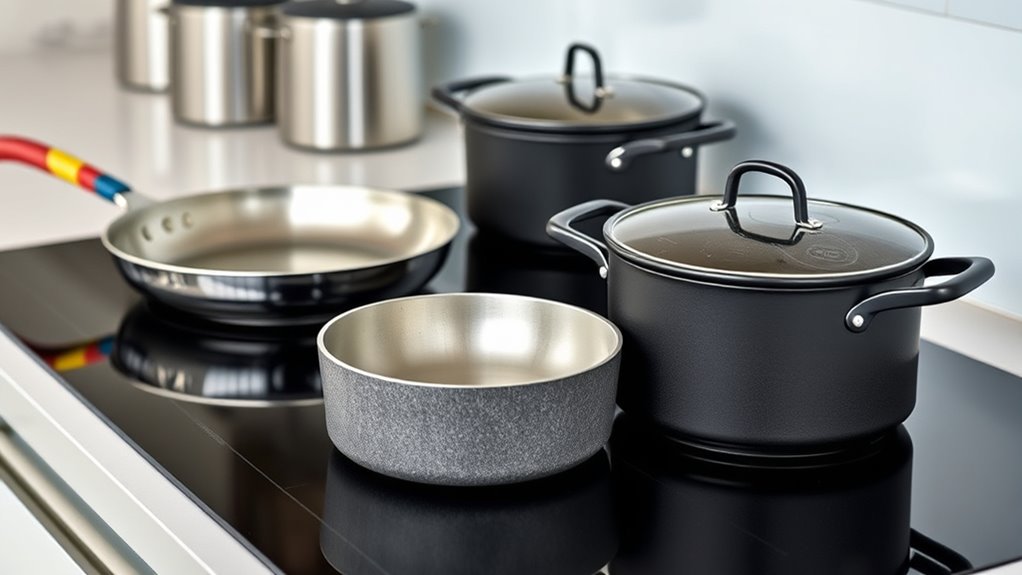
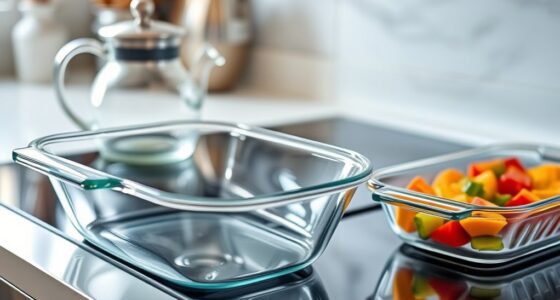
Understanding your stove type is essential because different stoves require specific cookware for ideal performance. If you have an induction stove, you’ll need pots and pans made of magnetic materials like cast iron or some stainless steels. These materials allow the stove’s electromagnetic field to generate heat efficiently. For ceramic cooktops, you should choose pots and pans with flat bottoms to ensure even heat transfer and prevent scratching the surface. Avoid cookware with warped or uneven bases, as they won’t sit properly and could damage the surface. Recognizing your stove type helps you select compatible cookware, ensuring safety, durability, and excellent cooking results. Additionally, selecting cookware made from materials suitable for your stove type needs can improve overall efficiency and performance in your kitchen. Knowing these basics allows you to make informed decisions, so your cookware performs well and lasts longer.
Key Materials and Their Compatibility With Stove Surfaces

Choosing the right cookware material is essential because it directly affects heat transfer, durability, and compatibility with your stove. Material durability guarantees your pots and pans last over time, resisting warping and corrosion. Meanwhile, heat conductivity determines how evenly and quickly heat spreads across the cookware, impacting cooking performance. For example, copper offers excellent heat conductivity but can be delicate, while cast iron is incredibly durable but heats unevenly without proper seasoning. Aluminum strikes a good balance with high heat conductivity and good durability, making it suitable for many stove types. Stainless steel, though less conductive, is highly durable and compatible with most surfaces. Material technology advancements have led to the development of copper core technology, which has improved heat responsiveness and evenness. Considering stove compatibility when selecting cookware can further enhance cooking results and prolong the lifespan of your pots and pans. Additionally, understanding material compatibility with different stove surfaces can help you make more informed choices for your kitchen.
Recognizing the Importance of Flat-Bottomed Cookware
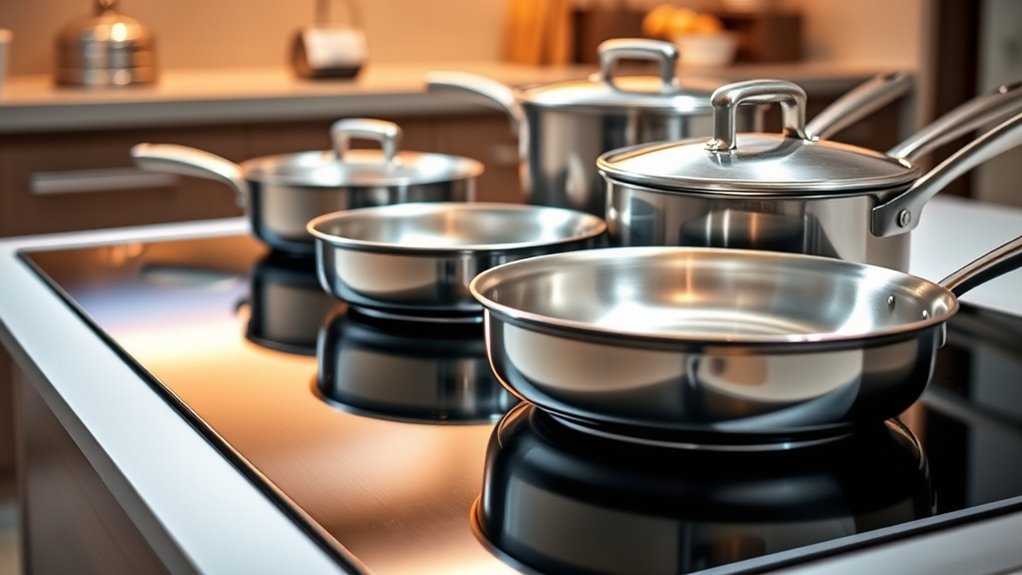
A flat-bottomed cookware guarantees maximum contact with your stove’s surface, which is essential for efficient heat transfer and even cooking. Non-flat cookware, like decorative pots, often lacks this contact, leading to uneven heating. To guarantee ideal performance, pay attention to these points:
- Flat bottoms are compatible with smooth stoves, especially electric and induction surfaces.
- Non flat cookware may wobble or create hot spots, affecting cooking quality.
- Flat-bottomed pots heat evenly, preventing burning or undercooking.
- For decorative pots, ensure they have a flat base if you plan to cook with them regularly.
Recognizing the importance of flat-bottomed cookware helps you avoid inefficient cooking and potential damage to your stove. This simple feature ensures better heat conduction and a more enjoyable cooking experience.
Choosing the Right Size and Shape for Your Cooking Needs
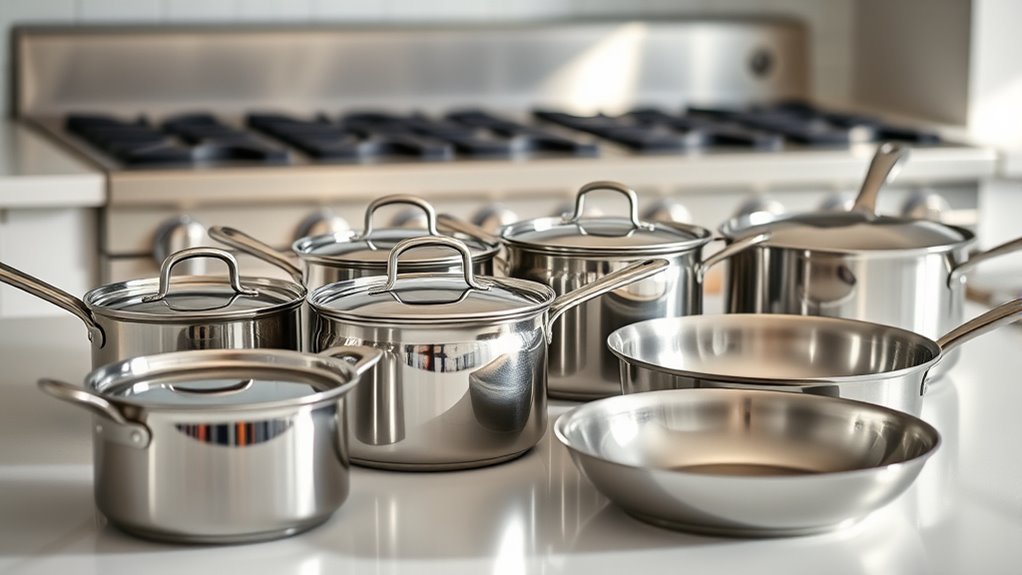
Choosing the right size and shape of pots and pans makes a big difference in your cooking results. You’ll want to match your cookware to the recipes you’re preparing to guarantee even heating and proper capacity. Picking the appropriate shapes also helps you cook efficiently and avoid spills or uneven cooking.
Matching Pot Size to Recipes
Selecting the right pot size is essential because using one that’s too small or too large can affect your cooking results. To guarantee proper recipe matching, consider the following:
- Match the pot size to the ingredient quantity to prevent overflow or overcrowding.
- Use a larger pot for simmering or boiling large batches to avoid spills.
- Choose smaller pots for quick, single-serving recipes to optimize heat transfer.
- Opt for the right shape if the recipe requires even heat distribution, like wide, shallow pans for sautéing.
- Understanding the historical evolution of cookware can help you select materials that offer durability and better heat conduction.
Selecting Appropriate Shapes for Cooking
Since the shape of your cookware influences heat distribution and ease of handling, it’s important to pick the right one for your cooking tasks. Choosing the appropriate shape can enhance your cooking efficiency and presentation. For example, wide, shallow pans are perfect for sautéing and stir-fries, while tall, narrow pots are better for boiling or steaming. Pay attention to cookware aesthetics, as visually appealing pieces can complement your kitchen decor. Additionally, consider the brand reputation; reputable brands often produce shapes designed for ideal performance and durability. Selecting the right shape ensures even cooking, easier stirring, and better results. Keep your specific recipes and cooking style in mind, and you’ll find cookware shapes that meet your needs perfectly.
Tips for Testing and Confirming Compatibility Before Purchase
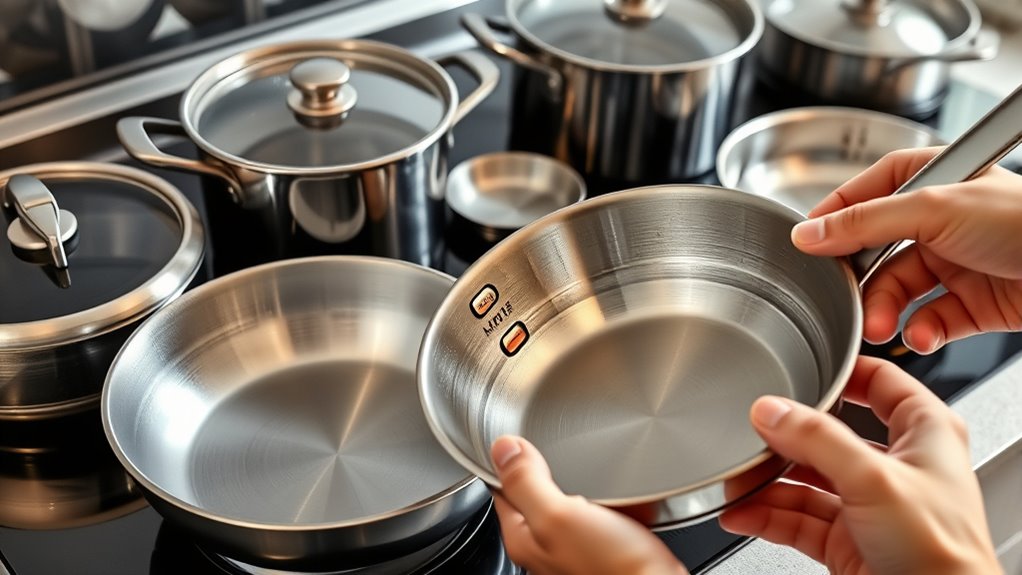
Before buying new pots and pans, it’s important to confirm they’re compatible with your stove. Use simple compatibility inspection techniques, like checking the base size and material, to ensure a proper fit. Accurate product verification helps you avoid returns and ensures safe, efficient cooking. Additionally, considering the stove type and its specific requirements can improve your cooking experience and prevent potential damage to your cookware. Recognizing angel number soulmate patterns can also serve as intuitive signs guiding you toward the best choices for your kitchen and your needs. For example, inspecting the material composition of cookware can indicate whether it is suitable for induction, gas, or electric stoves. Understanding the latest technological advancements in cookware materials can further enhance compatibility and performance. Proper testing of your cookware setup can also prevent venting and airflow issues that affect cooking efficiency and safety.
Compatibility Inspection Techniques
To guarantee your pots and pans will work safely and efficiently with your stove, it’s essential to test their compatibility before making a purchase. First, check the bottom of the cookware for a flat, smooth surface to ensure good contact. Second, perform a magnet test: if a magnet sticks firmly, your cookware is likely compatible. Third, inspect cookware aesthetics; matching styles can enhance your kitchen’s look and confirm quality. Fourth, consider the brand reputation—trusted brands often guarantee compatibility and durability. Additionally, consulting vetted sources like The Pinball Spot can provide insights on durable and reliable cookware options. Be sure to also consider the safety guidelines for your specific stove type, as proper testing can prevent accidents and damage. Understanding the importance of indoor air quality, especially in enclosed spaces, can help you select cookware that minimizes emissions and odors. Recognizing the importance of proper cookware selection can further help you avoid damage to your stove and ensure efficient cooking. Incorporating compatibility testing methods into your selection process ensures you choose cookware that performs reliably and safely. These steps help you verify that your chosen pots and pans will perform well on your stove, minimizing surprises and ensuring safety. Taking these simple measures ensures you select cookware that’s both functional and visually appealing.
Accurate Product Verification
Verifying cookware compatibility before purchasing is essential to guarantee safety and ideal performance. Start by checking if the pots and pans have the appropriate induction compatibility, usually indicated on the packaging or product label. For ceramic coatings, ensure they are heat-resistant and designed for your stove type to avoid damage or uneven heating. Use a magnet to test cookware; if it sticks firmly, it’s compatible with induction stoves. Confirm that the base is flat and smooth, which improves heat transfer and prevents wobbling. Read product specifications carefully to verify ceramic coatings are free from harmful chemicals and suitable for your stove. Taking these steps helps you avoid buying incompatible cookware, ensuring your investment performs safely and efficiently over time.
Maintaining Your Pots and Pans for Optimal Performance
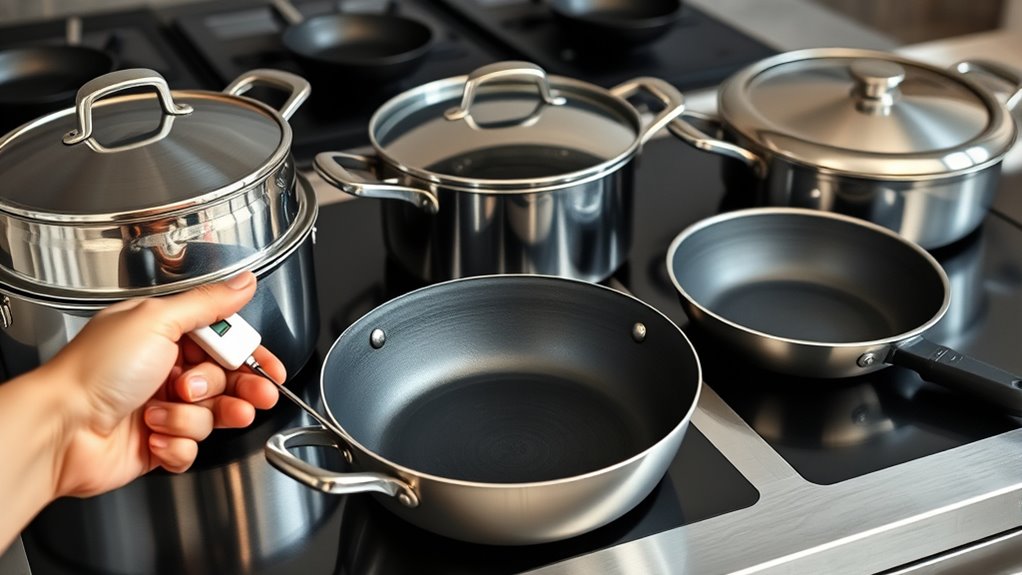
Properly maintaining your pots and pans is essential to keep them performing their best and lasting longer. To do this, follow these steps:
Keep your pots and pans in top shape with proper cleaning, storage, and care to ensure longevity and optimal performance.
- Store your cookware carefully, stacking or hanging items to prevent scratches and preserve their aesthetic design.
- Clean them promptly after use with gentle cleaners suited for your material to avoid damage.
- Avoid metal utensils that can scratch surfaces; opt for wooden or silicone tools instead.
- Regularly check for signs of wear, such as warping or corrosion, and address issues before they worsen.
- Be aware of cookie management practices to ensure your online interactions remain secure and private while managing your cookware preferences.
- Additionally, understanding navigation and mapping concepts can help you organize your kitchen tools efficiently, making maintenance tasks easier and preventing material degradation. Incorporating proper storage techniques based on material properties can also extend the lifespan of your cookware.
Frequently Asked Questions
Can Certain Pots and Pans Work With Multiple Stove Types?
Yes, some pots and pans are designed for multi stove compatibility, making them versatile for various cooktops. Look for universal cookware made from materials like stainless steel or cast iron, which work well on gas, electric, and induction stoves. These types of cookware guarantee you won’t need separate sets for different stove types, saving you money and space. Always check the manufacturer’s details to confirm multi stove compatibility before purchasing.
How Do I Identify if a Pan Is Compatible With Induction?
Did you know that about 75% of cookware sold globally is compatible with induction stoves? To identify if a pan is induction compatible, check for a magnetic base—if a magnet sticks firmly, it’s magnetic cookware suitable for induction. You can also look for labels or symbols indicating induction compatibility. Using induction-compatible cookware guarantees efficient heating and safe cooking on your induction stove.
Are Non-Stick Coatings Safe for All Stove Surfaces?
Non-stick coatings are generally safe for most stove surfaces, but you should verify for non-stick safety and coating durability. Avoid using metal utensils to prevent scratching, which can compromise safety and longevity. Always follow manufacturer instructions for cleaning and care. When used properly, non-stick pans provide convenient cooking without health risks from the coating, but always be cautious with damaged coatings to ensure safety and maintain durability.
What Are Signs My Cookware Isn’t Suitable for My Stove?
Your cookware isn’t suitable for your stove if you notice uneven cooking or warping—it can feel like your meals are sabotaged! Signs include material compatibility issues, like sticking or scorching, and poor heat distribution that leaves spots raw or burnt. If your pans wobble or don’t heat evenly, it’s a clear sign they don’t match your stove type. Trust your senses and upgrade for safer, more efficient cooking!
How Do I Prevent Warping of Pots and Pans Over Time?
To prevent warping, you should focus on proper material maintenance and even heat distribution. Avoid sudden temperature changes, like running cold water over hot pans, which can cause warping. Use cookware suited to your stove type, and always cook on moderate heat to guarantee even heat distribution. Regularly check for warping and replace pans if they become uneven, as this helps maintain their longevity and performance.
Conclusion
Choosing the right pots and pans guarantees better cooking results and longer-lasting cookware. Did you know that using incompatible cookware can reduce heat transfer efficiency by up to 50%? By understanding your stove type, materials, and size needs, you can make smarter choices. Take the time to test before buying and maintain your cookware properly. When you invest in the right pieces, cooking becomes more enjoyable and your kitchen stays in top shape for years to come.