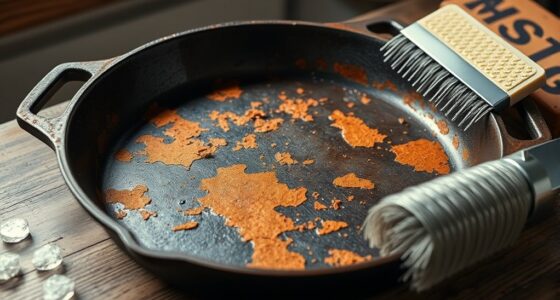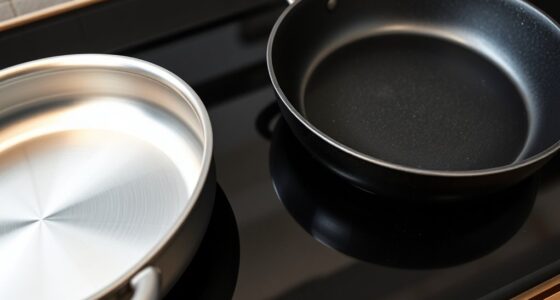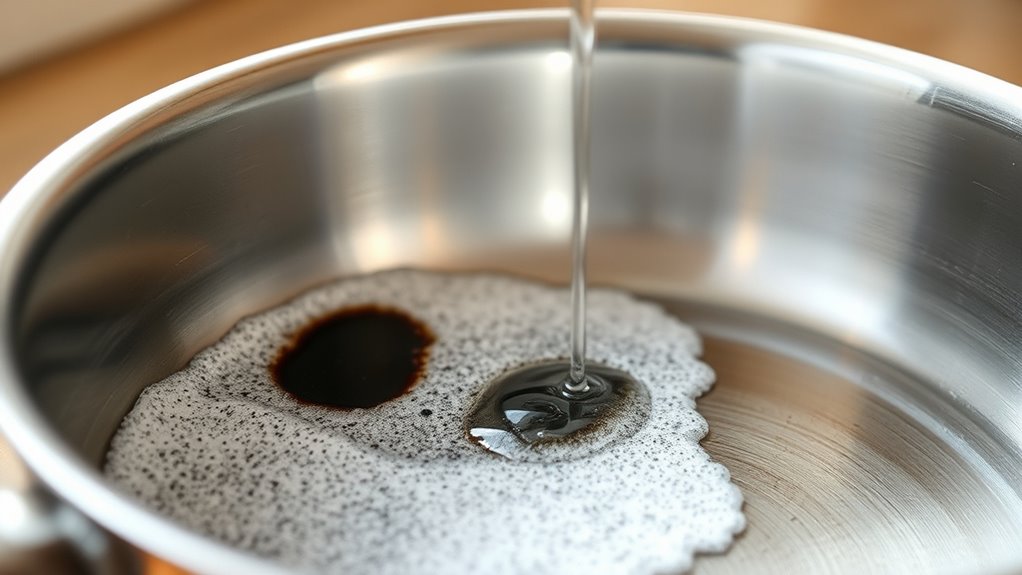

To remove burnt oil from pots and pans without damaging them, start by letting your cookware cool slightly, then sprinkle baking soda generously over the affected areas. Add a splash of water to create a paste, and let it sit for 15-20 minutes to loosen the residue. Use a non-abrasive scrubber to gently clean away the burn marks. For stubborn spots, boil a mixture of equal parts white vinegar and water, then scrub again. Keep your cookware in top shape by following these eco-friendly tips.
Key Takeaways
- Cool cookware before cleaning, then sprinkle baking soda on burnt areas and add water to form a paste; let sit before gentle scrubbing.
- Use a mixture of equal parts vinegar and water, bring to a boil, then let cool to loosen burnt residues safely.
- Avoid abrasive tools; opt for non-abrasive sponges or scrubbers to prevent damaging the surface.
- Regularly clean cookware promptly after use and monitor to prevent oil from burning and hardening.
- Prioritize eco-friendly cleaning methods with baking soda, vinegar, and natural solutions to extend cookware lifespan.
Have you ever wondered how to effectively remove burnt oil from your pots and pans? If so, you’re not alone. Burnt oil can be stubborn, but tackling it with eco friendly cleaning methods not only protects the environment but also preserves your cookware’s longevity. Preventative maintenance plays a key role here—by acting quickly and adopting the right habits, you can avoid the hassle of deep cleaning later on.
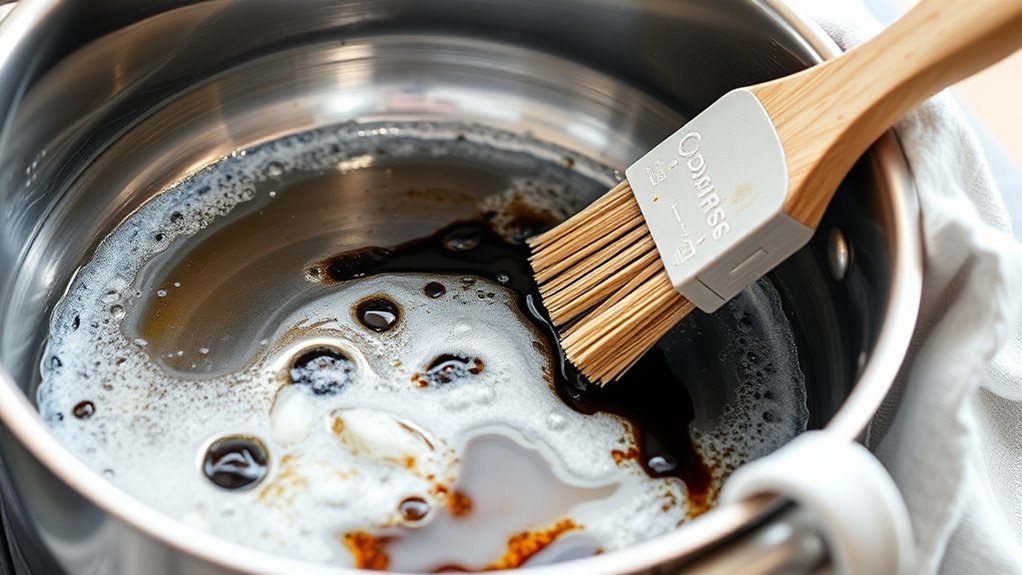
Start by letting the cookware cool slightly before attempting any cleaning. Once safe to handle, sprinkle a generous amount of baking soda over the burnt areas. Baking soda is a natural, eco friendly cleaning agent that gently lifts grime without scratching your pots or pans. Add a splash of water to create a paste, then let it sit for 15-20 minutes. This allows the baking soda to break down the burnt oil, making it easier to scrub away. Using a non-abrasive scrubber or sponge, gently scrub the surface in circular motions. If the burnt oil persists, repeat the process or add a little more water and baking soda to boost cleaning power.
For tougher spots, consider adding a small amount of white vinegar. Vinegar is another eco friendly cleaning choice that cuts through grease and helps neutralize odors. Pour equal parts vinegar and water into the pan, bring it to a gentle boil, then turn off the heat and let it sit for a few minutes. Once cooled, scrub again with your sponge. The combination of baking soda and vinegar creates a fizzing reaction that can loosen even the most stubborn burnt residue. Additionally, understanding the importance of contrast ratio in your cookware’s material can help you select pans that are easier to clean and maintain over time.
Preventative maintenance is vital to avoid future burn marks. Always monitor cooking temperatures to prevent oil from overheating and burning. Use lower heat settings when frying or sautéing to give yourself more control. After cooking, clean your pots and pans promptly—residue left to sit can harden and become more difficult to remove later. Regularly inspecting your cookware for signs of wear and tear can help you catch problems early, saving you time and effort.
In addition, using eco friendly cleaning techniques regularly can extend the lifespan of your cookware. Avoid harsh chemical cleaners that may damage surfaces or pollute the environment. Instead, stick with natural solutions like baking soda, vinegar, and lemon juice. These options are safe, sustainable, and effective for keeping your pots and pans in top condition. By combining preventative maintenance with eco conscious cleaning habits, you’ll find it easier to manage burnt oil and keep your cookware looking and functioning like new.
Frequently Asked Questions
Can I Use Dishwasher Detergent to Remove Burnt Oil Stains?
Yes, you can use dishwasher detergents to remove burnt oil stains, but they might not be the most effective choice. Dishwasher detergents are designed to tackle grease, but their effectiveness of cleaning burnt oil depends on the severity of the stain. For best results, try soaking the pan with a mixture of dish soap and hot water first, then scrub gently. If needed, use a paste of baking soda for extra cleaning power.
Is It Safe to Use Steel Wool on Non-Stick Cookware?
Using steel wool on non-stick cookware isn’t safe because it can damage the non-stick coating. Steel wool safety isn’t guaranteed on delicate surfaces, and it often scratches or strips away the coating, reducing the pan’s lifespan. To protect your non-stick coating, avoid steel wool and opt for softer scrubbers like non-abrasive sponges or cloths. This way, you’ll keep your cookware in top shape without risking damage.
How Long Should I Soak Pans to Loosen Burnt Oil?
For oil looseness, soak your pans for about 30 minutes to an hour. This soaking duration helps break down burnt oil, making it easier to scrub away without damaging your cookware. If the burnt oil is stubborn, extend the soaking time up to several hours or overnight. Just make sure to use warm water and a gentle dish soap, and avoid harsh abrasives to protect your pans.
Are Natural Remedies Effective for Heavy Burnt Oil Buildup?
Think of natural remedies as gentle warriors against heavy buildup; they can be surprisingly effective. Baking soda, vinegar, and lemon cut through burnt oil like a warm breeze, loosening stubborn grime without damaging your pots and pans. While they might take a bit more patience, their eco-friendly power makes them worth trying first. With a little effort, you can restore your cookware’s shine, all while respecting the environment.
Can I Prevent Burnt Oil Stains From Forming in the Future?
To prevent burnt oil stains, practice preventative maintenance and good oil management. Always monitor your heat levels to avoid overheating, which causes oil to burn quickly. Use the right amount of oil, and don’t leave pots unattended while cooking. Regularly clean your cookware to remove any residual buildup, and consider using lower heat settings. These habits help reduce the risk of burnt oil stains, keeping your pots and pans in better condition longer.
Conclusion
So, next time you burn oil, don’t panic—you’ve got the tools to save your pots and pans. Ironically, what once looked ruined can shine like new with a little patience and the right tricks. Remember, a little effort now saves a costly replacement later. Burnt oil might be stubborn, but your cleaning skills are tougher. Who knew that a simple kitchen mishap could turn you into a cleaning pro? Happy cooking—and cleaning!