Enameled cast iron is perfect for everyday cooking, as it’s low-maintenance and heats quickly, making cleanup easy. Choose it for versatile dishes, quick meals, and when you want a no-fuss option. Bare cast iron is better when you need superior heat retention, durability, and techniques like searing or slow-cooking that require steady temperatures. Knowing when to use each can elevate your cooking game—continue to explore to discover how to make the most of both types.
Key Takeaways
- Use bare cast iron for high-heat cooking like searing, frying, and slow-cooking that benefits from heat retention and durability.
- Opt enameled cast iron for quick heating, easy cleanup, and dishes that require gentle or acidic ingredients.
- Choose bare cast iron if you’re willing to maintain seasoning and prevent rust; select enameled for low-maintenance convenience.
- Bare cast iron is ideal for outdoor cooking, camping, and recipes needing prolonged, even heat; enameled works well for everyday kitchen use.
- Consider enameled cast iron for versatile, no-seasoning-needed cookware, especially if you prefer minimal upkeep.
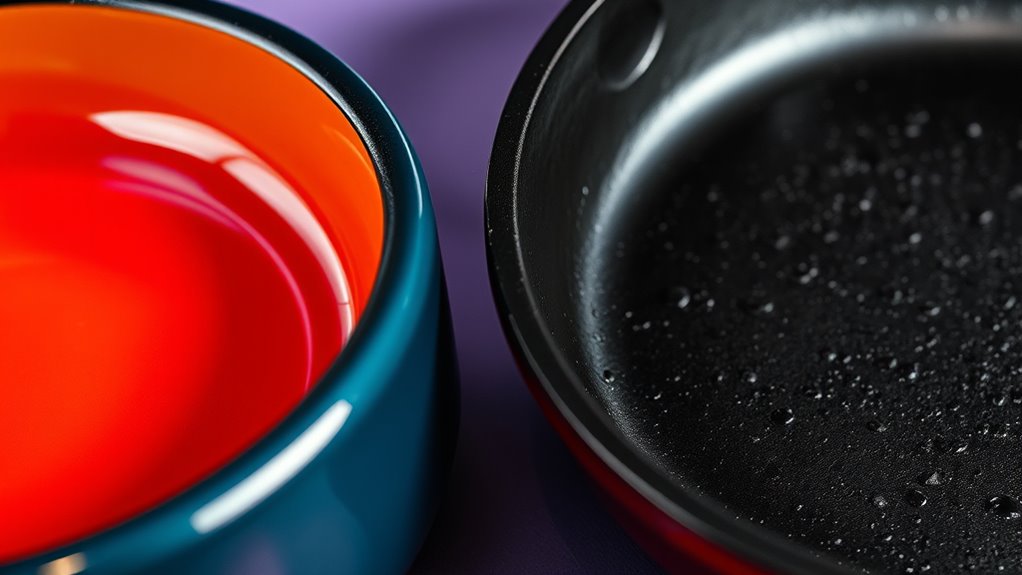
When choosing between enameled cast iron and bare cast iron, understanding their differences can help you make an informed decision for your kitchen. One key aspect to contemplate is how each type responds to seasoning techniques and their heat retention capabilities. Bare cast iron requires regular seasoning to develop a natural non-stick surface and improve its performance over time. This process involves applying a thin layer of oil and heating the pan to create a durable, polymerized coating. Seasoning not only enhances the non-stick qualities but also helps prevent rust. Conversely, enameled cast iron comes pre-coated with a smooth, durable glaze that doesn’t need seasoning. This makes it more convenient for those who prefer a low-maintenance option and want to skip the seasoning process altogether.
Heat retention is another critical factor. Bare cast iron is renowned for its superior ability to retain heat. Once heated, it maintains a consistent temperature, making it perfect for searing, frying, and slow-cooking dishes that require steady heat. This excellent heat retention allows you to cook evenly without hot spots, giving you better control over your cooking process. Enameled cast iron also retains heat well, but it tends to heat up more quickly and can lose heat faster than its bare counterpart. While it’s still suitable for many cooking methods, it might not provide the same level of temperature stability as uncoated cast iron. If you’re preparing dishes that benefit from prolonged, even heat, bare cast iron could be the better choice.
Another difference lies in how each material handles cleaning. Bare cast iron needs to be cleaned carefully to preserve its seasoning; usually, you avoid soap and prefer warm water and a brush. Re-seasoning may be necessary if the surface starts to degrade or rust appears. Enameled cast iron, however, can be cleaned with soap and water without damaging the coating. It’s dishwasher safe, which appeals to those who want quick cleanup without worrying about stripping seasoning.
Top picks for "cast iron enamel"
Open Amazon search results for this keyword.
As an affiliate, we earn on qualifying purchases.
Frequently Asked Questions
Can Enameled Cast Iron Go on Induction Cooktops?
Yes, enameled cast iron is induction compatible because it has a magnetic base, allowing it to work with induction cooktops. Its heat conduction properties ensure even cooking, making it a great choice for precise temperature control. Just make sure the bottom of your enameled cast iron cookware has a flat, magnetic surface to guarantee ideal induction compatibility and efficient heat transfer during your cooking.
Is Bare Cast Iron Better for Outdoor Cooking?
You’ll find bare cast iron a true outdoor hero, like a rugged mountain climber conquering wild terrains. Its seasoning techniques develop a natural non-stick layer that withstands the elements, while cleaning methods keep it battle-ready. Unlike enameled cookware, bare cast iron’s durability makes it perfect for open flames and camping trips. With proper care, it becomes a trusted companion for outdoor adventures, ready to weather any culinary storm you throw at it.
How Do I Prevent Chipping on Enameled Cast Iron?
To prevent chipping on enameled cast iron, handle it carefully and avoid rapid temperature changes. Use gentle cleaning tips like avoiding metal scrubbers, and dry it thoroughly after washing. While the enameled coating doesn’t require seasoning, applying a light layer of oil before storage helps protect it. Proper seasoning techniques and avoiding impact or thermal shocks are key for chip prevention, ensuring your cookware stays in great condition longer.
Which Cast Iron Type Is More Dishwasher Safe?
If you’re looking for easier dishwasher safety, enameled cast iron is your best bet. Its smooth, glass-like coating handles the dishwasher’s cycle better, making maintenance tips simpler. Bare cast iron, however, prefers hand washing to preserve its seasoning and prevent rust. So, for convenience and less fuss, choose enameled; for seasoned flavor, opt for bare cast iron and stick to gentle cleaning methods.
Can I Use Metal Utensils on Enameled Cast Iron?
You can use metal utensils on enameled cast iron, but it’s not always recommended. Metal utensils are generally safe for enameled surface durability if you’re gentle, but they can scratch the coating over time. To protect the enamel, opt for wooden, silicone, or nylon utensils whenever possible. This helps maintain the cookware’s appearance and prevents damage, ensuring your enameled cast iron stays in great condition longer.
Conclusion
Choosing between enameled and bare cast iron is like picking the right tool for a job—you want reliability and ease. I once burned stew in a bare cast iron pan, but a friend’s enameled one saved her dish from sticking. Both have their place, but understanding their strengths helps you cook smarter. Think of it as your trusty kitchen arsenal—knowing when to use each makes every meal smoother and more enjoyable.