
Expensive cutting boards, especially end grain types, are often worth it because they’re more durable, self-healing, and resistant to knife marks, making them ideal for frequent use. Edge grain boards are more affordable and easier to maintain but tend to show wear faster. If you’re serious about quality and longevity, investing in a high-end board can pay off. Keep exploring to discover which option fits your cooking style best.
Key Takeaways
- End grain boards are more durable, self-healing, and better at resisting knife marks, justifying their higher cost for frequent use.
- Edge grain boards are more affordable, easier to maintain, but may show cuts faster, suitable for casual or infrequent cooking.
- Regular maintenance like oiling extends the lifespan of expensive boards, making their investment worthwhile over time.
- Protective finishes on high-end boards can improve moisture resistance and simplify cleaning, enhancing long-term value.
- The decision depends on your budget, cooking frequency, and willingness to perform upkeep, with end grain offering superior performance for serious chefs.

When it comes to choosing a cutting board, many home cooks wonder if splurging on an expensive one is really worth it. The answer often depends on factors like material durability and maintenance requirements, which can vary considerably between different types of high-end boards. Expensive cutting boards, especially those made from premium hardwoods like maple, walnut, or teak, tend to offer superior material durability. These woods are dense and resistant to knife marks, meaning they last longer and maintain their surface quality over time. This durability makes them a worthwhile investment if you frequently prepare meals, as they can withstand heavy use without quickly showing signs of wear.
Premium hardwood cutting boards are durable, resistant to knife marks, and worth the investment for frequent cooks.
However, higher-quality boards also tend to have specific maintenance requirements to preserve their condition. For example, many expensive wood cutting boards need regular oiling with mineral or beeswax-based oils to prevent cracking and drying out. Neglecting this upkeep can lead to warping or splitting, which diminishes the board’s performance and lifespan. Conversely, some high-end boards are treated with protective finishes that make them easier to clean and more resistant to moisture, reducing maintenance effort. Still, these treatments can sometimes impact the board’s ability to withstand deep cuts, so it’s essential to think about what level of maintenance you’re comfortable with and whether you’re willing to commit to regular upkeep.
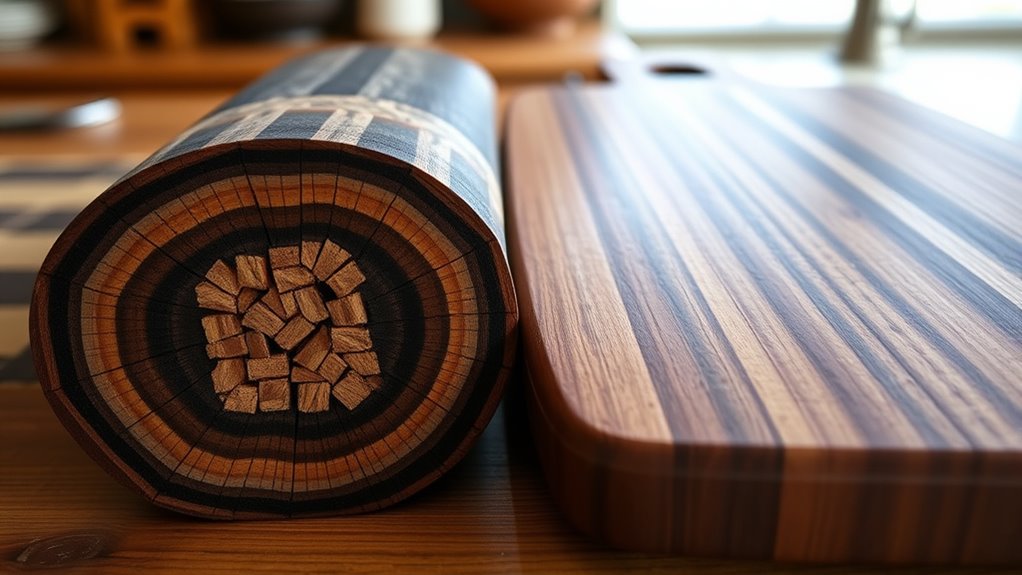
When comparing end grain and edge grain cutting boards, these factors become even more apparent. End grain boards, often considered the gold standard, are made by arranging wood fibers so that they face upward. This construction makes them exceptionally durable because their surface can ‘self-heal’ from knife marks and absorbs less impact when chopping. But they tend to be more expensive and require meticulous maintenance to prevent moisture absorption, which can cause warping if not properly cared for. Edge grain boards, on the other hand, are typically more affordable and easier to maintain. They are made by gluing together strips of wood with the grain running parallel to the surface, which makes them more susceptible to knife marks but generally less demanding in terms of upkeep.
Additionally, the way the wood is finished on high-end boards can influence their longevity and ease of maintenance. Some premium boards feature protective coatings that help guard against stains and moisture, making cleaning easier and extending their lifespan. Ultimately, investing in an expensive cutting board makes sense if you value material durability and are prepared to meet its maintenance requirements. While they may cost more upfront, their longevity and performance can justify the expense, especially if you cook often. But if you prefer a low-maintenance option and are okay with replacing your board more frequently, a less costly edge grain board might suit you better. The key is balancing your budget, how often you cook, and how much effort you’re willing to put into caring for your cutting surface.
Top picks for "grain expensive cutt"
Open Amazon search results for this keyword.
As an affiliate, we earn on qualifying purchases.
Frequently Asked Questions
How Do End Grain and Edge Grain Cutting Boards Compare in Durability?
End grain cutting boards are more durable because their wood grain absorbs less impact, thanks to the material density at the cellular level. They resist knife marks better and tend to stay smooth longer. Edge grain boards are less durable because their surface exposes the wood’s cross-section, making them more prone to cuts and dents. If longevity matters, end grain boards generally outperform edge grain ones.
What Maintenance Is Required for High-End Cutting Boards?
You should oil your high-end cutting board weekly to keep its wood hydrated and prevent cracking—studies show proper maintenance extends its lifespan by up to 50%. For cleaning, avoid harsh chemicals; instead, use warm water and mild soap. Regularly sanitize with vinegar or a mixture of lemon and salt. Proper oil maintenance and gentle cleaning methods guarantee your expensive board remains beautiful and functional for years.
Are Expensive Cutting Boards More Hygienic Than Cheaper Options?
Expensive cutting boards often meet higher hygiene standards because they’re made from quality materials and designed for easier cleaning. You can maintain better hygiene by following proper cleaning practices, such as washing with hot, soapy water and disinfecting regularly. While cost doesn’t guarantee hygiene, investing in a durable, well-crafted board encourages consistent cleaning, reducing bacteria buildup and making it more hygienic than cheaper options that might harbor germs due to poor maintenance or inferior materials.
Can Expensive Cutting Boards Be Used for All Types of Food?
Yes, expensive cutting boards can be used for all types of food, but you should prioritize food safety. They often feature better construction and materials, reducing cross-contamination. Just make certain your knives are compatible with the board’s surface to prevent damage. For instance, end grain boards are gentle on knives and ideal for delicate tasks, while the durability of high-quality boards supports various food prep needs safely.
How Do Aesthetic Qualities Impact the Overall Value of a Cutting Board?
A cutting board’s aesthetic qualities greatly boost its overall value. For example, a board with a striking, harmonious color palette and unique grain patterns can inspire pride every time you cook. The visual appeal enhances your kitchen’s ambiance and makes food prep more enjoyable. When a cutting board looks beautiful, it becomes a functional art piece, elevating your cooking experience and justifying a higher price point.
Conclusion
Ultimately, investing in an expensive cutting board is worth it if you value durability and knife preservation. While they might cost more upfront, you’re getting a tool that stands the test of time—like a trusty old friend. Cheaper boards can wear out quickly, making you replace them often. So, if you’re serious about your kitchen, it’s better to bite the bullet now than keep patching up something that’s bound to let you down later.