
When choosing a quality kitchen knife, consider whether you prefer the durability and balance of forged blades or the affordability and lightness of stamped blades. Forged knives are thicker, sturdier, and hold an edge longer, making them ideal for demanding tasks. Stamped knives are lighter and more budget-friendly but may not last as long. To guarantee the best fit for your needs, understanding these differences will help you make an informed choice—stay with us to find out more.
Key Takeaways
- Consider forged blades for durability, superior edge retention, and better balance, ideal for frequent, demanding kitchen tasks.
- Opt for stamped blades if you need an affordable, lightweight knife suitable for lighter or occasional use.
- Evaluate handle materials for comfort, grip, and maintenance; high-quality options include wood, composite, and stainless steel.
- Assess the knife’s intended use and frequency to determine if a sturdier forged or a lighter stamped blade is appropriate.
- Remember that proper sharpening and maintenance are essential for both forged and stamped knives to perform well and last longer.

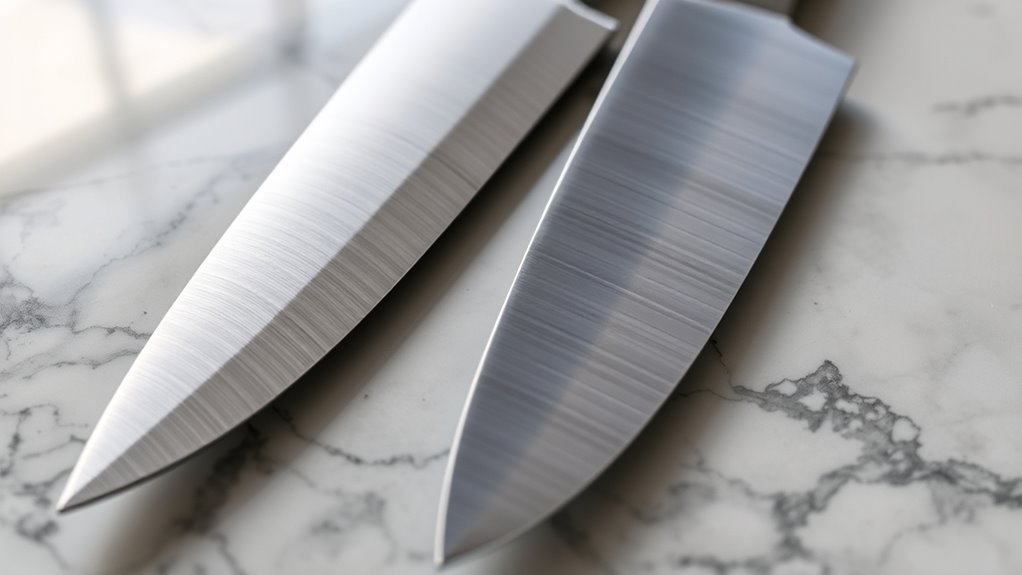
Have you ever wondered how the right kitchen knife can transform your cooking experience? The secret often lies in the details of its construction. When choosing a quality kitchen knife, understanding blade construction is essential. Forged blades are made from a single piece of high-quality steel that’s heated and shaped through a forging process. This results in a dense, durable blade that offers excellent stability and edge retention. Because of the forging process, these blades tend to be thicker at the spine, providing better balance and a sturdier feel in your hand. On the other hand, stamped blades are cut from a sheet of steel, then pressed into shape. They’re usually thinner, lighter, and more affordable but can be less durable over time. Knowing the differences in blade construction helps you pick a knife that matches your cooking style and needs. Additionally, blade sharpening is crucial for maintaining optimal performance and extending the lifespan of your knife. Handle materials also play a essential role in your choice. The handle is what you grip, so comfort and safety matter. Handles made from high-quality materials like wood, composite, or stainless steel can feel comfortable and secure, reducing fatigue during longer prep sessions. Wooden handles, for instance, offer a traditional look and a warm feel, but they require more maintenance to prevent cracking or warping. Composite handles combine durability with comfort, resisting moisture and damage. Stainless steel handles are sleek and hygienic, often used in commercial settings, but can feel less comfortable for extended use unless ergonomically designed. Cheaper plastic handles are lightweight and easy to clean but sometimes lack the grip or balance of premium materials. When choosing a handle, consider how it fits your hand, the grip’s texture, and how well it balances the weight of the blade. A well-designed handle not only enhances safety but also boosts your control and confidence while cutting.
Frequently Asked Questions
Are Forged Knives More Durable Than Stamped Knives?
Yes, forged knives tend to be more durable than stamped ones because of their blade manufacturing process, which involves shaping the steel from a single piece. This results in a stronger, more resilient blade that withstands regular use. Plus, forged knives often have better knife aesthetics, with a seamless, balanced look. You’ll find that their durability and craftsmanship make them a worthwhile investment for any serious cook.
Can Stamped Knives Be Sharpened Easily?
Stamped knives can be sharpened easily, but don’t expect miracles. Their thinner blades and consistent blade thickness make sharpening straightforward, so you can keep them razor-sharp with minimal effort. However, their ease of maintenance can vary depending on quality. If the blade is too thin or cheap, it might struggle to hold an edge. Still, with proper sharpening tools, you’ll find them easier to maintain than you’d think.
Which Type of Blade Is Better for Professional Chefs?
As a professional chef, you’ll find forged blades better due to their superior blade aesthetics and durability. They handle heavy-duty tasks and maintain their sharpness longer, reducing your maintenance requirements. Forged knives also tend to be more balanced and comfortable for precise cuts. While stamped blades are easier to sharpen, they often lack the robustness you need in a busy kitchen. For quality and longevity, forged knives are the ideal choice.
Are Forged Knives More Expensive Than Stamped Ones?
Yes, forged knives tend to be more expensive than stamped ones. You’ll notice that forged knives often enhance your kitchen aesthetics with their solid, professional look, making them a stylish addition. When considering price comparison, forged blades usually cost more due to their handcrafted process and durability. If you’re after longevity and a premium feel, investing in a forged knife could be worth it, even if it’s pricier.
How Does the Weight Affect Knife Handling and Comfort?
Think of a knife’s weight as its dance partner—too heavy, and you’ll struggle to keep in step; too light, and it feels like it’s slipping away. A well-balanced, weighty knife offers an ergonomic grip, giving you better control and reducing fatigue during long chopping sessions. You’ll find it easier to maneuver, chop, and slice with confidence, turning your kitchen work into a smooth, graceful performance.
Conclusion
Ultimately, choosing the right kitchen knife depends on your needs and preferences, much like selecting a trusted partner in the kitchen. Whether you lean toward the craftsmanship of a forged blade or the efficiency of a stamped one, remember that a good knife can elevate your culinary journey. As the ancients knew, the right tool can turn simple ingredients into masterpieces—so pick wisely, and let your skills shine as brightly as a well-honed blade.