Choosing the best material for your baking sheets depends on your needs. Aluminum heats quickly and provides even baking, making it ideal for delicate treats, while steel offers durability and retains heat longer for roasting. Ceramic sheets look stylish and distribute heat gently, perfect for casseroles. Each material has pros and cons regarding durability, safety, and cost. Keep exploring further to discover which material suits your baking style best.
Key Takeaways
- Aluminum heats quickly and evenly, ideal for delicate baked goods, while steel offers better heat retention for roasting and sturdiness.
- Steel baking sheets are more durable, resistant to warping, scratches, and corrosion, making them suitable for long-term use.
- Ceramic sheets provide stylish appearance and gentle heat distribution, perfect for casseroles and baked dishes.
- Non-stick coatings on materials like aluminum and ceramic enhance ease of cleaning and versatility for sticky or fragile recipes.
- Cost-effectiveness depends on durability and maintenance; aluminum is affordable, steel offers longevity, and ceramic balances style with care needs.
As an affiliate, we earn on qualifying purchases.
Comparing Heat Conductivity and Distribution
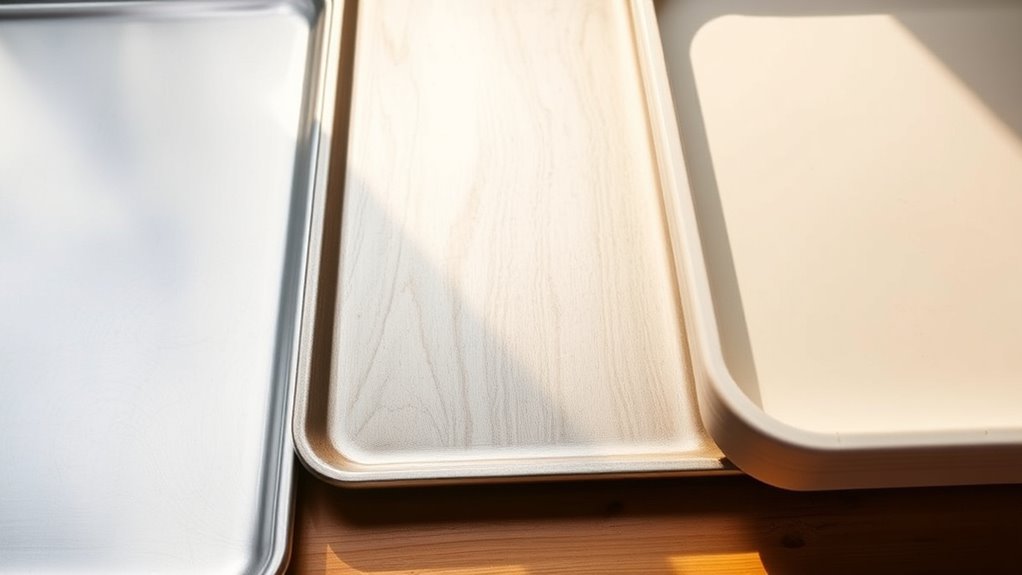
When choosing a baking sheet, understanding how materials conduct and distribute heat is essential. Material aesthetics can influence your choice, as some metals, like aluminum, offer a sleek, modern look that many brands highlight. Aluminum heats quickly and evenly, making it ideal for consistent baking results. Steel, on the other hand, heats more slowly but retains heat longer, which might appeal to brands with a reputation for durability. Ceramic sheets often provide a stylish appearance and distribute heat more gently, though their heat conduction varies. thermal conductivity plays a crucial role in how effectively a baking sheet performs, impacting your baking success. Additionally, material durability is an important factor to consider, as it affects the lifespan and performance of your bakeware. Considering industry standards can help you choose a product that meets safety and performance expectations. The ease of cleaning of each material can also influence your choice, since some surfaces are more resistant to sticking and easier to maintain. Furthermore, understanding heat retention can help you select a material that maintains consistent temperature during baking, improving your results. Ultimately, your choice depends on balancing aesthetic appeal with how well the material manages heat during baking, ensuring your baked goods turn out perfect every time.
As an affiliate, we earn on qualifying purchases.
Durability and Longevity of Baking Sheets
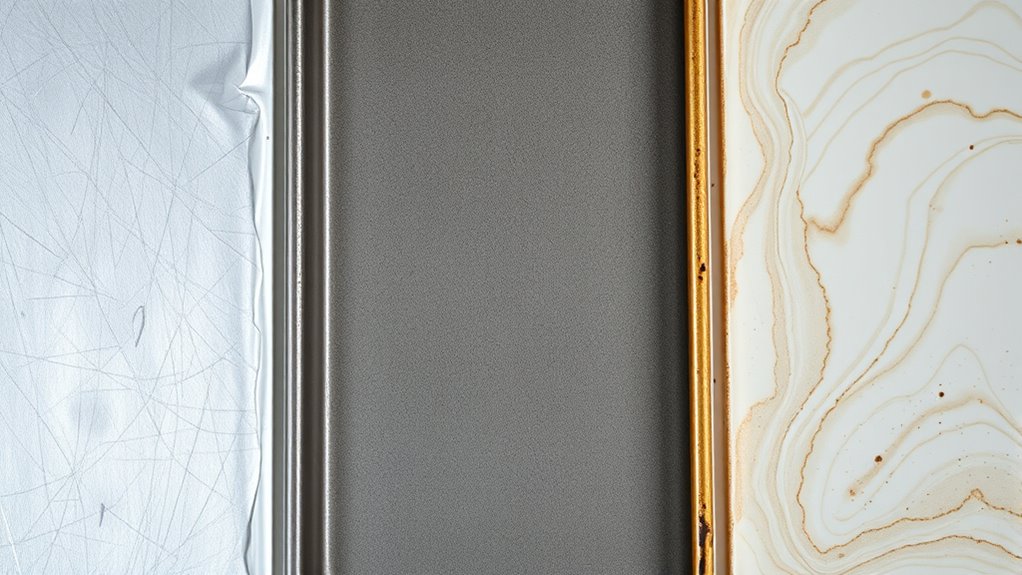
When choosing a baking sheet, you want one that stays resilient over time and withstands frequent use. Materials that resist warping guarantee your sheets remain flat and safe to use, even after many batches. Longevity depends on selecting a surface that endures the rigors of baking without losing its shape or performance. Additionally, selecting a material with high durability can also indicate durability and overall quality. For example, aluminum is known for its lightweight yet sturdy nature, making it a popular choice for long-lasting baking tools. Proper maintenance and care instructions can also extend the lifespan of your baking sheets, ensuring they remain in optimal condition for years to come.
Material Resilience Over Time
The durability of a baking sheet determines how well it withstands daily use and the test of time. Material resilience is key here—your choice affects how well it resists scratches, dents, and corrosion over years. Steel offers high corrosion resistance, maintaining strength longer, while aluminum may dent more easily but heats quickly. Ceramic surfaces can chip or crack with heavy use, reducing resilience. Consider the following:
| Material | Resilience to Damage | Corrosion Resistance | Longevity |
|---|---|---|---|
| Aluminum | Moderate | Low | Short-Medium |
| Steel | High | Very High | Long |
| Ceramic | Low | Moderate | Short |
Choosing a material with strong resilience and corrosion resistance ensures your baking sheets last, saving you money and effort over time. Additionally, material resilience can be affected by factors such as frequency of use and cleaning methods.
Resistance to Warping
Choosing a baking sheet that resists warping guarantees consistent performance and extends its lifespan. Warping can compromise oven safety by causing uneven heat distribution, which affects your baking results. Aluminum sheets, for example, are lightweight but prone to thermal expansion, making them more susceptible to warping under high heat. Steel sheets are sturdier and better at resisting deformation, ensuring they keep their shape over time. Ceramic baking sheets, though less prone to warping, can crack if subjected to rapid temperature changes. When selecting a material, consider how thermal expansion affects durability. A sheet that maintains its shape through repeated heating and cooling not only lasts longer but also ensures safer, more reliable baking. Incorporating materials with superior resistance to warping can help you avoid costly replacements and guarantees excellent oven safety. Additionally, understanding how thermal expansion impacts material stability can guide you toward more durable choices for long-term baking success.
ceramic baking sheets for casseroles
As an affiliate, we earn on qualifying purchases.
As an affiliate, we earn on qualifying purchases.
Ease of Cleaning and Maintenance
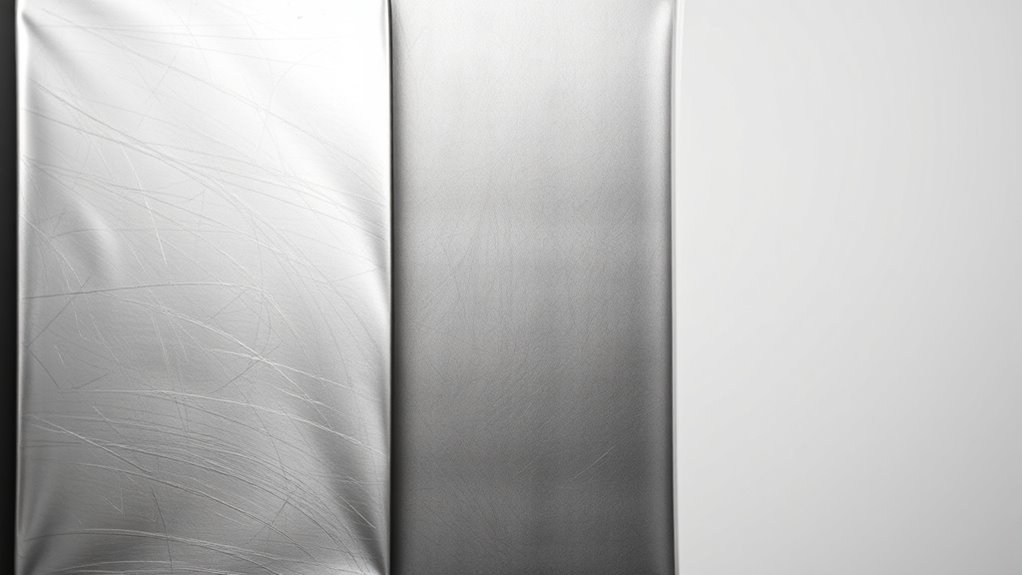
When choosing a baking sheet, consider how easy it is to clean and maintain. Non-stick coatings can make scrubbing easier, but their durability varies, so you’ll want to know how long they’ll last. Additionally, some materials require special care to keep them in top shape, saving you time and effort in the long run. For instance, certain best laundry detergents are designed to be gentle on cookware surfaces, helping extend their lifespan. Moreover, selecting materials that are compatible with modern cleaning techniques can further simplify maintenance and preserve the quality of your bakeware. Regularly replacing filters and following proper maintenance tips ensure your baking sheets stay in optimal condition and last for years to come. Being aware of brand reputation and authenticity markers can also assist in choosing durable and reliable bakeware that maintains its performance over time.
Non-stick Coating Durability
Non-stick coatings on baking sheets are designed to make cleaning easier, but their durability varies depending on the material and usage. Over time, you may notice coating peeling or flaking, which can lead to stickiness issues and compromised performance. Aluminum sheets with non-stick layers tend to be more prone to wear, especially if you use metal utensils or scrub harshly. Ceramic coatings are generally more resistant, but they can still chip or crack if handled roughly. Steel sheets often have a more durable coating, but they may require more careful maintenance to prevent peeling. To maximize longevity, avoid abrasive cleaning tools and follow manufacturer instructions. Proper care helps prevent coating peeling and keeps your baking sheet functioning smoothly longer. Additionally, understanding the importance of local laws can help you choose the best materials that suit your needs. Selecting materials that comply with safety regulations ensures you use cookware that is free from harmful chemicals. Using high-quality non-stick coatings can also significantly extend the lifespan of your baking sheets. Moreover, selecting durable materials that withstand frequent use can further enhance your baking experience. Regular inspections for wear and tear can help address issues early and prolong the life of your baking sheets.
Ease of Scrubbing
Cleaning your baking sheet is usually straightforward, especially if the surface resists sticking. The surface texture plays a big role in how easy it is to scrub. A smooth surface tends to require less effort and less frequent cleaning. Here’s what to contemplate:
- Smooth Aluminum: Allows quick cleaning with minimal scrubbing due to its even surface.
- Textured Steel: May trap debris, needing more effort and possibly more frequent cleaning.
- Ceramic Coatings: Usually non-porous, making cleanup easier but can stain if not cleaned promptly.
- Cleaning Frequency: Less frequent cleaning is needed if the surface resists sticking, but more frequent maintenance helps keep all materials in top shape. Choosing a surface texture that resists sticking simplifies scrubbing and reduces your overall cleaning time. Additionally, surfaces with non-porous coatings tend to be more resistant to stains and easier to maintain over time.
Maintenance Requirements
Choosing a baking sheet with a surface that resists sticking not only makes cleaning easier but also influences its ongoing maintenance needs. For example, non-stick coatings may require occasional reapplication to maintain their effectiveness, especially after frequent use or harsh cleaning. Steel and ceramic sheets often need less upkeep but can benefit from proper storage considerations to prevent chipping or scratching. Aluminum sheets, being more prone to scratches, should be stored carefully to avoid damage, which can affect their non-stick properties. Regular cleaning with gentle tools preserves the surface, reducing the need for coating reapplication. Overall, understanding each material’s maintenance requirements helps you prolong your baking sheets’ lifespan and keeps them performing suitably over time.
As an affiliate, we earn on qualifying purchases.
Safety and Non-Toxic Properties
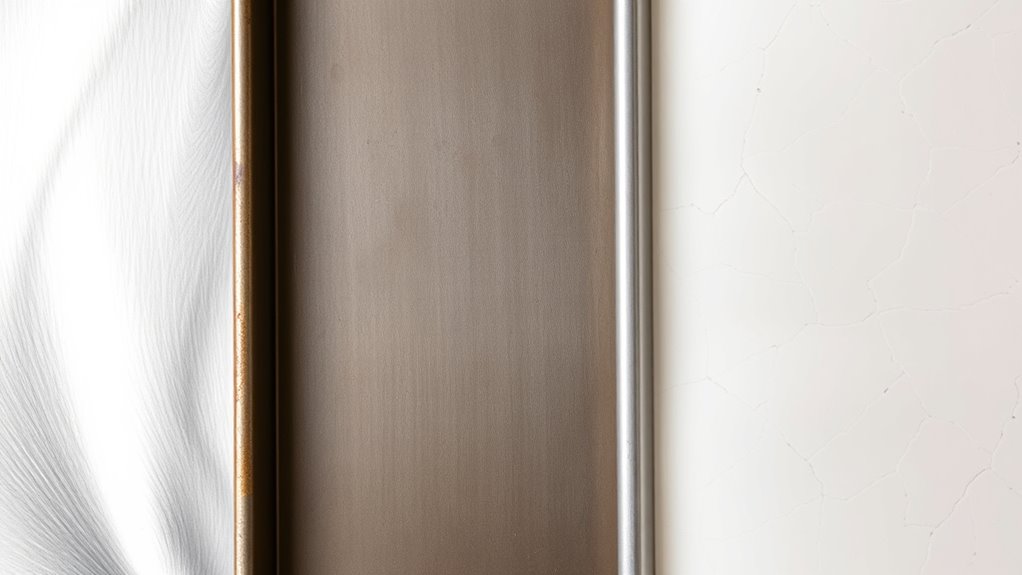
When selecting baking sheet materials, it’s vital to evaluate their safety and non-toxic properties to guarantee your health isn’t compromised. Material toxicity and chemical leaching are key concerns. Here’s what to consider:
- Aluminum: Generally safe, but uncoated sheets can release small amounts of aluminum, which may leach into food.
- Steel: Usually non-toxic, but some cheaper versions may contain coatings or alloys with questionable safety.
- Ceramic: Often glazed with non-toxic finishes, reducing chemical leaching risks, but poorly glazed options might contain lead or other toxins.
- Coatings: Non-stick coatings, like Teflon, can degrade over time, releasing chemicals; ensure they’re labeled non-toxic and safe at high temperatures.
Prioritize materials with proven safety records to avoid health risks related to material toxicity and chemical leaching.
Cost and Value for Money
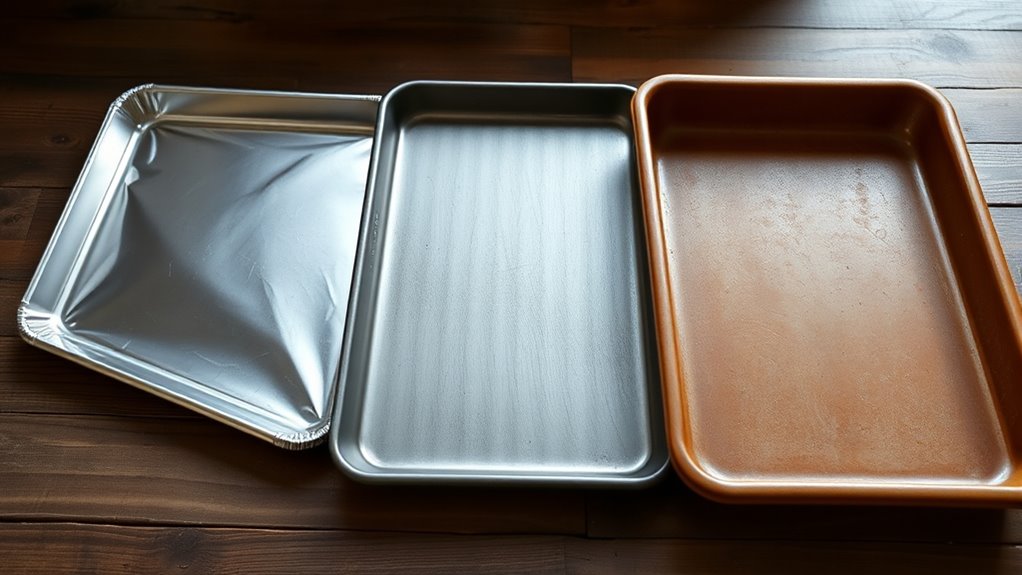
While safety remains a top priority, balancing cost and value for money is equally important when selecting a baking sheet. A thorough pricing comparison reveals that aluminum sheets are typically more affordable and offer great durability, making them budget-friendly options for regular use. Steel baking sheets tend to be slightly pricier but often provide longer-lasting performance and better heat retention, which can justify the higher cost. Ceramic sheets usually fall in the mid-range but may require more careful handling to prevent chips or cracks, impacting overall value. Consider your baking needs and frequency of use to determine which material offers the best balance of affordability and durability. Ultimately, choosing a cost-effective option guarantees you get the best value without compromising safety or performance.
Versatility and Compatibility With Different Recipes
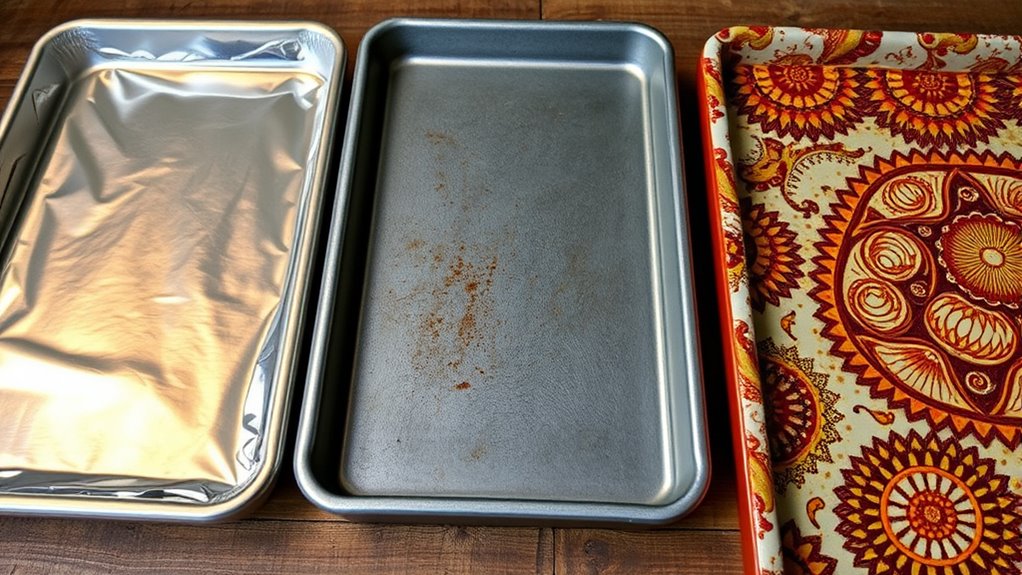
Different baking sheets excel in versatility and compatibility, making them suitable for a wide range of recipes. Your choice impacts recipe adaptability and cookware compatibility. For example:
- Aluminum sheets heat quickly and evenly, ideal for delicate pastries and cookies.
- Steel pans are sturdy and perfect for roasting vegetables or bread.
- Ceramic sheets excel at handling high temperatures, suitable for casseroles and baked dishes.
- Non-stick coatings improve recipe adaptability for sticky or fragile baked goods.
Aesthetic Appeal and Design Options
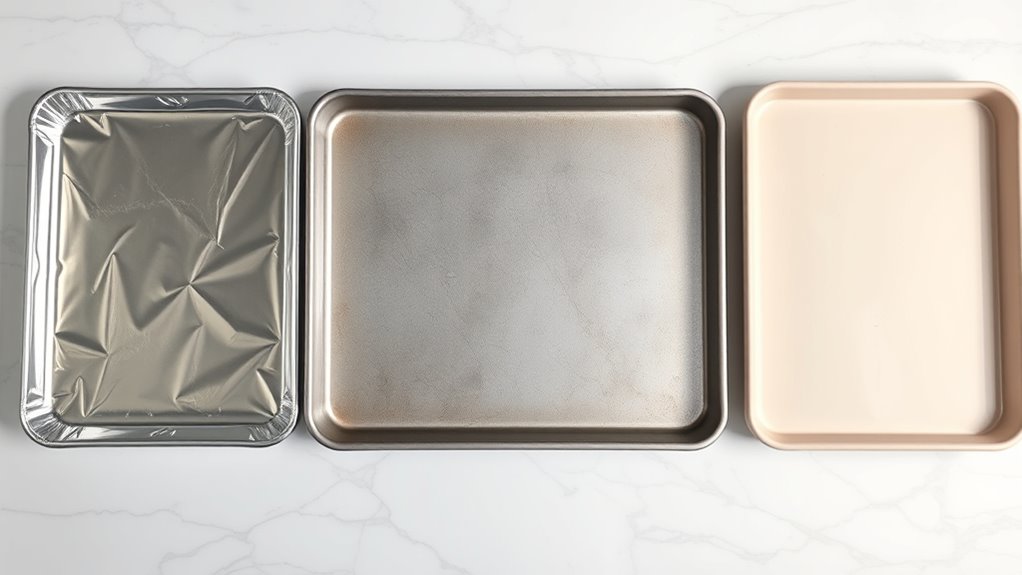
The aesthetic appeal and design options of baking sheets can elevate the look of your kitchen and make your baking experience more enjoyable. With a variety of color options, you can choose sheets that match your kitchen decor or add a pop of vibrancy. Ceramic baking sheets often come in rich, glossy finishes and decorative patterns, giving them a stylish appearance. Steel sheets may feature sleek, modern designs or classic finishes, while aluminum options can have anodized colors that resist staining. These design choices allow you to select baking sheets that not only perform well but also enhance your kitchen’s visual appeal. Whether you prefer minimalist elegance or bold decorative patterns, the right material can make your baking setup more personalized and attractive.
Environmental Impact and Sustainability
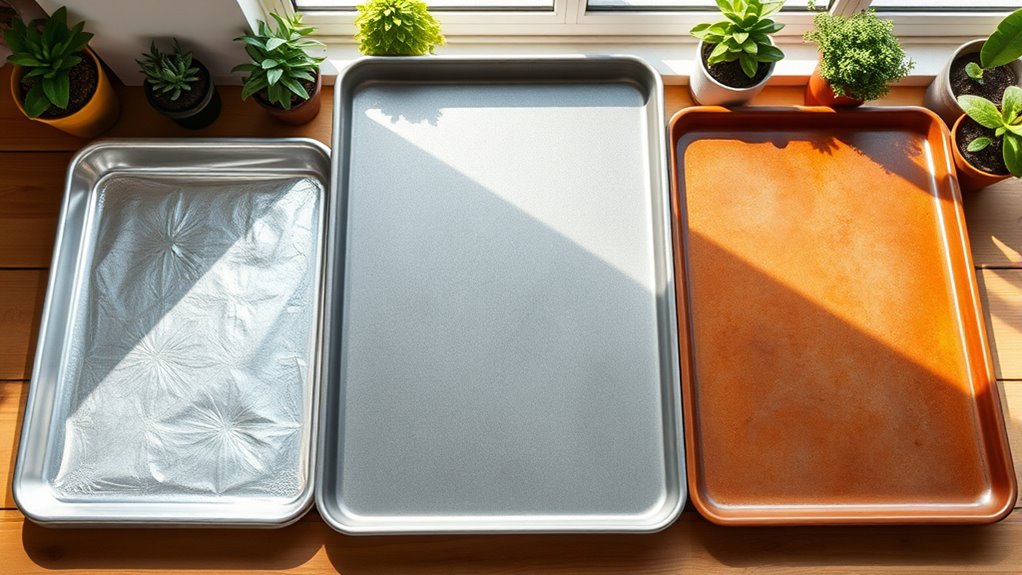
Choosing baking sheets that not only look great but also support environmental sustainability can make a meaningful difference. When evaluating materials, consider their eco friendly qualities and recyclability options. Here’s what to keep in mind:
Opt for eco-friendly, recyclable baking sheets to bake sustainably and reduce environmental impact.
- Aluminum sheets are highly recyclable and require less energy to produce, reducing environmental impact.
- Steel baking sheets are durable, long-lasting, and 100% recyclable, minimizing waste.
- Ceramic options often use eco friendly materials and can be repurposed or recycled, but some glazes may contain harmful chemicals.
- Look for products made from sustainable sources or with eco certifications to ensure minimal ecological footprint.
Frequently Asked Questions
Which Material Is Best for Baking Cookies?
For baking cookies, aluminum is your best choice because it heats evenly, giving you a consistent cookie texture. It also helps reduce baking time, so your cookies come out perfectly crisp or chewy, depending on your preference. Avoid ceramic, as it can cause uneven baking and longer baking times. Use aluminum sheets for reliable results and consistently delicious cookies.
Can Ceramic Baking Sheets Go in the Oven at High Temperatures?
Ceramic baking sheets can generally go in the oven at high temperatures, but you should verify their ceramic durability and oven safety ratings first. Most high-quality ceramic sheets withstand temperatures up to 450°F or even 500°F. However, lower-quality options might crack or break if exposed to extreme heat. Always follow the manufacturer’s guidelines to ensure your ceramic baking sheet remains safe and effective during high-temperature baking.
Are Steel Baking Sheets Suitable for Broiling?
While steel baking sheets excel in durability, making them a reliable choice, they also handle broiling tasks well. Their heat conductivity ensures even cooking, which is essential for broiling. You’ll find that steel sheets are suitable for high-temperature environments, offering a sturdy and safe option. Just remember to choose a heavy-gauge steel for maximum durability and consistent heat distribution, so your broiling results come out perfect every time.
How Do I Prevent Sticking With Aluminum Baking Sheets?
To prevent sticking on aluminum baking sheets, apply a non-stick coating or use a baking spray before placing your food. Make sure to evenly coat the surface, especially if you’re baking sticky items like cookies or roasted vegetables. You can also line the sheet with parchment paper for extra protection. These steps help guarantee easy removal and keep your baking sheet in good condition.
Which Material Is Safest for Acidic Foods?
If you’re concerned about acidic food safety, go for ceramic or stainless steel baking sheets. These materials resist corrosion better than aluminum, preventing harmful leaching. Ceramic offers excellent corrosion resistance and is non-reactive, ensuring your acidic foods stay safe and flavorful. Stainless steel also provides durability and safety, while aluminum can react with acids, potentially compromising food quality and safety over time. Prioritize ceramic or stainless steel for safer, corrosion-resistant baking.
Conclusion
Choosing the right baking sheet feels like selecting a trusted partner in your kitchen adventures. Whether it’s the quick heat of aluminum, the sturdy resilience of steel, or the timeless charm of ceramic, each material offers unique benefits. Imagine your baked goods turning golden and perfect, thanks to the ideal sheet beneath. With the right choice, every baking session becomes a delightful journey, filling your home with irresistible aromas and warm memories.