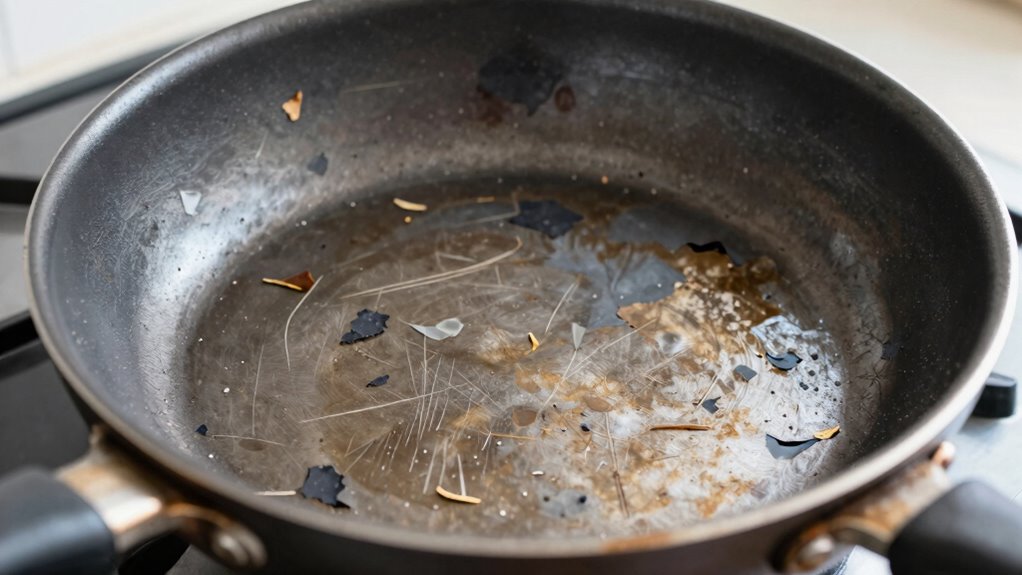

If your nonstick pan’s coating starts peeling, chipping, or flaking, it’s time to replace it for safety and performance. Food sticking or uneven heating also signals deterioration. Damage can release particles into your food, which may be harmful. Once you notice discoloration or scratches from metal utensils, avoid using it further. Proper signs of wear mean it’s best to switch to a safer, eco-friendly option. Keep looking to discover more signs that your pan needs replacing.

Get kitchen staples and gadgets delivered free with Prime
- Fast, free delivery on millions of items
- Prime Video, Amazon Music and more included
- Member-only deals all year
Key Takeaways
- Food starts sticking or burns unevenly despite proper heat and cleaning.
- Visible peeling, chipping, or discoloration on the nonstick surface.
- Flakes or coating debris are found in food or around the pan.
- Significant loss of nonstick performance, requiring added oil or scrubbing.
- Signs of coating deterioration that may pose health risks or compromise safety.
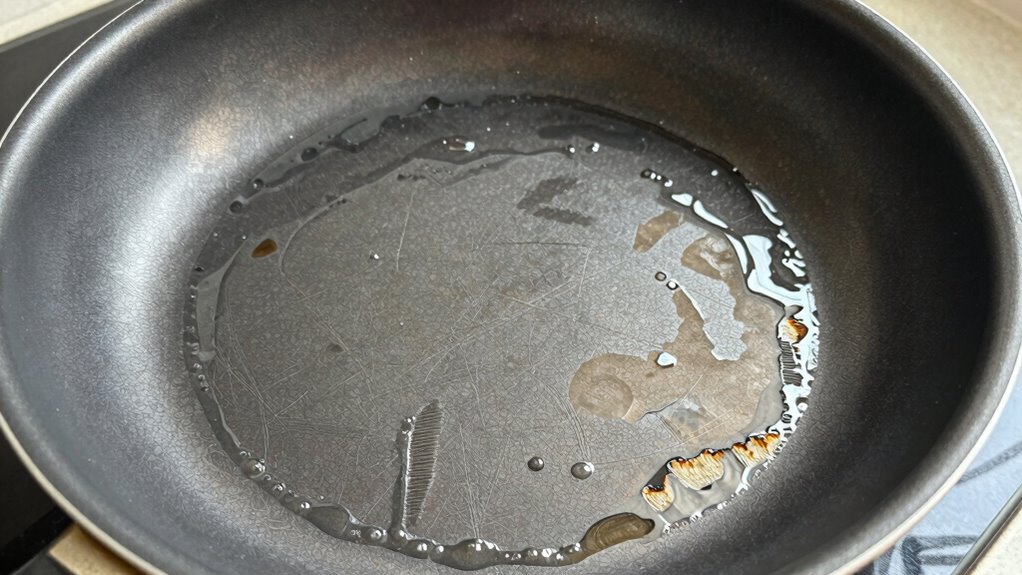
Nonstick pans are a staple in many kitchens because they make cooking and cleanup easier, but they can also present a range of problems that frustrate home cooks. Over time, the nonstick coating begins to wear down, which can lead to food sticking and uneven heating. When this happens, it’s a clear sign it might be time to replace your pan. While some might consider reconditioning or re-coating, often the most practical solution is to invest in a new one. But before tossing your old pan, consider eco friendly alternatives, like ceramic or cast iron, which can minimize environmental impact and reduce the need for frequent replacements. Proper maintenance also plays an essential role in extending the life of your nonstick pan. Avoid using metal utensils, which scratch and damage the coating, and always clean it gently with non-abrasive sponges. Hand washing is preferable over dishwashers, which can accelerate deterioration. When you take good care of your pan, you delay the inevitable replacement, saving money and reducing waste. Additionally, understanding how pan coatings can degrade over time helps you to recognize signs of wear more effectively. Research indicates that coating degradation can be influenced by factors such as heat, cleaning methods, and utensil use. However, even with proper maintenance, nonstick coatings have a limited lifespan, especially if you notice peeling, chipping, or discoloration. These issues aren’t just cosmetic; they can also compromise food safety and cooking performance. If you see flakes of coating in your food or around the pan’s surface, it’s time to retire it. Continuing to use a damaged nonstick pan risks ingesting non-toxic particles and exposes you to potential health hazards. Recognizing these signs early can help you decide whether to replace the pan or opt for eco friendly alternatives that support sustainability. Ceramic nonstick cookware, for example, offers a chemical-free surface that’s durable and easy to clean, making it a good replacement option. Cast iron pans, while requiring some initial seasoning and maintenance, can last for decades if cared for properly and are entirely eco friendly. When choosing a new pan, look for options that align with your eco-conscious values and cooking needs. Remember, investing in quality cookware and practicing proper maintenance not only extends the lifespan of your kitchen tools but also reduces your environmental footprint. Proper pan maintenance and awareness of coating deterioration can help you make informed decisions about when to replace your cookware. Ultimately, knowing when to replace your nonstick pan comes down to safety, performance, and the condition of its coating. If your pan’s surface shows signs of damage, it’s better to replace it rather than compromise your health or the quality of your meals. By staying attentive to these signs and exploring eco friendly alternatives, you guarantee your kitchen remains efficient, safe, and environmentally responsible. Additionally, understanding how to extend the lifespan of your cookware can contribute to reducing waste and supporting sustainable practices.
As an affiliate, we earn on qualifying purchases.
Frequently Asked Questions
How Long Does a Typical Nonstick Pan Last?
A typical nonstick pan lasts about 3 to 5 years, depending on how well you care for it. The pan coating gradually wears off with use, especially if you use metal utensils or scrub harshly. To maximize cookware longevity, avoid high heat and abrasive cleaners. When the coating begins to peel or shows signs of significant deterioration, it’s time to replace your pan for safety and peak nonstick performance.
Can I Repair a Scratched Nonstick Surface?
You can’t effectively repair a scratched nonstick surface because the nonstick coating is bonded to the pan’s base and damage compromises its integrity. While some repair techniques, like using nonstick spray or coatings, might temporarily mask scratches, they won’t restore the original nonstick properties. For safe and reliable cooking, it’s best to replace your pan once the nonstick coating is considerably scratched or damaged.
Are There Safer Alternatives to Nonstick Pans?
Imagine sizzling eggs sliding effortlessly onto a plate—that’s the magic of safer alternatives like ceramic coatings and stainless steel. Ceramic pans offer a natural, chemical-free nonstick surface, while stainless steel is durable and free from synthetic coatings. Both are safer options, allowing you to cook without worrying about harmful chemicals leaching into your food. Switch to these materials for healthier, reliable cooking experiences that keep your well-being front and center.
What Are the Environmental Impacts of Replacing Nonstick Pans?
Replacing nonstick pans impacts the environment, especially if you don’t dispose of them properly. You should aim for eco-friendly disposal methods, like recycling or repurposing, to reduce waste. Choosing pans made from sustainable materials, such as stainless steel or cast iron, minimizes environmental harm and promotes durability. By making mindful replacements, you help lower pollution and conserve resources, supporting a more eco-friendly cookware lifecycle.
How Do I Properly Maintain My Nonstick Cookware?
Did you know that properly maintaining your nonstick cookware can extend its life by up to 50%? To do this, use gentle cleaning techniques like hand-washing with soft sponges and avoiding abrasive scrubbers. Store your pans carefully, stacking with paper towels in between to prevent scratches. These simple storage tips and cleaning techniques keep your nonstick surface intact, ensuring it performs well and lasts longer.
As an affiliate, we earn on qualifying purchases.
Conclusion
When your nonstick pan starts to show signs of wear, it’s time to toss it out and find a shiny new one. Don’t wait for it to become a kitchen catastrophe—think of it as your modern-day squire, protecting your culinary quests. Like a trusty steed, a good nonstick pan makes cooking smoother and more enjoyable. So, heed the signs, replace it promptly, and keep your kitchen adventures running as smoothly as a well-oiled machine.
As an affiliate, we earn on qualifying purchases.
As an affiliate, we earn on qualifying purchases.
NFL season / tailgating Picks
team gear
As an affiliate, we earn on qualifying purchases.