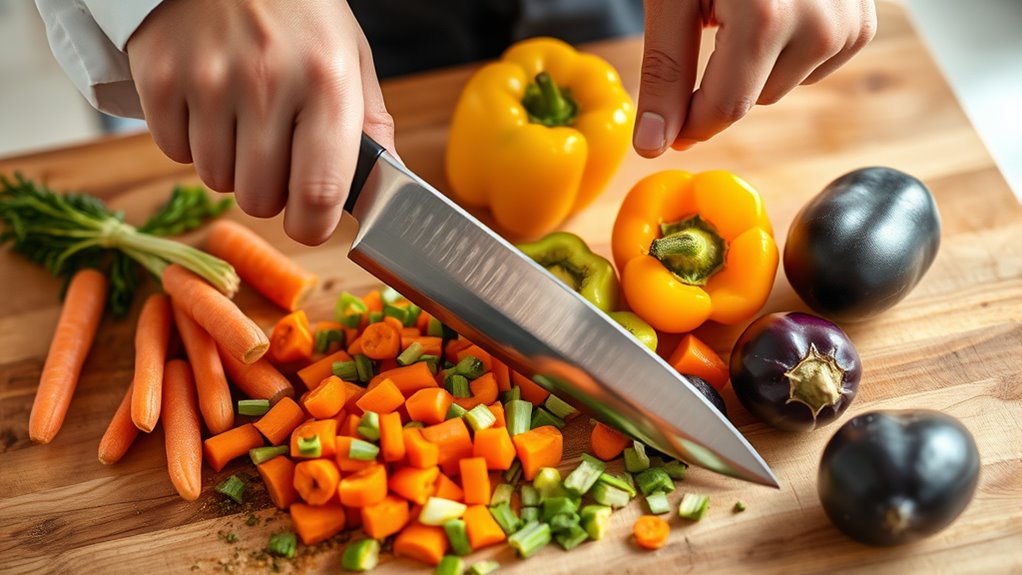

To chop veggies like a pro, start with a sharp knife and a stable cutting surface. Grip the handle firmly and use the claw grip to protect your fingertips. Practice a rocking motion, keeping the tip on the board and applying gentle pressure. Maintain steady, even slices and take your time to build confidence. Keep honing your skills and you’ll notice your precision and speed improve. Keep going to discover more tips for mastering your knife skills.

Get kitchen staples and gadgets delivered free with Prime
- Fast, free delivery on millions of items
- Prime Video, Amazon Music and more included
- Member-only deals all year
Key Takeaways
- Keep knives sharp and use proper grip with a guiding claw to ensure control and safety.
- Use a stable cutting surface and employ a gentle rocking motion for even, consistent vegetable cuts.
- Practice small, controlled slices to improve precision and build confidence over time.
- Maintain proper hand positioning: tuck fingers in and use the knuckles as a guide.
- Regularly hone and sharpen your knives to maintain optimal cutting performance.

Have you ever struggled with chopping vegetables evenly or felt unsure about handling a sharp knife? You’re not alone. Many beginners find the task intimidating, but with a few basic skills, you can chop like a pro in no time. The first step is understanding safety tips to prevent accidents. Always keep your knives sharp—dull blades require more force and are more likely to slip, leading to cuts. When handling knives, grip the handle firmly but comfortably, and keep your fingers tucked in on the hand holding the vegetable. This “claw grip” keeps your fingertips safe from the blade’s edge. Make sure your cutting surface is steady; a damp towel underneath your board can prevent slipping. Take your time, especially at first, to build confidence and precision. Remember, rushing increases the risk of injury. Practicing proper technique is essential for developing safe cutting habits and improving your skills efficiently. Knife maintenance is *essential* for both safety and efficiency. After each use, wash your knives carefully by hand with warm, soapy water and dry them immediately to prevent rust. Avoid putting them in the dishwasher, as harsh detergents and the jarring cycle can dull blades and damage handles. Keep your knives sharp by honing them regularly with a honing steel, which realigns the blade’s edge, and get them professionally sharpened once or twice a year if needed. Proper maintenance not only extends the life of your knives but also makes chopping safer and easier. Store your knives in a knife block or on a magnetic strip, instead of loose in a drawer, to protect the blades and prevent accidental cuts when reaching for them. When it comes to actually chopping vegetables, start with a stable, flat surface. Use a rocking motion, keeping the tip of the knife on the cutting board while lifting and lowering the handle through the vegetable. Practice slicing with a gentle, even pressure—don’t force the knife through. Pay attention to your hand positioning; your guiding hand should be in a claw shape, keeping your knuckles facing the blade to avoid cuts. Take small, controlled cuts to maintain consistency and improve your speed over time. As you gain confidence, you’ll notice your ability to produce uniform pieces improves, making your dishes look more professional and cook evenly. Remember, mastering basic knife skills takes patience, but with attention to safety tips and regular knife maintenance, you’ll find yourself chopping veggies quickly, safely, and like a true culinary beginner turned expert.
As an affiliate, we earn on qualifying purchases.
Frequently Asked Questions
What Is the Best Type of Knife for Beginners?
You should choose a beginner-friendly knife like a chef’s knife with a high-carbon stainless steel blade for durability and sharpness. Look for one with a comfortable handle made of ergonomic material, ensuring a secure grip during chopping. A well-balanced knife with a sturdy handle and quality knife material will make your veggie prep easier and safer, helping you develop confidence and improve your skills in the kitchen.
How Do I Safely Store My Knives?
Think of your knives as trusted friends—you want to keep them safe and happy. To do that, you should store them properly to guarantee knife storage safety. Use a knife block, magnetic strip, or blade guards to protect blades and prevent accidents. Regular knife maintenance, like cleaning and drying, also keeps them sharp. Proper storage extends your knives’ life and keeps your kitchen safe, so always prioritize safe storage practices.
How Often Should I Sharpen My Kitchen Knives?
You should sharpen your kitchen knives every 6 to 12 months, depending on how often you cook and use them. Regular knife maintenance ensures they stay sharp and safe. Use quality sharpening tools like a honing steel for routine upkeep and a whetstone or electric sharpener for more thorough sharpening. Keep an eye on your knives’ performance, and sharpen them when they start to feel dull or require more effort to cut.
Can I Wash My Knives in the Dishwasher?
You shouldn’t wash your knives in the dishwasher because dishwasher risks, like dulling or chipping, are common. Instead, follow knife cleaning tips by hand-washing with warm, soapy water immediately after use. Avoid leaving knives in the sink or soaking them, and dry them thoroughly to prevent rust. Hand washing preserves your knives’ sharpness and longevity, ensuring they stay safe and effective for all your veggie chopping needs.
What Grip Provides the Most Control When Chopping?
You want control like a maestro guiding an orchestra, so use the pinch grip. Grip the blade between your thumb and forefinger, with the rest of your fingers curled into a claw grip on the handle. This combo gives you precision and stability, turning your chopping into a smooth, confident dance. Mastering this grip transforms your veggie prep from a chore into a culinary performance, making every cut safer and more accurate.
As an affiliate, we earn on qualifying purchases.
Conclusion
Now that you’ve learned the basics of chopping and handling your knife confidently, you’re well on your way to becoming a kitchen pro. Remember, practice makes perfect, so don’t be discouraged if you don’t get it right away. Keep honing your skills, and soon you’ll be slicing and dicing like a seasoned chef. With patience and persistence, you’ll turn your kitchen into a culinary playground where every cut counts. Stick with it—you’ll be a pro before you know it.
As an affiliate, we earn on qualifying purchases.
As an affiliate, we earn on qualifying purchases.
Halloween Picks
halloween
As an affiliate, we earn on qualifying purchases.
![I 3D Printed Origami [video]](https://bestofculinary.com/wp-content/uploads/2026/05/i-3d-printed-origami-video-featured-560x300.jpg)