Glass cookware heats evenly and retains heat well, ideal for baking and slow cooking. However, it takes longer to heat up and isn’t compatible with induction cooktops unless specially designed. While it’s easy to clean and resistant to reactions with food, it can chip or crack if dropped or scratched. Proper handling extends its lifespan, but knowing its limitations helps you stay safe and efficient in the kitchen. Continue exploring to discover more tips and insights.
Key Takeaways
- Glass cookware provides even heat distribution, ideal for baking and slow cooking, but typically takes longer to heat than metal options.
- It is resistant to thermal shock and safe if used properly, though impacts or scratches can cause cracking or chipping.
- Suitable for oven use, but generally incompatible with induction stovetops unless specially equipped with a ferromagnetic layer.
- Easy to clean and non-reactive, maintaining its appearance over time, but requires gentle handling to avoid damage.
- Longer heat retention necessitates careful timing adjustments to prevent overcooking or thermal stress.
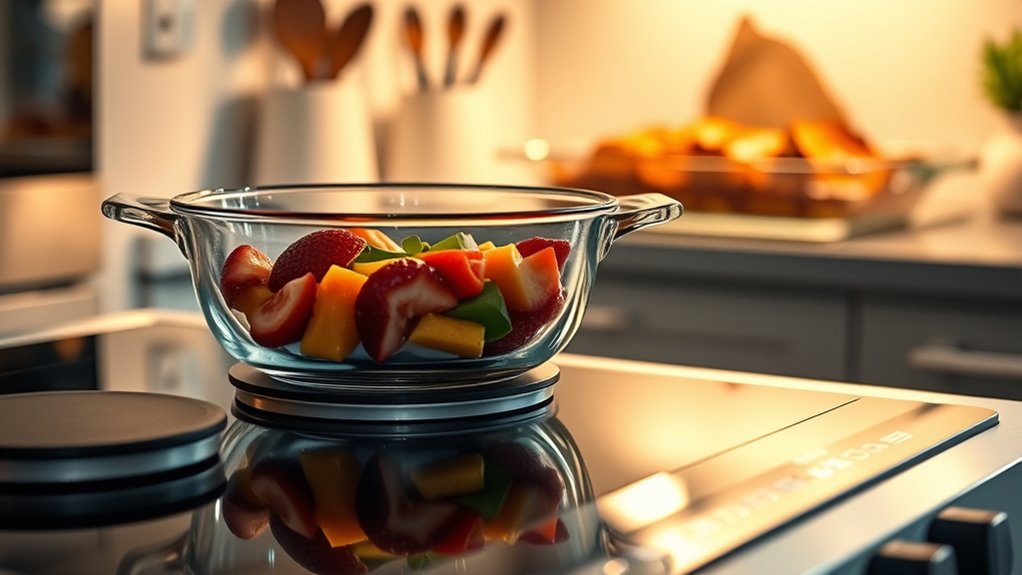
Glass cookware has become increasingly popular because it offers a sleek, non-reactive surface that’s easy to clean and visually appealing. When considering it for your kitchen, you’ll want to understand how its material durability and heating efficiency impact your cooking experience. Glass cookware is made from tempered or borosilicate glass, which is known for its strength and resistance to thermal shock. This means it can withstand sudden temperature changes better than regular glass, reducing the risk of cracking or breaking during use. However, it’s still vital to handle it carefully to avoid damage, especially if you drop it or expose it to extreme impacts. Its durability makes it a reliable choice for many cooks, but it’s not invincible; scratches or chips can occur over time, especially if you use metal utensils or abrasive cleaners. These imperfections can compromise its structural integrity, so proper care is necessary to prolong its lifespan. Additionally, some types of glass cookware incorporate European manufacturing standards, which enhance their safety and quality.
In terms of heating efficiency, glass cookware heats evenly, which is a significant advantage. Unlike some metal pans that can develop hot spots, glass distributes heat uniformly, helping you cook food more consistently. This property makes it excellent for baking and slow cooking, where even heat is vital. However, glass cookware generally doesn’t heat up as quickly as metal options. It takes more time to reach the desired temperature, which might be a downside if you’re in a hurry. Additionally, because glass retains heat longer, you might need to adjust your cooking times or remove it from the heat slightly earlier to prevent overcooking. When using glass on your stovetop, it’s essential to start with low or medium heat to avoid thermal stress that can cause cracking. Also, keep in mind that glass isn’t compatible with induction cooktops unless it has a special ferromagnetic layer, limiting its versatility in some kitchens.
Frequently Asked Questions
Can Glass Cookware Be Used in a Microwave Safely?
Yes, you can use glass cookware in a microwave safely because it’s designed for microwave safety and has good heat resistance. Make sure the glass is labeled microwave-safe before placing it in the microwave to avoid any risk of shattering. Use oven mitts when handling hot glass, and avoid sudden temperature changes to prevent breakage. Properly designed glass cookware ensures safe, even heating during microwave use.
How Does Glass Cookware Perform at High Temperatures?
When you push glass cookware to high temperatures, it’s like testing its resilience against thermal shock; it can handle warmth but risks cracking if suddenly exposed to extreme heat. Its excellent heat retention guarantees even cooking, yet prolonged high heat may weaken the glass over time. Use gradual temperature changes to protect your cookware, and you’ll enjoy consistent results without compromising its durability.
Is Glass Cookware Suitable for Induction Stovetops?
Glass cookware isn’t suitable for induction stovetops because it lacks induction compatibility. Induction cooktops rely on magnetic fields, and glass doesn’t conduct heat through magnetic induction. Instead, it heats through conduction from a compatible base. If you want efficient heat conduction and induction compatibility, choose cookware made of magnetic materials like cast iron or stainless steel. Glass is better suited for baking and stovetop use with compatible heat sources.
How Should I Clean and Maintain Glass Bakeware?
Did you know that over 80% of glass bakeware users clean it regularly? To keep yours in top shape, hand wash with warm, soapy water to prevent scratches, but dishwasher safety depends on the manufacturer—check your label. For stubborn stains, use baking soda paste or vinegar. Avoid abrasive scrubbers, and always dry thoroughly to prevent water spots and maintain clarity.
Are There Any Health Risks Associated With Glass Cookware?
There are minimal health risks associated with glass cookware if you prioritize food safety and material durability. Glass is non-reactive, so it won’t leach harmful chemicals into your food, making it safe for cooking and baking. Just make certain it’s free of cracks or chips, as damaged glass can harbor bacteria and break easily. Proper cleaning and handling help maintain its durability, keeping your cookware safe and reliable for everyday use.
Conclusion
While glass cookware offers a clear window into your cooking journey, it’s not without its pitfalls. Think of it as a delicate glass garden—beautiful but fragile, requiring gentle handling. With its even heat and stylish look, it’s like a mirror reflecting your culinary creativity. Just remember, treating it with care keeps your kitchen a safe, shining sanctuary. Embrace its transparency, but be mindful of its delicate soul, and your cooking adventures will stay bright and beautiful.