Using a kitchen scale is essential for precise ingredient measurements, ensuring your baked goods turn out consistently every time. Unlike volume methods, weighing ingredients eliminates discrepancies caused by packing or measuring techniques, giving you greater control and accuracy. This helps achieve the perfect texture and flavor, especially in delicate recipes. Investing in a scale transforms your baking into a more reliable and enjoyable craft. Keep going to discover how it can elevate your baking skills even more.
Key Takeaways
- Baking by weight ensures precise, consistent measurements, leading to better and more reliable results.
- Using a kitchen scale eliminates discrepancies caused by volume measurements like cups or tablespoons.
- It simplifies recipe adjustments, such as scaling or modifying ingredients, with greater accuracy.
- A scale reduces cleanup and saves time by measuring directly into mixing bowls.
- Investing in a kitchen scale transforms baking into a more precise, confident, and enjoyable craft.
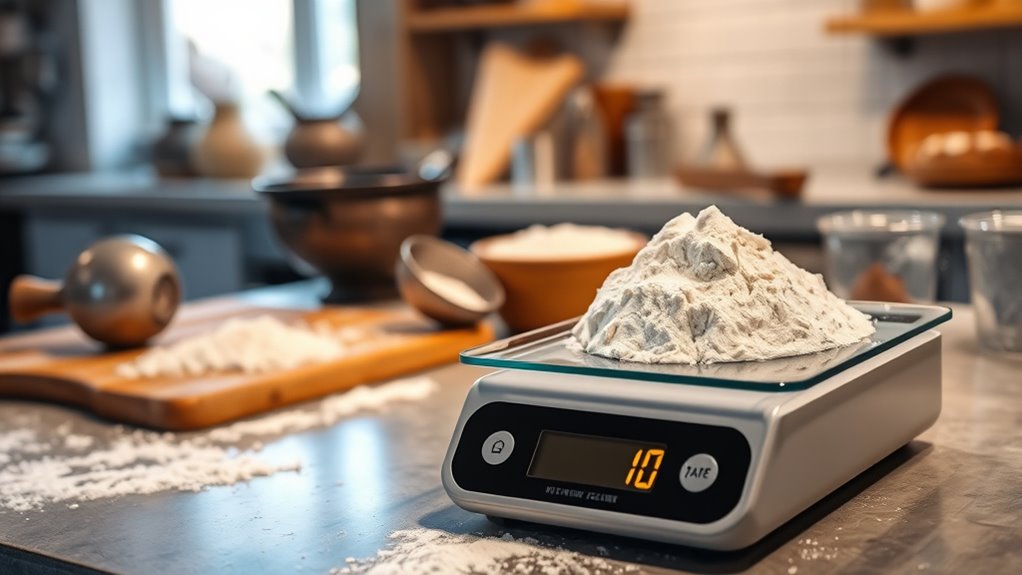
Are you tired of guessing measurements when baking? If so, a kitchen scale is the tool you need to elevate your baking game. Using a scale ensures ingredient accuracy, which is essential for achieving the perfect texture and flavor. When you measure ingredients by weight, you eliminate the discrepancies that often come with using volume measurements like cups or tablespoons. This accuracy leads to more consistent results each time you bake, making it easier to replicate your favorite recipes or experiment with new ones confidently.
Using a kitchen scale ensures precise measurements for consistently perfect baked goods.
Baking is a science, and even small differences in ingredient amounts can make a significant difference in the final outcome. For example, too much flour can make your bread dense, while too little sugar might affect the rise of your cakes. By using a kitchen scale, you can precisely measure ingredients, ensuring every batch turns out as intended. This precision is especially helpful when working with delicate recipes like soufflés or macarons, where exact measurements are critical. Over time, you’ll notice that your baked goods become more uniform, which boosts your confidence and reduces waste.
Many bakers prefer weighing ingredients because it simplifies the process. Instead of juggling multiple measuring cups and spoons, you can add ingredients directly to your mixing bowl. This not only saves time but also minimizes cleanup. Additionally, weighing ingredients provides a level of consistency that volume measurements can’t guarantee. Variations in ingredient packing, such as how tightly flour is scooped into a cup, can lead to inconsistent results. A scale removes this guesswork by providing a straightforward, reliable measurement every time.
Another advantage is that weighing ingredients allows for better control over recipe modifications. If you want to halve or double a recipe, adjusting weights is much more straightforward than recalculating volume measurements. This flexibility helps you create smaller or larger batches without sacrificing quality. Plus, a good kitchen scale can help you measure specialty ingredients like liquids, nuts, or chocolates with precision, further improving your baking outcomes.
Ultimately, investing in a kitchen scale is a smart choice for any baker serious about quality and consistency. It guarantees ingredient accuracy, which is the foundation of successful baking. With consistent measurements, your recipes will turn out the same way every time, giving you more confidence and fewer disappointments. Using precise measurement techniques can significantly enhance your baking results and reduce errors. Whether you’re a beginner or a seasoned baker, a kitchen scale is an essential tool that transforms your baking from guesswork into a precise and enjoyable craft.
Frequently Asked Questions
How Do I Calibrate My Kitchen Scale Accurately?
To calibrate your kitchen scale accurately, start by placing it on a flat, stable surface. Use calibration techniques like weighing an item with a known weight or a calibration weight if available. Turn on your scale and follow the manufacturer’s instructions to reset or calibrate, ensuring scale accuracy. Regular calibration helps maintain precision, so check it periodically, especially after moving or dropping it.
Can I Use a Digital Scale for Liquids?
Yes, you can use a digital scale for liquids. Just make sure it’s set to liquid measurement or fluid ounces, and check the scale’s accuracy before use. Digital scales that have a tare function make it easy to measure liquids precisely by subtracting the weight of the container. Always calibrate your scale regularly to guarantee consistent scale accuracy, especially when measuring liquids where small differences matter.
What Is the Best Weight Unit for Baking?
The best weight unit for baking is grams because of measurement accuracy. Grams provide precise measurements, reducing errors caused by unit conversion and ensuring consistent results. Using grams simplifies scaling recipes up or down without guesswork. When you measure in grams, you avoid the inaccuracies of cups or ounces, making your baking more reliable and professional. Stick with grams for the most accurate and consistent baking outcomes.
How Should I Clean and Maintain My Kitchen Scale?
To keep your kitchen scale in top shape, follow simple cleaning tips like wiping it with a damp cloth and avoiding harsh chemicals. Calibration methods involve placing a known weight on the scale and adjusting it according to your model’s instructions. Regular cleaning prevents residue buildup, while calibration guarantees accuracy. Store it in a dry place and handle it gently to maintain precise measurements for all your baking needs.
Are There Specific Scales Recommended for Professional Bakers?
Yes, professional bakers should choose scales with high accuracy and durability. Look for models recommended by industry standards and trusted brands like Ohaus or Escali. These scales offer precise measurements, reliable calibration, and sturdy construction, ensuring consistency in your baking. Investing in a professional-grade scale helps maintain precision, which is essential for recipes requiring exact ingredient ratios, ultimately elevating your baking quality and confidence.
Conclusion
A kitchen scale turns your baking into precision, your measurements into confidence, and your results into perfection. It transforms guesswork into consistency, chaos into order, and frustration into joy. With every weigh, you build trust in your ingredients, mastery in your craft, and pride in your creations. Embrace the scale, and watch your baking rise—literally and figuratively—into a artful, reliable, and delightful experience every time you step into the kitchen.