Maintaining your kitchen tools regularly keeps them functioning well and prevents buildup of grime, bacteria, and food residues that can lead to contamination or damage. Proper cleaning and storage extend their lifespan, ensuring they stay sharp, rust-free, and safe to use. Adopting a routine makes upkeep easier and more organized, saving you time and effort. Keep going, and you’ll discover even more tips to keep your tools in top shape for years to come.

Get kitchen staples and gadgets delivered free with Prime
- Fast, free delivery on millions of items
- Prime Video, Amazon Music and more included
- Member-only deals all year
Key Takeaways
- Regular maintenance prevents rust, dull blades, and bacteria buildup, ensuring tools stay safe and effective.
- Proper cleaning and storage extend the lifespan of kitchen tools and prevent damage.
- Routine upkeep ensures tools function efficiently, supporting better cooking results.
- Material-specific care avoids deterioration, especially for delicate items like wood utensils.
- Organized storage and inspections prevent environmental damage and maintain tool accessibility.
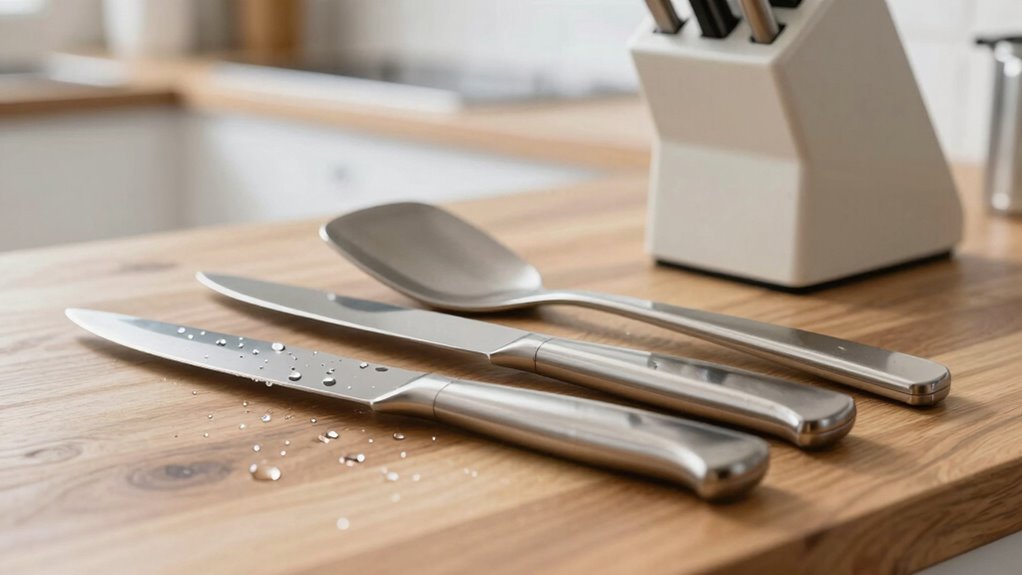
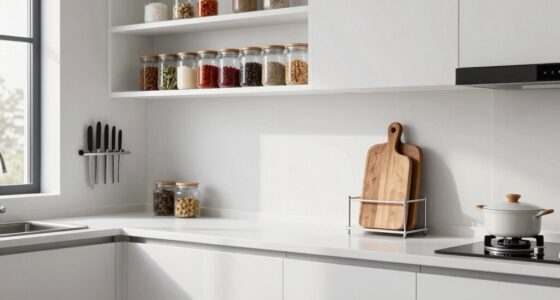
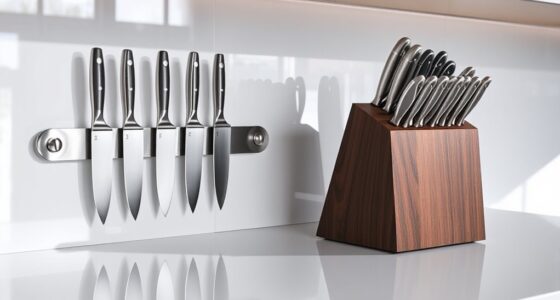
Keeping your kitchen tools in top condition is vital for efficient cooking and maintaining safety. When you follow a consistent maintenance routine, you guarantee that your tools work properly and last longer. Developing regular cleaning schedules prevents the buildup of grime, bacteria, and food residues that can compromise the quality of your tools and your health. It’s easy to overlook the importance of cleaning, but neglecting this step can lead to rust, dull blades, or even cross-contamination. Setting aside specific times during your week for cleaning helps you stay organized and makes sure nothing gets overlooked. For example, after preparing meals, take a few minutes to wash and dry your knives, cutting boards, and utensils. For larger tools like mixers or blenders, a quick rinse and wipe-down after use will keep them in good shape. Creating a cleaning schedule tailored to your usage patterns makes this process automatic and less burdensome. Additionally, paying attention to the materials of your tools, such as wooden utensils, can help you choose appropriate cleaning methods to extend their lifespan. Proper knowledge about material-specific care is essential for avoiding damage and ensuring longevity, especially as different materials require different maintenance techniques. Incorporating professional cleaning tools can also improve the effectiveness of your routine and make maintaining your kitchen tools easier. Proper storage tips are just as vital as cleaning when it comes to maintaining your kitchen tools. Proper storage prevents damage and makes your tools easier to access when needed. For knives, always store them in a knife block or on magnetic strips, avoiding loose drawers that can dull blades or cause injuries. Utensils and small gadgets should be kept in designated containers or drawer organizers, which prevent clutter and make cleaning easier. For larger tools, such as pots, pans, or mixers, consider hanging racks or shelves to keep them off countertops and prevent scratches or dents. Using the right storage solutions also helps keep your tools dry and free from moisture, which can lead to rust. If you have specific tools that require special care, such as wooden spoons or cutting boards, store them in a way that allows air circulation to prevent mold or warping. Regularly inspecting your storage areas and reorganizing as needed keeps your tools accessible and in good condition. Understanding the importance of proper storage can significantly prolong the life of your kitchen tools and help prevent damage caused by improper handling or environmental factors. Additionally, knowing how to prevent environmental damage can further safeguard your tools against humidity and temperature fluctuations.
knife sharpening and honing tools
As an affiliate, we earn on qualifying purchases.
As an affiliate, we earn on qualifying purchases.
Frequently Asked Questions
How Often Should I Replace My Kitchen Tools?
You should replace your kitchen tools based on their replacing frequency and tool lifespan, which varies by item. For example, knives need replacing every 1-3 years, while spatulas last about 2-3 years with proper care. Keep an eye out for signs of wear, damage, or rust, and replace tools promptly to ensure safety and efficiency. Regularly evaluating your tools helps maintain a well-functioning, safe kitchen environment.
Can I Use Harsh Chemicals to Clean Kitchen Tools?
Think of your kitchen tools as your culinary allies—would you risk harming them? Using harsh chemicals for cleaning can damage their surfaces and compromise food safety, leading to shorter tool longevity. Chemical cleaning might seem quick, but it’s often too aggressive. To protect your tools and guarantee they last, stick to gentle cleaners and proper maintenance routines. Your tools deserve care, just like the delicious meals you create.
Are There Specific Maintenance Tips for Electric Kitchen Gadgets?
Yes, you should follow specific maintenance tips for electric kitchen gadgets. Create a cleaning schedule that includes unplugging devices before cleaning, avoiding water contact with electrical parts, and wiping down with a damp cloth. Proper storage solutions, like dry, dust-free containers, help prevent damage. Regularly check cords and buttons for wear. This routine guarantees your gadgets stay functional and safe, prolonging their lifespan and maintaining peak performance.
How Do I Prevent Rust on Metal Kitchen Tools?
To prevent rust on metal kitchen tools, you should focus on rust prevention and metal care. Always dry your tools thoroughly after washing, as moisture causes rust. Apply a light coat of mineral oil or food-safe oil to protect the metal surface. Store tools in a dry, ventilated area, and avoid leaving them wet or in humid environments. Regular maintenance keeps your metal tools in excellent condition and rust-free.
What’s the Best Way to Store Cleaned Kitchen Tools?
You should store cleaned kitchen tools in dry, well-ventilated storage containers to prevent moisture buildup. After washing, use proper drying techniques like air drying or towel drying to eliminate water. Store utensils with handles facing up or in dedicated racks to avoid damage. This approach keeps your tools dry, rust-free, and ready for use, extending their lifespan and maintaining hygiene.
kitchen utensil storage solutions
As an affiliate, we earn on qualifying purchases.
As an affiliate, we earn on qualifying purchases.
Conclusion
Remember, giving your kitchen tools a little tender loving care keeps them happy and ready for their next performance. Think of it as whispering a gentle lullaby to your trusty utensils, ensuring they stay in their prime, quietly working behind the scenes. When you treat your tools with care, they’ll serve you well, turning everyday cooking into a smooth, harmonious dance. A little maintenance goes a long way in keeping your culinary symphony running flawlessly.
professional kitchen cleaning brushes
As an affiliate, we earn on qualifying purchases.
As an affiliate, we earn on qualifying purchases.
As an affiliate, we earn on qualifying purchases.
NFL season / tailgating Picks
team gear
As an affiliate, we earn on qualifying purchases.