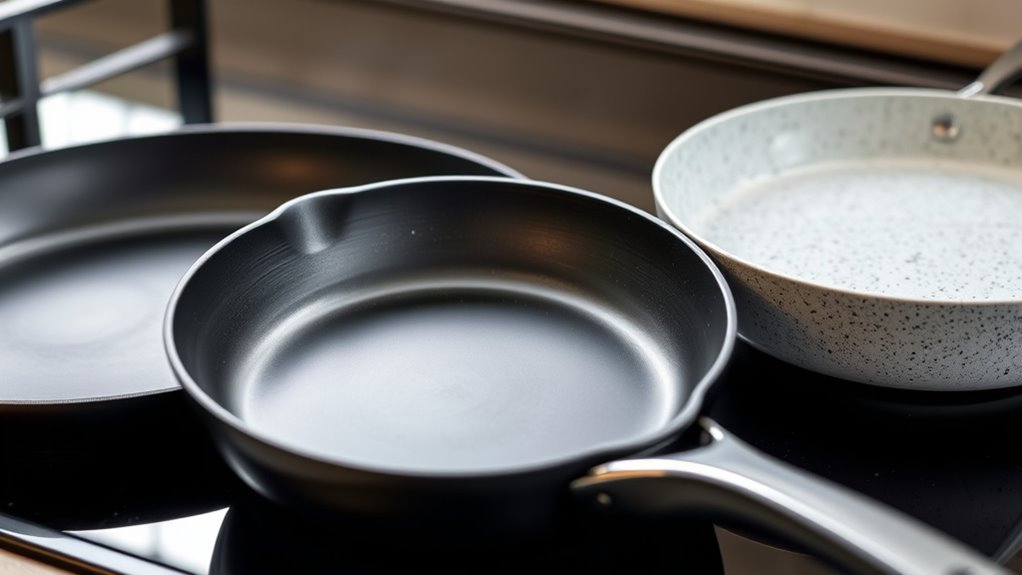

Nonstick and ceramic-coated pans are indeed different in materials and construction. Nonstick pans usually have a chemical-based PTFE coating, while ceramic pans use silica-based ceramic layers. Ceramic coatings tend to be less durable and may chip easier, but they avoid chemical fumes if overheated. Nonstick pans often last longer but can release fumes when heated too high. To discover how these differences affect your cooking and which might suit your needs better, keep exploring.
Key Takeaways
- Nonstick pans typically use PTFE coatings, while ceramic pans have silica-based ceramic layers, affecting durability and heat resistance.
- Ceramic-coated pans often have smoother surfaces for easier food release but are more prone to scratching and wear.
- Nonstick pans generally last longer and resist chipping better than ceramic-coated options, which are more fragile over time.
- Ceramic coatings are made from natural materials and pose fewer chemical safety concerns compared to traditional nonstick coatings.
- Price varies; nonstick pans are usually cheaper initially but may need replacing sooner, whereas ceramic pans cost more but can be more durable with proper care.
Materials and Construction Differences
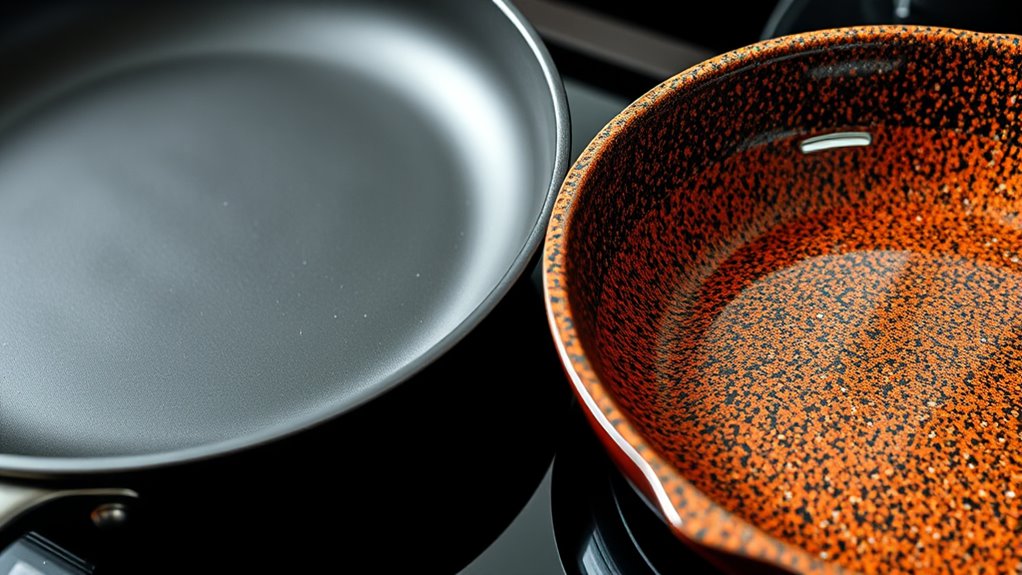
Nonstick and ceramic-coated pans differ markedly in their materials and construction, which directly impacts their performance and durability. Manufacturing techniques play a vital role in shaping each pan’s qualities. Nonstick pans typically feature a base made from aluminum or stainless steel, coated with a synthetic nonstick layer like PTFE or similar substances. Ceramic-coated pans, on the other hand, use a base material such as aluminum or steel, but are coated with a silica-based ceramic layer. Material compatibility is essential, as ceramic coatings require specific bonding processes to guarantee adhesion and longevity. While nonstick coatings rely on chemical bonding, ceramic coatings depend on high-temperature curing for durability. These differences influence not only how each pan is made but also how well they perform over time. Additionally, the materials used in each type can affect their resistance to scratching and overall lifespan, especially considering the different manufacturing processes involved. The coating application method can also affect the uniformity and integrity of the coating, which is crucial for performance. Furthermore, the durability of each coating can vary significantly based on these construction methods, impacting their long-term performance. Proper understanding of coating adhesion techniques can help consumers choose pans that last longer and perform better.
Cooking Performance and Food Release

When it comes to cooking performance and food release, ceramic-coated pans often excel at providing a smooth surface that allows food to slide off easily, especially when properly heated and seasoned. The ceramic surface, combined with a quality nonstick coating, helps prevent sticking and makes cleaning simpler. To maximize performance:
- Use medium heat to preserve the nonstick coating and avoid damaging the ceramic surface.
- Preheat the pan to ensure even heat distribution and ideal food release.
- Avoid metal utensils, which can scratch the ceramic surface and compromise food release.
- Regularly maintain the coating by following manufacturer guidelines to ensure long-lasting effectiveness.
- Proper cleaning and care, such as hand washing and avoiding abrasive scrubbers, can extend the life of the nonstick surface and maintain its performance over time. Additionally, understanding the different types of coatings can help you select the best pan for your needs and ensure longevity. Being aware of material composition can also help you choose a pan that suits your cooking style and maintenance preferences. These steps help maintain the nonstick coating’s effectiveness and ensure your food slides off effortlessly. Overall, ceramic-coated pans deliver excellent food release, especially when maintained properly.
Durability and Longevity

Ceramic-coated pans tend to be more susceptible to wear and damage over time compared to traditional nonstick options. They often have lower abrasion resistance, meaning they can chip or degrade more quickly with frequent use or abrasive utensils. Scratch durability is another concern, as ceramic coatings can be more easily scratched, reducing their effectiveness and lifespan. If you’re diligent with gentle tools and proper care, ceramic pans can last several years, but they generally don’t match the longevity of traditional nonstick pans. Proper maintenance and careful handling are essential for extending their lifespan. Additionally, the presence of lifetime warranties on some nonstick pans can be an indicator of their durability and manufacturer confidence. Because of their material composition, ceramic coatings may also be more prone to thermal shock, which can cause cracking or peeling if exposed to sudden temperature changes. Regularly checking for signs of wear and avoiding thermal shocks can help prolong the useful life of ceramic cookware.
Health and Safety Considerations
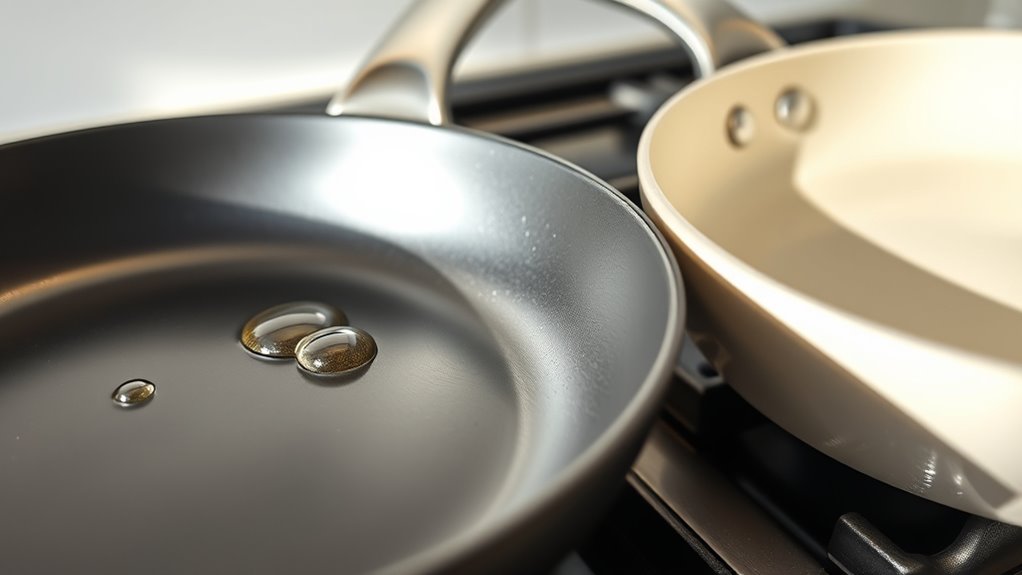
While both nonstick and ceramic-coated pans are popular choices, concerns about their health and safety often influence your decision. You should consider chemical safety, especially regarding nonstick coatings that may release fumes if overheated. Ceramic pans typically use natural materials, reducing chemical risks. Additionally, the environmental impact plays a role; nonstick pans often involve chemicals that can harm ecosystems during manufacturing or disposal. To better understand, think about:
- The potential release of toxic fumes from overheated nonstick coatings.
- The use of safer, eco-friendly materials in ceramic coatings.
- The long-term environmental consequences of manufacturing and disposing of each type.
Being aware of these factors helps you choose cookware that prioritizes your health and minimizes environmental harm.
Price and Value for Money
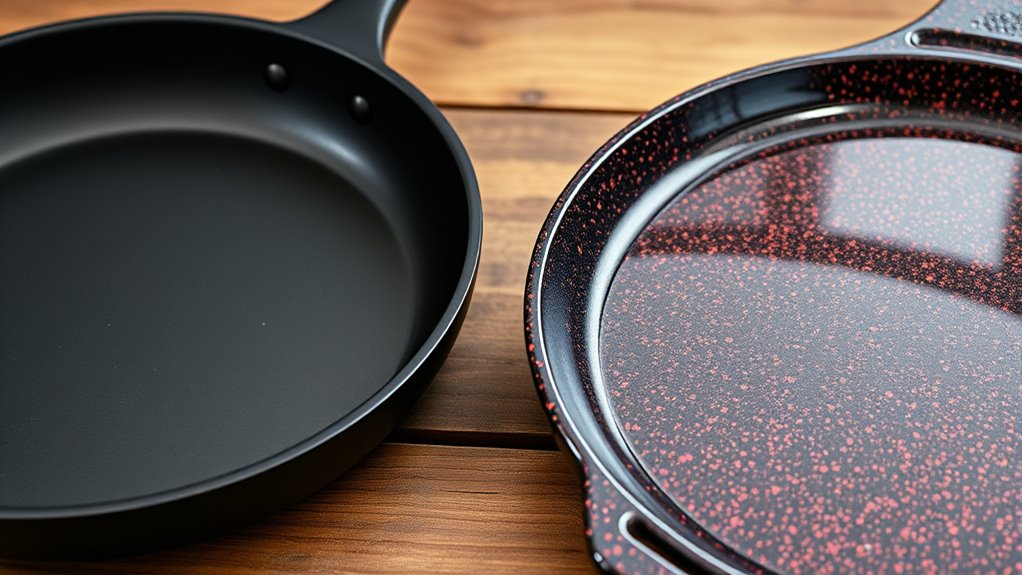
Choosing between nonstick and ceramic-coated pans often comes down to their cost and overall value for money. Budget options are available for both types, making it easier to find a pan that fits your financial situation. Nonstick pans tend to be less expensive upfront, but lower-quality options may wear out quickly. Ceramic-coated pans can be pricier initially but often last longer if properly cared for. Brand reputation plays a key role in ensuring you’re getting good value; reputable brands usually offer better durability and consistent performance, which saves you money in the long run. Consider your usage needs and budget carefully. Investing in a well-made pan from a trusted brand can provide better value, whether you prefer nonstick or ceramic coating. Additionally, understanding the entertainment and parks support hours can help you plan your shopping or cooking routines around more convenient times. When selecting cookware, it’s also important to consider the durability, as this directly impacts the longevity and overall value of your purchase. Recognizing the importance of proper maintenance can extend the lifespan of your pans and maximize their value. Furthermore, advancements in material technology are leading to cookware that combines the benefits of both coatings, potentially offering better longevity and performance. Staying informed about new innovations can help you make smarter choices and get the best value for money over time.
Frequently Asked Questions
Can Ceramic Coatings Withstand High-Temperature Cooking?
Ceramic coatings can withstand high-temperature cooking, thanks to their thermal resistance, but you should still be cautious. While they generally handle heat well, extreme temperatures may affect coating durability over time. To maximize lifespan, avoid using high heat constantly and follow manufacturer guidelines. Proper care guarantees your ceramic-coated pan maintains its nonstick qualities and prevents damage, making it a reliable choice for high-temperature cooking when used correctly.
Are Nonstick Pans Safe for Use With Metal Utensils?
You can use metal utensils with nonstick pans, but beware—metal utensil damage can compromise the nonstick coating durability. It’s like playing with fire; you might scratch or chip the surface, reducing its effectiveness and lifespan. To keep your pan in top shape, opt for wooden or silicone tools. If you want your nonstick coating to last, treat it gently and avoid metal utensils altogether.
Do Ceramic Pans Emit Toxic Fumes When Overheated?
Ceramic pans can emit toxic fumes if you overheat them, especially when they reach very high temperatures. Overheating risks increase if you leave the pan unattended or turn the heat up too high, causing the ceramic coating to break down and release fumes. To stay safe, avoid heating your ceramic pan beyond recommended temperatures, and always use moderate heat to prevent any toxic fumes from being released.
How Environmentally Friendly Are the Manufacturing Processes?
You’ll find that ceramic pans are generally more eco-friendly, thanks to their manufacturing processes that focus on sustainable production methods. These methods reduce harmful emissions and avoid toxic chemicals, making the process more environmentally conscious. By choosing ceramic, you support eco-friendly manufacturing practices, which helps minimize your carbon footprint. Overall, ceramic pans tend to be a greener option, aligning with sustainable production goals and reducing environmental impact compared to traditional nonstick pans.
Can Both Types Be Used in Induction Cooktops?
Think of your cookware as a vessel sailing on your stove’s magnetic currents. Both nonstick and ceramic coated pans can be used on induction cooktops if they have the right cookware material—specifically, a magnetic base. Check for induction compatibility, which means the pan’s bottom must be ferromagnetic. So, whether ceramic or nonstick, verify your cookware material supports induction to keep your culinary voyage smooth.
Conclusion
While both nonstick and ceramic coated pans offer their own charm, choosing between them is like selecting a trusted companion for your culinary adventures. Each brings its own subtle strengths and gentle compromises, inviting you to discover what suits your style best. Remember, the right pan isn’t just about features—it’s about creating moments in your kitchen that feel just right. Embrace the journey, and let your cookware naturally enhance your cooking story.